How to Sell Programmatic Advertising Like a Pro

A practical guide to selling programmatic advertising by understanding the product, targeting the right buyers, simplifying complexity, proving ROI, building trust, and positioning programmatic as a scalable, long-term growth strategy.
Programmatic advertising has transformed how businesses connect with their audiences, combining automation and advanced targeting to deliver highly personalized campaigns. If you’re a business owner, marketer, or advertising sales professional, mastering the art of selling programmatic advertising is essential. Why? It’s expected that programmatic ad spending will hit over $140 billion globally in the upcoming years!
What is Programmatic Advertising?
Programmatic advertising automates the buying and selling of digital ad space using advanced algorithms and real-time bidding (RTB). Instead of manually negotiating ad placements, programmatic platforms allow brands to target the right audience, at the right time, on the right channels, all within milliseconds.
Why Should You Sell Programmatic Advertising?
The value of programmatic advertising lies in its efficiency and precision. Here’s why clients will want this solution and why you should sell it with confidence:
- Highly Targeted Campaigns: Programmatic enables advertisers to reach niche audiences based on data points like demographics, browsing habits, and even behaviors.
- Real-Time Adjustments: Advertisers can tweak campaigns in real time to optimize results.
- Cost Efficiency: With real-time bidding, advertisers only pay for impressions that matter, cutting wasted ad spend.
- Reach Across Channels: Programmatic spans platforms like social media, websites, mobile apps, video, and even connected TV (CTV).
By showcasing these benefits, you’ll position programmatic advertising as a must-have solution for clients aiming to stay competitive.
Step 1: Know Your Product Inside Out
Before you can sell programmatic advertising effectively, you need to fully understand how it works. Clients may have questions about platforms, targeting, or data privacy, and your ability to answer them builds trust and credibility.
Understand the Key Terms
Some buzzwords your clients may mention include:
- DSP (Demand-Side Platform): Software that allows buyers to bid on digital ad space in real-time.
- SSP (Supply-Side Platform): Software used by publishers to make ad inventory available for DSPs to bid on.
- RTB (Real-Time Bidding): The process of buying and selling ads through real-time auctions.
- Third-Party Data vs First-Party Data: Clients must know where the data driving campaigns comes from.
Being able to explain, in simple terms, how these pieces connect will help demystify programmatic advertising for your clients.
Step 2: Identify Your Target Buyer
Not all companies and industries are ready or in need of programmatic advertising. Target businesses that could benefit most from programmatic, such as those with robust online presences or those actively advertising across multiple digital platforms.
Who Should You Target?
- Mid-Sized to Large Brands looking to streamline ad operations.
- E-commerce Companies focused on data-driven advertising.
- Media Agencies that want to offer better solutions to their clients.
- Tech-Savvy MarketersTech-savvy marketers
Make sure to tailor your message to appeal to their pain points, such as wasted budgets or limited reach.
Step 3: Establish the Benefits for Your Client
Your pitch should emphasize how programmatic advertising solves problems or unlocks new opportunities for their business.
Lead With Results
- Highlight ROI Metrics – Explain how programmatic reduces ad spend and increases engagement rates.
- Demonstrate Scalability – Showcase how campaigns can expand across devices and regions quickly.
Case Study Tip
Share case studies or testimonials to prove programmatic’s results. For example, illustrate how Brand A doubled conversions or reduced CPL (cost-per-lead) using programmatic tools. Real-world examples increase your pitch’s credibility and appeal.
Step 4: Focus on Education and Simplification
Programmatic advertising has its complexities. The quicker you simplify it for your clients, the closer you get to a sale.
Break It Down, Step-by-Step
Explain the process clients can expect with your service:
- Audience Research – Show how you tailor campaigns with actionable data.
- Creatives & Formats – Discuss ad types they can use (e.g., mobile, video, display).
- Campaign Execution – Demonstrate how you manage ongoing optimizations.
Address Concerns Proactively
Some clients may worry about:
- Data privacy compliance (you can assure them with GDPR or CCPA solutions).
- Transparency in reporting (offer access to detailed analytics).
By making things easy to understand and mitigating fears, you’re ensuring confidence in your programmatic offerings.
Step 5: Show the Human Side of Automation
A common myth your clients may believe is that automation minimizes the need for human expertise. Prove otherwise by emphasizing the role you play in optimizing results.
Your Human Expertise Adds Value
- Discuss how you fine-tune algorithms to avoid ad fatigue.
- Share how you troubleshoot platform issues in real-time.
- Speak about leveraging creativity alongside data insights.
The perfect balance between automation and personal attention will make your offering irresistible.
Step 6: Offer a Trial or Scaled Launch
If you’re selling programmatic to a potential client hesitant about fully committing, consider offering a trial campaign or small-scale launch.
Why Trials Work
A trial allows them to see the effectiveness firsthand without feeling pressured into a long-term commitment. Offer to:
- Set up a short campaign for a niche audience.
- Provide insights and analytics that demonstrate results.
- Build recommendations for scaling future campaigns.
Clients are far more likely to proceed with a larger purchase after seeing real improvements, even from small campaigns.
Pricing Models and Packaging Programmatic Advertising for Clients
One of the biggest barriers to selling programmatic advertising is confusion around pricing. Clients often struggle to understand what they are paying for and how value is delivered. Clearly, packaging programmatic offerings helps position you as a strategic partner rather than just a media vendor.
Instead of selling “ads,” sell outcomes and transparency. Break pricing into understandable components such as media spend, technology fees, data costs, and management expertise. This makes programmatic feel predictable and controlled rather than risky.
Common Programmatic Pricing Models
- CPM-Based Pricing: Ideal for brand awareness and reach-focused campaigns.
- Performance-Based Pricing: Suitable for lead generation, installs, or conversions.
- Hybrid Pricing: Combines fixed management fees with variable media spend.
- Retainer + Media Spend: Popular with long-term clients seeking consistency.
Example Pricing Structure
| Pricing Component | Description | Client Benefit |
|---|---|---|
| Media Spend | Budget used to buy ad inventory | Full control over scale |
| Platform / Tech Fee | DSP, data, and optimization tools | Access to premium technology |
| Data Costs | Audience targeting and enrichment | Better targeting accuracy |
| Management Fee | Strategy, optimization, reporting | Human expertise & accountability |
By presenting pricing clearly, you reduce friction in the sales process and increase trust.
Building Trust Through Follow-Ups
Your responsibility doesn’t end after the sale. Programmatic advertising campaigns require tweaks and attention, and staying engaged with your client will ensure you keep their trust while upselling in the future.
Regular Updates
Provide monthly or even weekly campaign updates. Celebrate wins but also address any challenges before they arise. Proactive customer service often leads to retention.
Feedback Loop
Encourage feedback. Ask clients what’s working and what enhancements they’d like.
Using Data and Reporting to Strengthen Your Sales Narrative
Beyond campaign execution, data storytelling is one of the strongest tools for selling programmatic advertising. Clients don’t just want reports—they want insights that connect ad performance to business impact.
Position reporting as a decision-making asset, not a technical deliverable. Show how data informs smarter budget allocation, audience refinement, and creative improvements.
What High-Value Programmatic Reports Should Include
- Audience performance breakdowns (who converts vs who doesn’t)
- Channel-level insights (display, video, CTV, mobile)
- Creative performance comparisons
- Funnel-based attribution (awareness → engagement → conversion)
Reporting Metrics That Matter to Clients
| Metric | What It Tells the Client | Why It Helps Sales |
|---|---|---|
| Conversion Rate | Campaign effectiveness | Proves ROI |
| Frequency | Ad exposure control | Prevents ad fatigue |
| Cost per Action | Efficiency of spend | Budget justification |
| Engagement Rate | Creative relevance | Supports optimization upsells |
When clients clearly understand why performance improved, they are more likely to increase spend and commit long-term.
Positioning Programmatic Advertising as a Long-Term Growth Engine
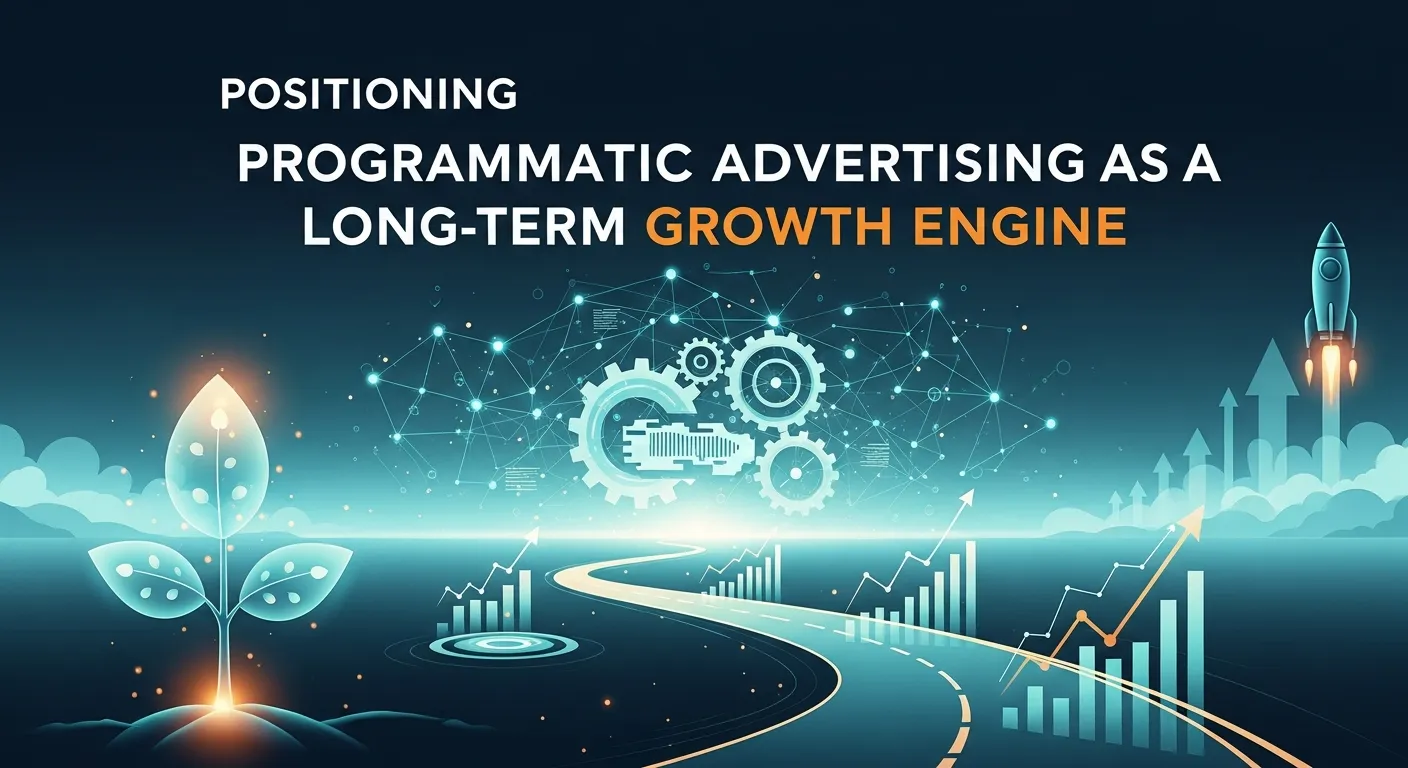
Many advertisers mistakenly view programmatic advertising as a short-term performance tactic. As a seller, your advantage is positioning it as a scalable, long-term growth engine that evolves with the client’s business.
Explain how programmatic improves over time as data accumulates. The more campaigns run, the smarter targeting, bidding, and creative decisions become—something traditional advertising cannot replicate.
Long-Term Value of Programmatic Advertising
- Builds proprietary audience insights
- Improves efficiency with every campaign cycle
- Supports cross-channel consistency (display, CTV, audio, mobile)
- Aligns with future-first strategies like AI-driven optimization
Programmatic vs Traditional Growth Impact
| Growth Factor | Programmatic Advertising | Traditional Advertising |
|---|---|---|
| Learning Curve | Improves with data | Static |
| Optimization Speed | Real-time | Post-campaign |
| Scalability | Instant across channels | Manual expansion |
| Future Readiness | AI & automation-driven | Limited adaptability |
By framing programmatic as a strategic investment rather than a one-off tactic, you elevate the conversation from selling ads to driving business growth.
Next Steps for Selling Programmatic Advertising
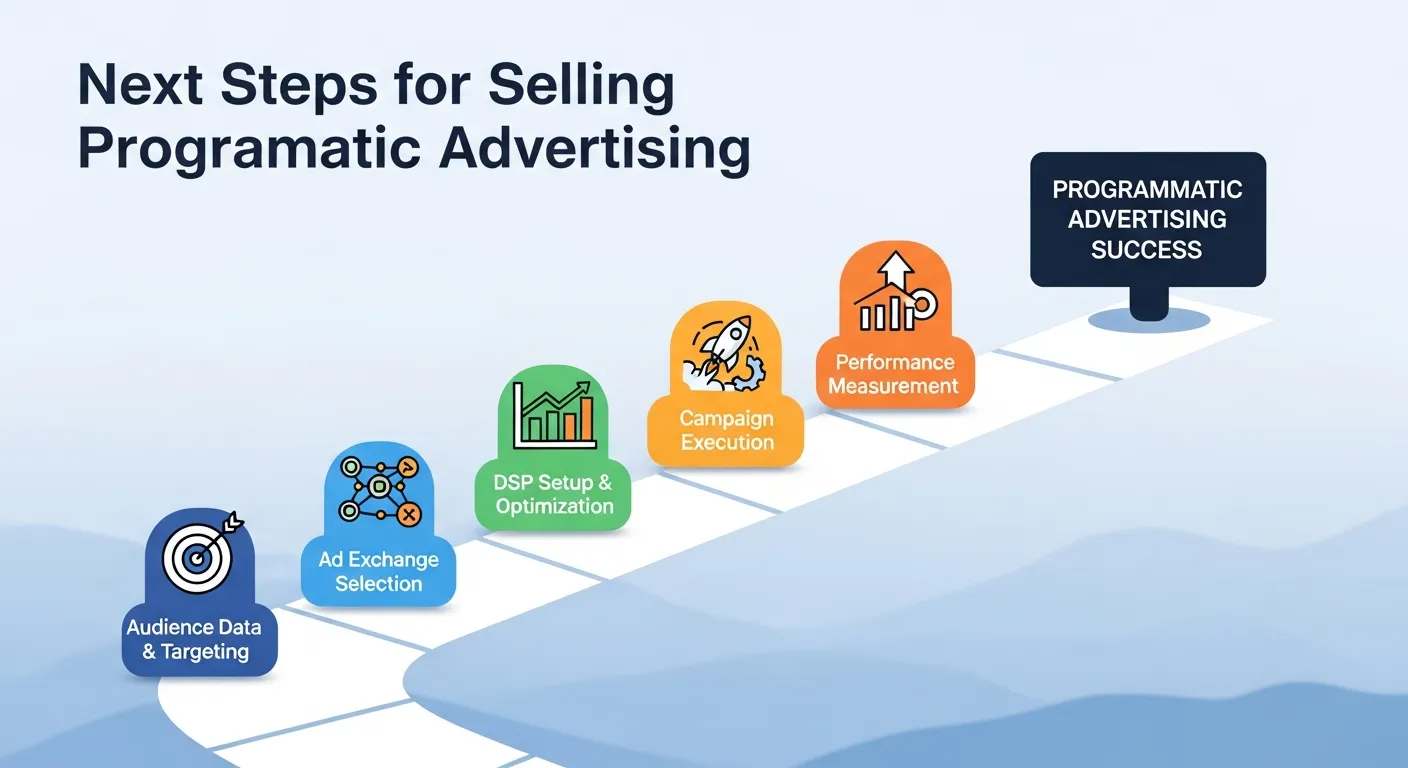
Selling programmatic advertising successfully isn’t about aggressive pitches—it’s about demonstrating expertise, building trust, and providing measurable value. By combining a clear understanding of programmatic advertising with insights into regulations, strategy, and advanced tools, you can guide clients toward campaigns that drive real results.
Modern programmatic campaigns are increasingly powered by artificial intelligence in programmatic advertising, enabling smarter audience targeting, real-time optimizations, and cross-channel consistency. Staying up-to-date with regulations programmatic advertising compliance (like GDPR and CCPA) ensures clients feel secure and confident in your solutions.
Educate Your Prospects
- Explain how programmatic advertising works, from real-time bidding to AI-driven optimizations.
- Break down complex terms like DSP, SSP, and audience segmentation into simple, actionable explanations.
Address Client Concerns Early
- Highlight your knowledge of regulations that programmatic advertising must comply with, ensuring legal and ethical campaigns.
- Discuss transparency in reporting and media spend to build trust.
Showcase Advanced Capabilities
- Explain how artificial intelligence in programmatic advertising enhances campaign performance by learning from data and improving targeting over time.
- Position your offering as a programmatic-advertising advanced solution that balances automation with human expertise.
Provide Tangible Results
- Share case studies, metrics, and analytics to show ROI, engagement rates, and cost efficiencies.
- Offer trial campaigns or phased launches to demonstrate effectiveness without long-term commitment.
Develop a Long-Term Strategy
- Position programmatic advertising as a scalable, long-term growth tool rather than a one-off tactic.
- Combine programmatic advertising strategy with traditional marketing for cross-channel consistency and future-ready campaigns.
Programmatic Advertising Next Steps
| Step | Action | Client Benefit | Key Tools/Insights |
|---|---|---|---|
| Educate | Explain AI-driven targeting, RTB, and audience segmentation | Clear understanding & trust | Programmatic dashboards, guides |
| Compliance | Address regulations programmatic advertising (GDPR/CCPA) | Legal confidence | Privacy-compliant platforms |
| Demonstrate Value | Share metrics, ROI, and engagement data | Proves performance | Analytics, case studies |
| Trial Campaign | Run small-scale campaigns | Reduces risk & builds confidence | DSP platforms, A/B testing |
| Long-Term Planning | Integrate programmatic-advertising advanced strategies | Growth and scalability | AI optimization, multi-channel strategy |
By following these steps, you not only simplify the complexity of programmatic advertising for your clients but also position yourself as a trusted advisor. Educating prospects, ensuring compliance, leveraging artificial intelligence in programmatic advertising, and presenting advanced strategies will strengthen long-term partnerships and help grow your business sustainably.
FAQs: Selling Programmatic Advertising
1. What is programmatic advertising?
Programmatic advertising is the automated buying and selling of digital ad space using data, algorithms, and real-time bidding (RTB) to target the right audience efficiently across multiple channels.
2. How does programmatic advertising differ from traditional advertising?
Unlike traditional media buying, which relies on manual placement and broad targeting, programmatic advertising uses data-driven strategies, allowing precise audience targeting, real-time optimization, and measurable ROI.
3. What channels can I reach with programmatic advertising?
Programmatic advertising spans digital display, mobile, video, connected TV (CTV), social media, and programmatic audio advertising, providing cross-channel reach for highly targeted campaigns.
4. How can programmatic advertising improve engagement?
Programmatic advertising for engagement delivers personalized content based on user behavior, demographics, and interests, resulting in higher interaction rates, click-throughs, and conversions.
5. What is real-time bidding (RTB) in programmatic advertising?
RTB is the process where ad impressions are auctioned in milliseconds to the highest bidder, ensuring advertisers reach the most relevant audience efficiently.
6. How do I measure the success of a programmatic campaign?
Success metrics include conversion rates, cost per action (CPA), engagement rates, frequency control, and channel performance analysis. Programmatic display advertising platforms provide real-time reporting for optimization.
7. Who benefits most from programmatic advertising?
Mid-sized to large brands, e-commerce companies, tech-savvy marketers, and agencies looking to improve targeting, engagement, and ROI benefit the most from programmatic advertising.
8. Can programmatic advertising integrate with other marketing strategies?
Yes, programmatic buying vs traditional media buying can be integrated into broader marketing strategies, combining digital automation with traditional channels to maximize reach and efficiency.
9. What role does data play in programmatic advertising?
Data is essential for audience targeting, personalization, and campaign optimization. Platforms use first-party and third-party data to ensure relevant ad delivery and actionable insights.
10. Is programmatic advertising suitable for small businesses?
Yes, small businesses can benefit from programmatic display advertising and programmatic-audio-advertising, especially when targeting niche audiences with limited budgets for maximum ROI.
New to the concept of automated ad buying? Don’t miss our full breakdown on Programmatic Advertising Across Channels: Display, Mobile, and Video