Programmatic Advertising Across Channels: Display, Mobile, and Video
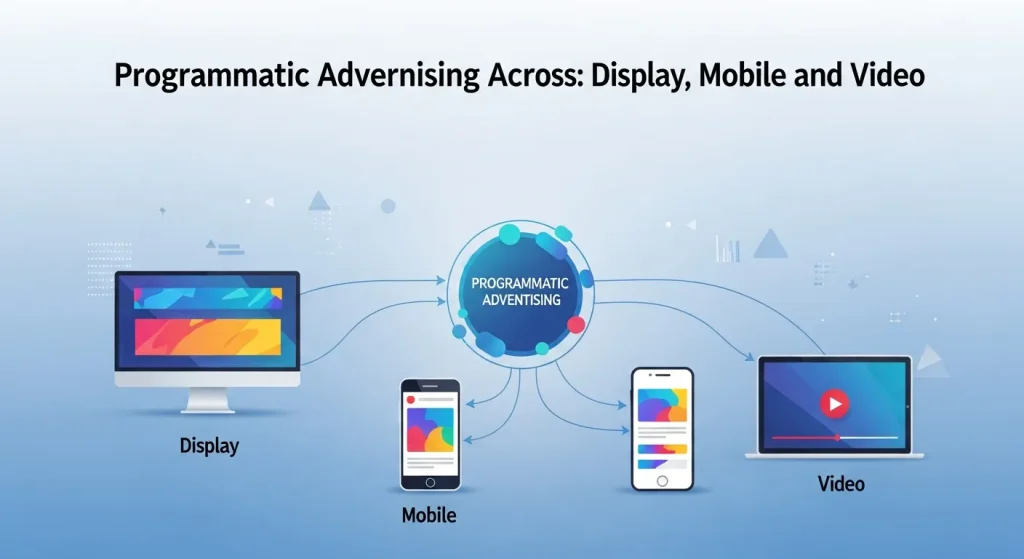
Programmatic advertising has become the backbone of modern digital marketing strategies. Advertisers and brands no longer rely solely on traditional methods to buy ad placements; they now leverage programmatic technologies to automate, optimize, and scale their campaigns. But what makes advertising even more powerful is its versatility across multiple channels—including display, mobile, and video.
If you’re looking to explore how programmatic advertising works on these channels and how to leverage it effectively for maximum ROI, you’re in the right place. This blog will break down the fundamentals, benefits, and best practices for running programmatic campaigns on display, mobile, and video platforms.
What Is Programmatic Advertising?
Before we jump into specific channels, it’s essential to have a clear understanding of programmatic. Programmatic advertising is an automated process of buying ad slots using algorithms and data rather than negotiating deals manually. It uses artificial intelligence (AI) to analyze data in real time, ensuring that ads are shown to the right audience, at the right time, and in the right digital environment.
At its core, programmatic advertising is designed to make ad buying efficient, data-driven, and results-oriented. It supports various ad formats and channels, allowing marketers to run cohesive campaigns across platforms.
Key benefits of programmatic advertising include:
- Efficiency: Automated processes save time.
- Granular targeting: Audience data allows for hyper-specific targeting.
- Real-time optimization: Campaigns can evolve dynamically based on performance.
- Cross-channel integration: Synchronize ads across display, mobile, video, and more.
Display Advertising Through Programmatic Channels
What is Display Advertising?
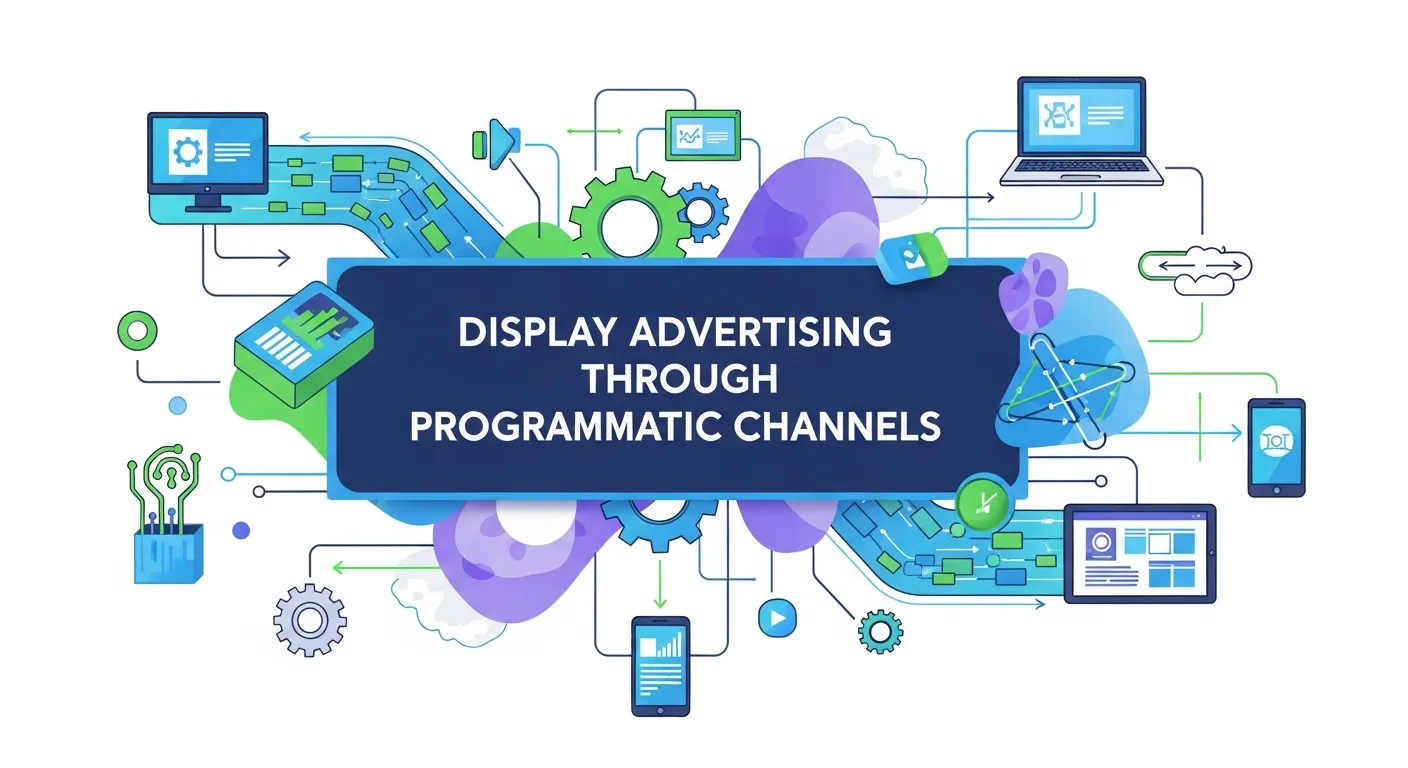
Display advertising encompasses banner ads, images, and rich media that appear across various websites and apps. These ads are often the first thing people think of when they hear “programmatic advertising.” Programmatic display advertising ensures that these visual ads are served to the right audience through advanced targeting.
Benefits of Programmatic Display Advertising
- Audience targeting: Reach audiences based on demographics, interests, location, or online behavior.
- Retargeting opportunities: Serve ads to people who have previously visited your website or interacted with your brand.
- Real-time bidding (RTB): Compete for ad placements in milliseconds through automated auctions.
Best Practices for Display Advertising
- Prioritize design: Ensure your banners are visually appealing, with clear calls-to-action (CTAs) tailored to your audience.
- Use responsive formats: Optimize your display ads to look great on both desktop and mobile screens.
- A/B test creative: Run multiple variations of your display ads and analyze which designs, messages, or placements perform best.
Programmatic Advertising on Mobile Devices
Why is Mobile Advertising Important?
With over 6.8 billion smartphone users worldwide, mobile is now the dominant channel for digital advertising. Whether it’s through apps, mobile browsers, or social media platforms, mobile advertising enables brands to engage their audience in highly personalized ways.
Programmatic mobile advertising automates the delivery of mobile ads, ensuring that your brand appears on trusted apps, mobile-optimized sites, and even location-based services.
The Unique Advantages of Mobile Advertising
- Location-based targeting: Mobile devices offer access to geolocation data, which makes hyper-local targeting possible for retailers, restaurants, events, and more.
- Native ads: Mobile-friendly native ads blend seamlessly with app content for less intrusive user experiences.
- App-specific opportunities: Engage users with in-app banners, interstitials, or rewarded ads.
Best Practices for Mobile Advertising
- Optimize for speed: Mobile users expect fast-loading ads. Ensure that your ad creatives load promptly to avoid drop-offs.
- Keep it short and sweet: Messaging should be concise, as screens are smaller and attention spans shorter.
- Leverage video in-app: Short-form videos or rewarded video ads see high engagement rates on mobile apps.
Video Advertising and Programmatic Buying
The Power of Video Advertising
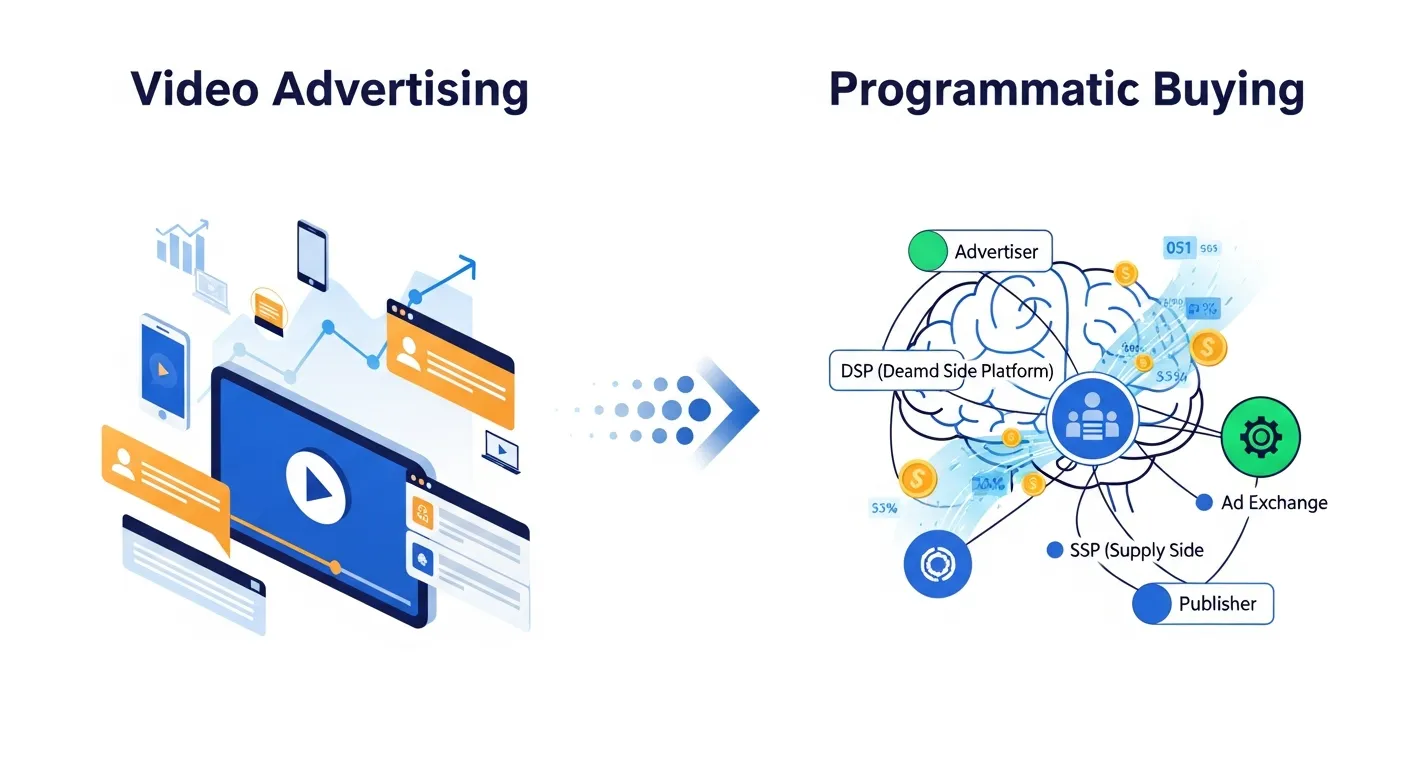
Video is the fastest-growing format in digital advertising. Thanks to platforms like YouTube, TikTok, and Instagram Reels, user engagement with video content has skyrocketed. Programmatic video buying enables brands to seamlessly place video ads wherever their target audience is most active.
Why Programmatic Video Stands Out
- High engagement: People are far more likely to remember a video ad than a static display banner.
- Advanced targeting: Combine behavioral data with video-specific metrics such as completion rates to refine campaigns over time.
- Premium inventory: Programmatic deals can give you access to high-quality video slots, including Connected TV (CTV) and OTT (Over-The-Top) streaming services.
Key Best Practices for Video Advertising
- Focus on storytelling: Use video to convey a compelling narrative that resonates emotionally with your audience.
- Short-form content: Ads between 6 and 15 seconds perform best on most platforms.
- Include subtitles: Many viewers watch videos on mute, so subtitles ensure your message gets across regardless of sound.
- Monitor completion rates: Optimize for completion rather than click-through rates (CTR) to ensure your message reaches the audience in full.
Integrating Multiple Programmatic Channels for Maximum Impact
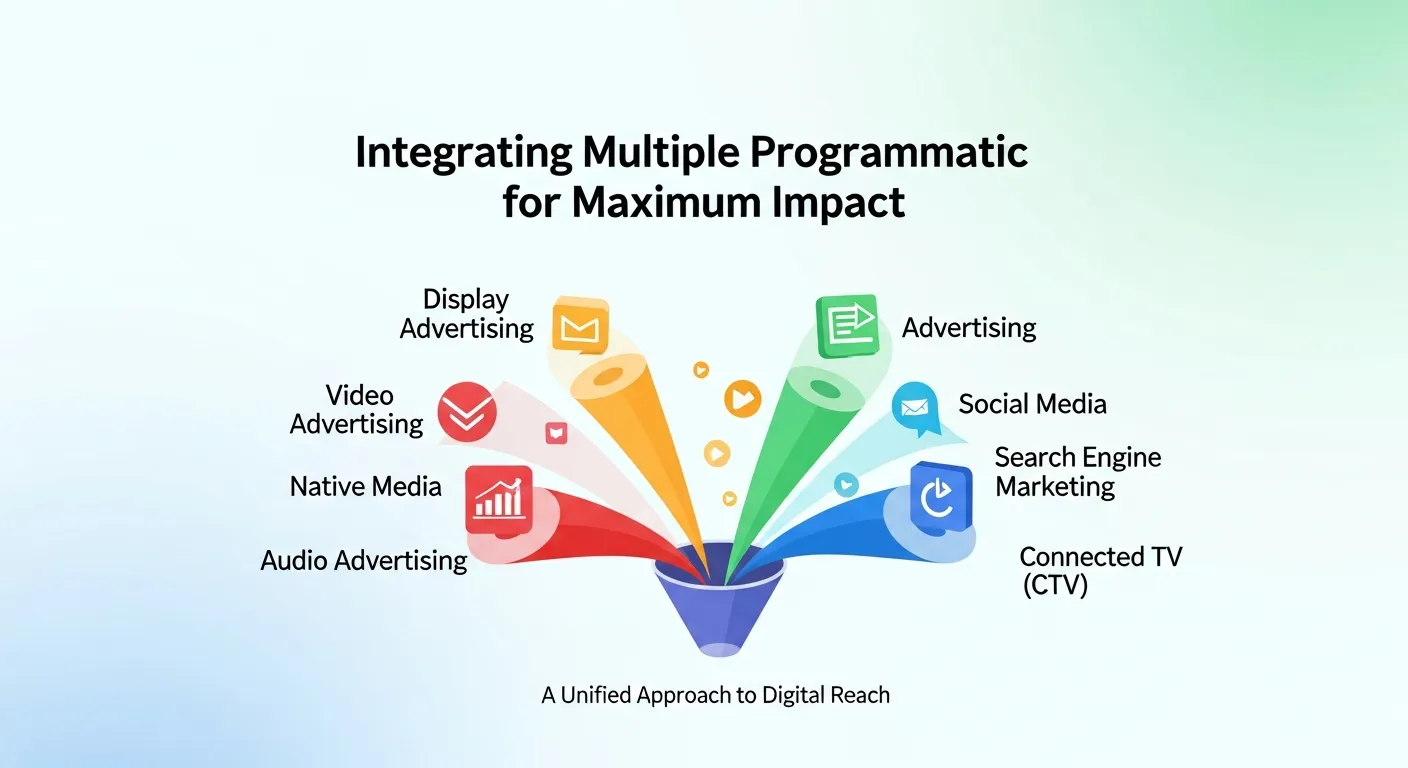
When it comes to programmatic advertising, the whole is greater than the sum of its parts. While each channel (display, mobile, video) has individual strengths, integrating them can help you create a cohesive multi-channel strategy for your brand.
How to Seamlessly Integrate Channels
- Consistent messaging: Create ads with matching brand tones and visuals for a unified experience across display, mobile, and video platforms.
- Centralized data management: Use a data management platform (DMP) or customer data platform (CDP) to streamline targeting efforts across various programmatic channels.
- Cross-channel retargeting: Use insights from display and mobile campaigns to refine your targeting for video ads, and vice versa.
- Dynamic creative optimization (DCO): Automatically tailor ad creatives based on channel, context, and audience behavior.
Example of an Integrated Campaign
Imagine you’re launching a new product:
- Use display ads to build early awareness across different websites.
- Leverage programmatic video ads on YouTube and CTV to highlight your product’s features with engaging visuals.
- Use mobile advertising to create hyper-local campaigns and offer exclusive mobile-first promotions.
This type of integration ensures that your message reaches your audience at every stage of their customer journey while staying consistent and impactful.
Measuring Success: Metrics That Matter in Programmatic Campaigns

Running programmatic campaigns across display, mobile, and video channels is only half the battle—the other half is measuring their success. Many marketers make the mistake of focusing solely on clicks or impressions, but a programmatic advertising strategy for success relies on comprehensive performance analysis to optimize ROI.
Key Metrics to Track
- Viewability Rate: Ensures that ads are actually seen by users.
- Engagement Rate: Measures clicks, video completions, interactions, and shares.
- Cost Per Action (CPA): Tracks efficiency of spend for conversions.
- Attribution Modeling: Determines which touchpoints contribute most to conversions.
- Cross-Device Tracking: Ensures users moving between devices are correctly attributed.
Example Metrics for Multi-Channel Programmatic Campaigns
| Metric | Display | Mobile | Video | Why It Matters |
|---|---|---|---|---|
| Impressions | Yes | Yes | Yes | Measures reach across channels |
| Click-Through Rate (CTR) | Yes | Yes | Yes | Indicates engagement & interest |
| Completion Rate | No | No | Yes | Ensures the video message is fully seen |
| Cost Per Action (CPA) | Yes | Yes | Yes | Shows the efficiency of ad spend |
| Frequency | Yes | Yes | Yes | Prevents overexposure & ad fatigue |
| Engagement Rate | Yes | Yes | Yes | Indicates interaction quality |
Use centralized dashboards to track these metrics across channels, allowing for quicker optimizations and better reporting to clients.
Leveraging Artificial Intelligence in Programmatic Advertising
Artificial intelligence (AI) is transforming how programmatic campaigns are executed and optimized. AI enables real-time bidding, dynamic creative optimization (DCO), and predictive targeting, ensuring your campaigns reach the right audience efficiently.
How AI Enhances Programmatic Campaigns
- Predictive Targeting: AI analyzes historical data to identify which audience segments are most likely to convert.
- Dynamic Creative Optimization: Automatically adjusts ad creatives based on user behavior, device type, location, and time of day.
- Bid Optimization: AI algorithms determine the optimal bid for each impression in milliseconds, ensuring cost efficiency.
- Fraud Prevention: Machine learning detects suspicious traffic and prevents wasted ad spend.
AI Features Across Channels
| Feature | Display | Mobile | Video | Benefit |
|---|---|---|---|---|
| Predictive Targeting | Yes | Yes | Yes | Improves conversion potential |
| Dynamic Creative Optimization | Yes | Yes | Yes | Enhances engagement & relevance |
| Real-Time Bid Adjustments | Yes | Yes | Yes | Maximizes ROI & efficiency |
| Fraud Detection | Yes | Yes | Yes | Reduces wasted spend |
Takeaway: Incorporating AI into your programmatic campaigns not only improves performance but also positions your brand as technologically advanced, appealing to data-driven clients.
Personalization and Engagement Strategies for Programmatic Campaigns
Personalization is no longer optional—programmatic advertising for engagement relies heavily on delivering the right message to the right audience at the right time. Proper personalization boosts click-through rates, retention, and overall ROI.
Key Personalization Strategies
- Behavioral Targeting: Show ads based on past website visits, app usage, or video interactions.
- Contextual Targeting: Serve ads relevant to the content the user is currently viewing.
- Geo-Targeting: Deliver mobile ads to users in specific locations for events, retail, or local promotions.
- Sequential Messaging: Guide users through the sales funnel with tailored ads that build on previous interactions.
Engagement Tactics Across Channels
| Strategy | Display | Mobile | Video | Expected Outcome |
|---|---|---|---|---|
| Behavioral Targeting | Yes | Yes | Yes | Increases relevancy & CTR |
| Contextual Targeting | Yes | Yes | Yes | Higher engagement & brand alignment |
| Geo-Targeting | No | Yes | Yes | Hyper-local audience reach |
| Sequential Messaging | Yes | Yes | Yes | Improves conversion funnel progression |
Why Programmatic Advertising Is the Future of Digital Marketing
Programmatic advertising isn’t just a trend—it’s the future. With its ability to harness data, deliver real-time optimization, and simplify ad buying across channels, programmatic is an invaluable tool for marketers. Whether you’re optimizing display campaigns, reaching users on their mobile devices, or making an impact with compelling video content, programmatic technology enables you to connect with your audience in meaningful ways.
By adopting programmatic advertising across display, mobile, and video channels, you can increase your reach, improve efficiency, and maximize ROI.
Frequently Asked Questions (FAQs) About Programmatic Advertising
1. What is programmatic advertising?
Programmatic advertising is the automated process of buying and optimizing digital ad placements using data, algorithms, and artificial intelligence (AI), instead of manual negotiations. It allows advertisers to reach the right audience at the right time, across multiple channels like display, mobile, video, and CTV.
2. How does programmatic advertising differ from traditional media buying?
Unlike traditional media buying, which involves manual ad placements and negotiations, programmatic buying uses automation, AI, and real-time bidding (RTB) to optimize ad delivery. This ensures faster, more efficient, and data-driven campaigns.
3. What is programmatic display advertising?
Programmatic display advertising delivers banner ads, images, or rich media across websites and apps automatically. Using advanced targeting and retargeting, it ensures your ads reach the right audience with minimal manual effort.
4. How can programmatic advertising improve engagement?
Programmatic advertising for engagement uses personalization strategies such as behavioral, contextual, and geo-targeting, as well as sequential messaging. This ensures ads are relevant, increasing click-through rates (CTR) and overall audience interaction.
5. What role does AI play in programmatic advertising?
AI enhances programmatic campaigns by enabling predictive targeting, dynamic creative optimization (DCO), bid adjustments in real time, and fraud detection. This ensures better performance, efficiency, and ROI.
6. Can programmatic advertising be used for audio and CTV campaigns?
Yes. Programmatic audio advertising allows brands to place ads on streaming music platforms and podcasts automatically. CTV programmatic advertising enables brands to deliver ads on connected TVs and OTT streaming services, reaching highly engaged audiences.
7. How do I measure the success of programmatic campaigns?
Success is measured using key metrics such as impressions, click-through rates (CTR), completion rates (for video), cost per action (CPA), engagement rate, and frequency. Centralized dashboards can track these metrics across all channels for effective optimization.
8. What is the difference between programmatic mobile and desktop advertising?
Programmatic mobile advertising focuses on reaching users on smartphones and tablets using location-based, in-app, and native ad formats. Desktop advertising typically targets website visitors via banners and display ads. Both benefit from AI-driven optimization but offer different user engagement opportunities.
9. How does programmatic SEM strategy work?
A programmatic SEM strategy automates the bidding and placement of search ads using audience data and AI. It allows marketers to target the most relevant users for their paid search campaigns, optimizing cost-per-click (CPC) and conversion rates.
10. What are the advantages of integrating multiple programmatic channels?
Integrating channels like display, mobile, video, audio, and CTV creates a cohesive multi-channel approach. It ensures consistent messaging, better retargeting, and higher ROI while allowing campaigns to adapt dynamically based on audience behavior.
New to the concept of automated ad buying? Don’t miss our full breakdown on How to Sell Programmatic Advertising Like a Pro