Avoiding Programmatic Advertising Pitfalls: Common Mistakes and How to Fix Them
Programmatic advertising has revolutionized the way businesses promote their products and services. By automating the ad buying process, programmatic advertising allows marketers to target specific audiences with precision, saving time and resources while maximizing ROI. But as with any innovative technology, it comes with its own set of challenges.
Whether you’re new to programmatic advertising or a seasoned marketer, this guide will help you identify common mistakes and provide actionable tips to overcome them. From poor targeting to lack of transparency, we’ll cover the missteps you need to avoid to make your campaigns as effective as possible.
What is Programmatic Advertising?
Before we jump into the pitfalls, let’s quickly define what programmatic advertising is. Simply put, it’s the automated buying and selling of digital ad space using technology. Unlike traditional methods of buying ads, programmatic advertising uses algorithms and AI to deliver ads to the right audience at the right time and on the right platform.
Key benefits of programmatic advertising include real-time data tracking, precise targeting, and greater scalability for campaigns.
While the advantages are undeniable, poor execution can result in wasted ad spend, ineffective targeting, or even reputational damage. With that in mind, here are the most common pitfalls marketers encounter and how to avoid them.
The Most Common Programmatic Advertising Mistakes
1. Not Defining Clear Objectives
One of the biggest mistakes marketers make is failing to set clear goals. Without a defined objective, it’s nearly impossible to measure the success of your campaign.
What to do instead:
Set specific, measurable, achievable, relevant, and time-bound (SMART) goals before launching your campaign. For example, rather than simply aiming to “increase brand awareness,” focus on something more precise, like “achieving 1,000 impressions per day from our target audience in the U.S. within three months.”
By starting with a clear vision, you can better align your campaign settings, ad formats, and budgets.
2. Targeting Too Broadly or Narrowly
Precise audience targeting is one of programmatic advertising’s greatest strengths, but some marketers either cast too wide of a net or hyper-focus on a too-small segment.
- Broad targeting leads to irrelevant impressions and wasted ad spend.
- Overly narrow targeting constrains your campaign’s reach, missing out on potential leads.
What to do instead:
Strike a balance by getting to know your audience. Use first-party data, such as customer profiles or CRM data, to create highly relevant, but not overly restrictive, audience segments. Combine this information with third-party data to further refine your targeting without being too exclusive.
Also, don’t be afraid to test and adjust your targeting strategy based on campaign performance.
3. Ignoring Viewability Metrics
It doesn’t matter how clever or eye-catching your ad is if it’s never seen by your target audience. Poor ad placements can result in low viewability rates, rendering your campaign ineffective.
What to do instead:
Partner with trusted Demand Side Platforms (DSPs) and use tools that measure viewability metrics, such as the percentage of your ad that was visible and the time it was in view. Platforms like Moat and Integral Ad Science can help ensure your ads are being displayed in optimal positions.
Additionally, consider leveraging private marketplaces or direct deals to secure more prominent ad placements.
4. Overlooking Ad Fraud
Ad fraud is a significant issue in programmatic advertising, with billions of dollars lost each year to bots and fraudulent clicks. If your ads are being served to fake users or non-human traffic, your ROI takes a massive hit.
What to do instead:
To combat ad fraud, work with DSPs and platforms that emphasize transparency and use fraud detection tools such as DoubleVerify or White Ops. Consider whitelisting reputable publishers rather than relying solely on open exchanges, and monitor your campaign data regularly for unusual spikes in traffic or clicks.
5. Set-and-Forget Mentality
Another common error is the “set-it-and-forget-it” approach. Marketers may launch a campaign and fail to optimize or adjust it over time, leading to poor performance as trends and user behaviors change.
What to do instead:
Adopt a dynamic approach by continuously monitoring and refining your campaign. Regularly analyze performance metrics such as CTR (Click-Through Rate) or CPA (Cost Per Acquisition) and make adjustments as needed. A/B test ad creatives, formats, and placements to find what resonates best with your audience.
6. Lack of Transparency with Partners
If you’re outsourcing programmatic advertising to an agency or third-party vendor, not knowing how your budget is allocated or how performance is tracked can lead to inefficiencies and distrust.
What to do instead:
Demand transparency from your partners. Look for agencies and platforms that offer granular reporting of metrics like spend allocation, placement performance, and ROI. This ensures you’re fully informed about where your budget goes and how effective each campaign is.
7. Not Optimizing Creative for Context
Even the most well-targeted ad can fail if the creative doesn’t match the context in which it appears. For example, delivering a polished corporate ad on a casual social media platform can result in dissonance and disengagement.
What to do instead:
Customize your creative assets for different platforms and formats. Ensure your message aligns with the tone, style, and user behavior on each channel. For instance, use visually dynamic images or short, punchy videos on platforms like Instagram and TikTok, while relying on professional banners or text ads in B2B environments.
Programmatic Advertising Across Different Channels
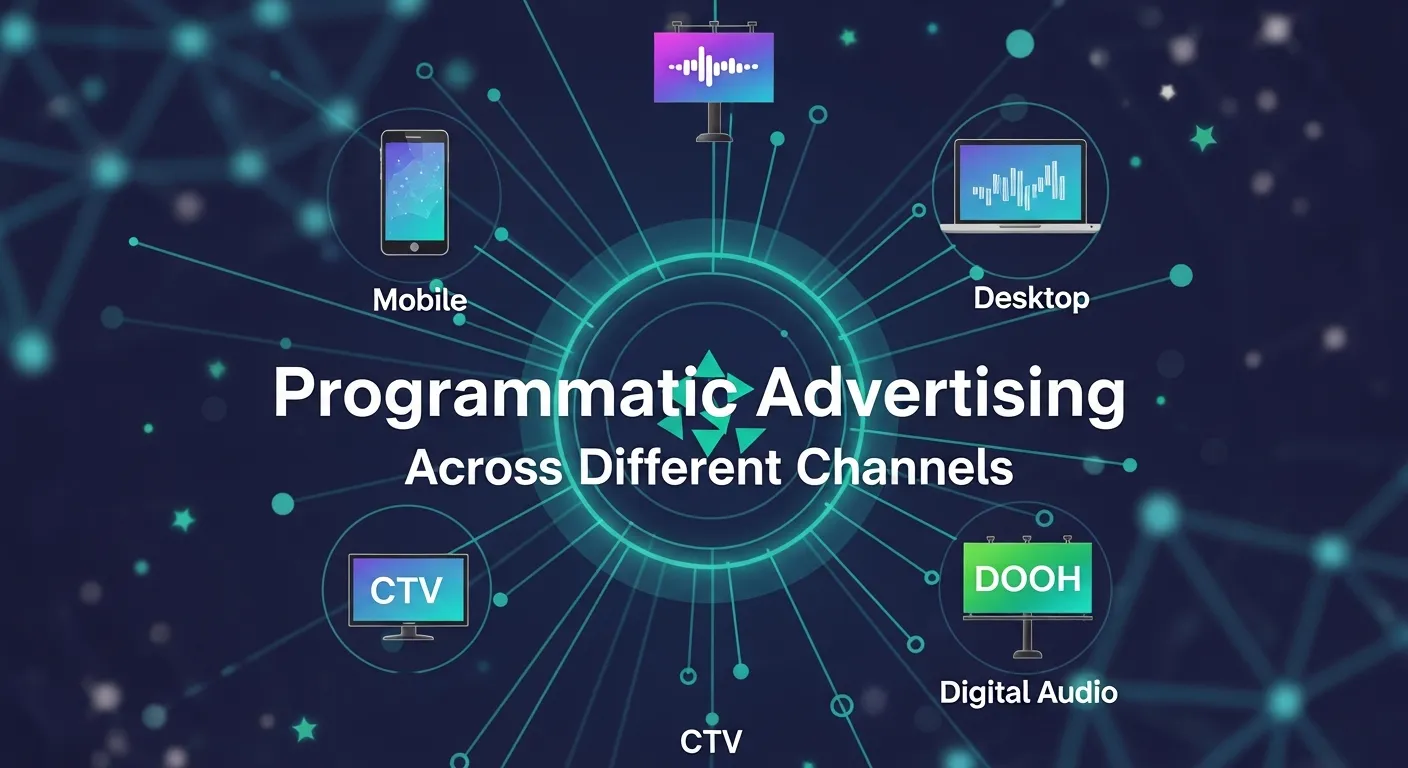
programmatic advertising strategies for success now spans multiple digital channels beyond display and social, including video, audio, connected TV (CTV), and digital out-of-home (DOOH). Each channel offers unique engagement and conversion opportunities.
Key Channels and How They Work:
- Programmatic Display: Standard banners and interactive ads served via DSPs. Great for brand awareness and retargeting.
- Programmatic Video: In-stream or out-stream ads on YouTube or OTT platforms, enhancing engagement through storytelling.
- Programmatic TV/CTV: Automated ad buying on connected TVs, targeting households based on demographics and viewing habits.
- Programmatic Audio: Ads on streaming services like Spotify or podcasts, perfect for contextual targeting.
- Programmatic DOOH: Dynamic digital billboards updated based on location, weather, or audience demographics.
Programmatic Advertising Channels and Benefits
| Channel | How It Works | Key Benefit |
|---|---|---|
| Display Ads | Banners via DSPs | Brand awareness and retargeting |
| Video Ads | In-stream or out-stream video placements | Higher engagement and storytelling potential |
| TV / CTV Ads | Automated ad buying on connected TV | Household-level targeting |
| Audio Ads | Ads on music/podcast platforms | Contextual engagement and brand recall |
| DOOH Ads | Dynamic billboards updated in real time | Localized targeting and attention capture |
Leveraging Data for Smarter Programmatic Advertising
Data is the backbone of successful programmatic campaigns. First-party, second-party, and third-party data, combined with predictive analytics, enable smarter targeting, higher engagement, and improved ROI.
Ways to Use Data Effectively:
- First-Party Data: Customer purchase history and browsing behavior
- Second-Party Data: Partner audience insights
- Third-Party Data: Broader behavioral targeting, privacy-compliant
- Predictive Analytics: Forecast high-value users for smarter bidding
- Segmentation and Personalization: Deliver micro-targeted, relevant ads
Using Data in Programmatic Advertising
| Data Type | Example Use Case | Benefit |
|---|---|---|
| First-Party Data | Retargeting past customers | Higher conversion rates |
| Second-Party Data | Partner retail audience | Expands reach without losing relevance |
| Third-Party Data | Behavioral targeting across sites | Broad audience targeting |
| Predictive Analytics | Forecast high-value users | Better ROI and efficient bidding |
| Segmentation | Personalized creatives for micro-audiences | Improved engagement and brand affinity |
Programmatic Advertising Compliance and Privacy Considerations

With data-driven targeting comes responsibility. Ignoring compliance can result in fines, lost trust, and reputational damage. Brands must integrate privacy-conscious strategies.
Key Compliance Considerations:
- Data Privacy Regulations: GDPR, CCPA, and other emerging frameworks
- Consent Management: Implement CMPs for cookie and tracking permissions
- Brand Safety: Avoid low-quality sites; monitor placements
- Transparent Reporting: Provide insight into budgets, data usage, and performance
- Privacy-Preserving Personalization: Use anonymized or aggregated data for relevant targeting
Programmatic Advertising Compliance Checklist
| Compliance Area | Key Action | Benefit |
|---|---|---|
| Data Privacy | Adhere to GDPR, CCPA rules | Avoid fines and protect reputation |
| Consent Management | Use CMPs for permissions | Ensure lawful data collection |
| Brand Safety | Monitor placements with verification tools | Protect brand image |
| Reporting Transparency | Provide detailed campaign reporting | Build trust with clients and stakeholders |
| Privacy-Preserving Ads | Use anonymized/aggregated data | Maintain personalization ethically |
Programmatic advertising is a powerful tool when executed correctly. By avoiding common mistakes, leveraging multiple channels, utilizing data effectively, and maintaining compliance, marketers can maximize ROI, engagement, and brand trust. The future of programmatic advertising is automated, data-driven, and privacy-conscious—those who adapt will lead the digital marketing landscape.
Pro Tips for Programmatic Advertising Success
- Leverage AI and Machine Learning: Use AI tools to make real-time optimizations based on data and trends.
- Regularly Audit Campaigns: Schedule quarterly reviews to evaluate what’s working and what’s not, ensuring scalability and alignment with business goals.
- Focus on Cross-Channel Integration: Programmatic advertising performs best when integrated with other digital marketing efforts. Ensure a cohesive message across channels like email, social media, and search ads.
The Future of Programmatic Advertising: Stay Ahead of the Curve
Programmatic advertising is evolving rapidly, driven by technological advancements, changing consumer behaviors, and stricter data privacy regulations. To stay competitive, marketers must not only understand these changes but also adapt proactively. Here’s what the future looks like and how to prepare:
- Leverage AI & Machine Learning: Automate bidding, optimize targeting, and personalize creatives in real time.
- Go Cross-Channel: Integrate campaigns across display, video, CTV, audio, and DOOH for consistent messaging.
- Prioritize Privacy & Compliance: Use consent management and anonymized data to balance personalization with regulations like GDPR and CCPA.
- Innovate Creatively: Match ads to platform and context; use dynamic creative optimization for better engagement.
- Optimize Continuously: Track KPIs, refine targeting, and adjust campaigns regularly for maximum ROI.
The future is automated, data-driven, and privacy-conscious. Marketers who adapt quickly will lead in engagement, conversions, and campaign performance.
Frequently Asked Questions (FAQs) About Programmatic Advertising
1. What is programmatic advertising?
Programmatic advertising is the automated buying and selling of digital ad space using technology and data. It uses algorithms to deliver ads to the right audience at the right time, improving targeting, efficiency, and ROI.
2. How does programmatic advertising work?
It works through Demand-Side Platforms (DSPs) and real-time bidding (RTB) systems that analyze audience data to place ads on websites, apps, CTV platforms, and more. Advertisers can target users based on demographics, behavior, or interests.
3. What are the main benefits of programmatic advertising?
Programmatic advertising provides precise targeting, real-time campaign optimization, scalability, and improved ROI. It also allows marketers to use data-driven strategies for personalized engagement.
4. What mistakes should I avoid in programmatic advertising?
Common mistakes include unclear objectives, poor targeting, ignoring viewability metrics, overlooking ad fraud, a set-and-forget mentality, lack of transparency with partners, and misaligned creative.
5. How can I use data effectively in programmatic campaigns?
Leverage first-party data (customer interactions), second-party data (partner insights), and third-party data (broader audience targeting) combined with predictive analytics and segmentation to deliver relevant and personalized ads.
6. What channels can I use for programmatic advertising?
Programmatic advertising spans multiple channels: display, video, TV/CTV, audio, and digital out-of-home (DOOH). Each channel offers unique opportunities for engagement, retargeting, and audience-specific campaigns.
7. How do I ensure compliance and privacy in programmatic advertising?
Follow regulations like GDPR and CCPA, implement consent management platforms (CMPs), monitor ad placements for brand safety, and use anonymized or aggregated data for personalized targeting.
8. What is the role of AI and machine learning in programmatic advertising?
AI and machine learning optimize bids, placements, and creative delivery in real time. They analyze trends and audience behavior to increase campaign efficiency and ROI.
9. How does programmatic advertising fit into a broader SEM strategy?
Programmatic advertising complements search engine marketing (SEM) by providing targeted display and video campaigns. Integrated strategies help maintain brand consistency across channels and improve overall conversions.
10. What are the future trends in programmatic advertising?
Future trends include increased use of AI, cross-channel integration, privacy-first targeting, programmatic CTV and DOOH growth, and stricter adherence to regulatory frameworks. Staying updated is key to long-term success.
Digital programmatic advertising is the future—get ahead by reading Examples of Programmatic Advertising and How They Work and take your first steps today.