The Future of Programmatic Advertising
The future of Programmatic Advertising has reshaped how brands interact with their audiences online. Automated, data-driven, and precise, this digital advertising method has become indispensable for marketers looking to optimize their ad spend. But where is it heading next?
This blog explores emerging trends in programmatic advertising and unveils how these changes will redefine digital marketing. By the end, you’ll have a clearer understanding of what the future holds and how your organization can stay ahead in this evolving landscape.
What is Programmatic Advertising?
Before we jump into future trends, let’s lay the groundwork by understanding programmatic advertising. Simply put, programmatic advertising refers to the use of automation to purchase and manage digital ad campaigns in real time. Unlike traditional methods of ad buying that rely on negotiations and manual orders, programmatic leverages algorithms to place ads in front of the right people at the right time.
Key benefits of programmatic advertising include:
- Precision targeting based on user data and behavior
- Efficiency through automation
- Scalability to reach vast audiences across multiple platforms
It powers the majority of digital display advertising , covering everything from banner ads to video ads and even connected TV placements. But as technology matures, programmatic advertising is poised to evolve in revolutionary ways.
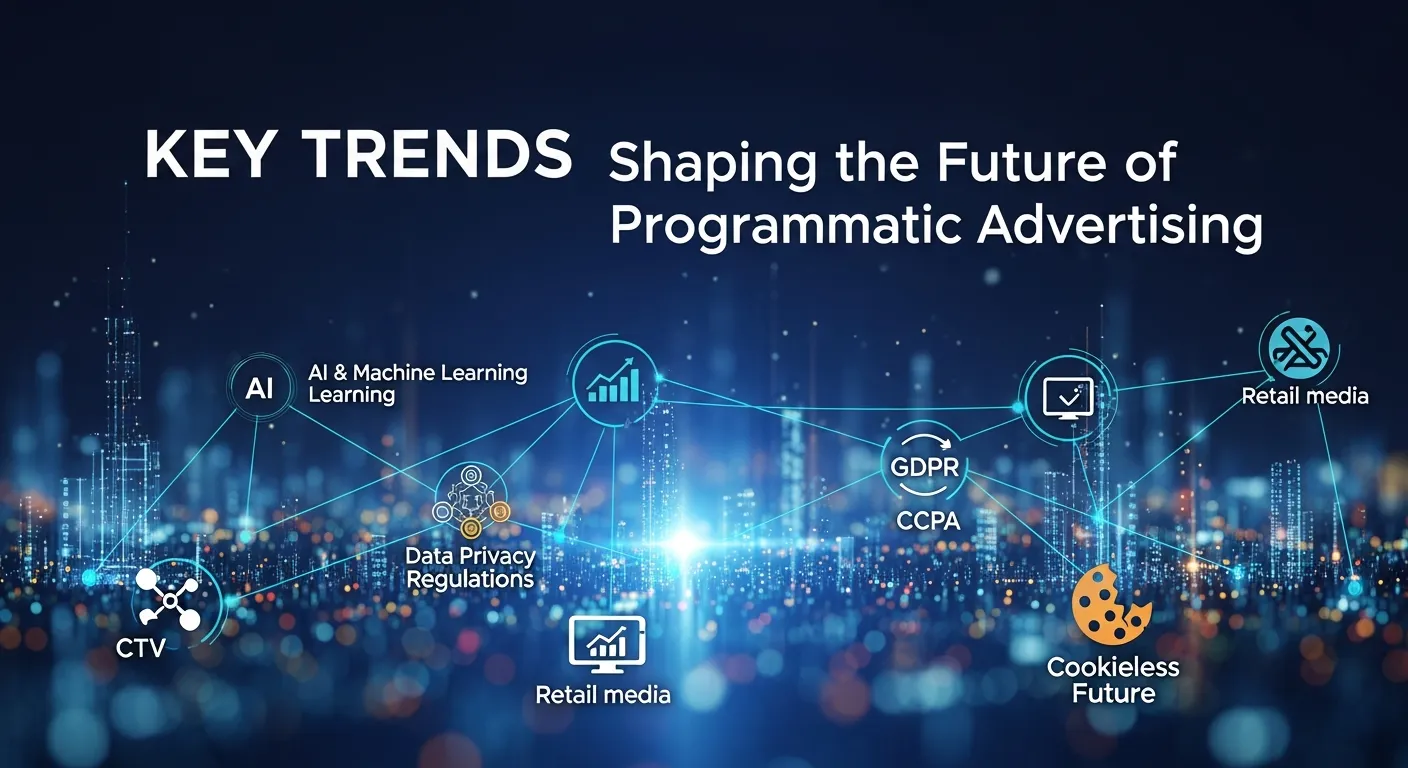
Key Trends Shaping the Future of Programmatic Advertising
1. Automation Meets Artificial Intelligence
At the heart of programmatic is automation, and its capabilities are significantly expanding with advancements in artificial intelligence (AI) and machine learning. AI will enhance programmatic systems by predicting consumer behavior more accurately and optimizing ad placements in real time.
For example:
- Algorithms can evaluate which creatives perform best for specific audiences and adjust them on the fly.
- Predictive analytics will anticipate moments when users are most likely to convert, prioritizing those ad placements.
This automation shift will also reduce human error while saving marketers countless hours in execution.
2. Growth of Connected TV (CTV) Advertising
Connected TV is becoming a popular channel for programmatic. Platforms like Hulu and Roku allow advertisers to target audiences through streaming TV, combining the precision of programmatic with the reach of traditional television.
According to eMarketer, programmatic ad spending on connected TV is projected to hit $27.47 billion in the U.S. by 2025. With customizable targeting options and the ability to measure performance in real time, CTV offers brands unprecedented opportunities to engage viewers on a large scale.
3. Privacy-First Advertising
We’re entering a privacy-first era in digital marketing. With GDPR, CCPA, and the impending demise of third-party cookies, advertisers will need to adjust how they target and measure audiences.
The future of programmatic will revolve around:
- First-party data collection through direct consumer relationships.
- Contextual targeting, which focuses on in-the-moment relevance rather than personal data (e.g., showing ads for travel gear on travel blogs).
- Privacy-friendly measurement tools, such as Google’s Privacy Sandbox and advanced encryption mechanisms.
Brands that commit to ethical and transparent data practices will not only comply with regulations but also gain consumer trust.
4. Programmatic Audio on the Rise
While traditionally dominated by visual formats, programmatic advertising is rapidly extending into audio platforms like Spotify, Pandora, and podcasts. With the surge of audio content consumption globally, programmatic audio offers a unique way to carve out niche audiences.
What makes this trend exciting?
- It’s highly personal. Voice is an intimate medium, and ads here often feel more engaging.
- Ad spots can be dynamically inserted, ensuring relevance to the listener’s context.
For marketers, programmatic audio opens up opportunities to target users during commute times, workouts, or even while they unwind at home.
5. The Integration of Augmented Reality (AR) and Virtual Reality (VR)
The AR and VR space is still nascent, but it’s a category to watch closely for programmatic advancements. AR lenses and VR experiences on platforms like Snapchat, Instagram, and Meta are becoming fertile ground for innovative ad placements.
Imagine:
- Programmatic-powered AR ads that allow users to “try on” products virtually, such as makeup or fashion.
- Branded VR experiences targeting niche, highly engaged communities.
The combination of immersive experiences and programmatic efficiency promises a future where ads are exciting and functional.
6. Unified Platforms and Supply Path Optimization (SPO)
Fragmentation has long been a challenge in digital advertising. Managing separate platforms for display, social, video, and CTV can be overwhelming. However, the trend toward unified platforms aims to simplify things. Major players are building streamlined interfaces that allow advertisers to manage and measure all campaigns from one place.
Simultaneously, Supply Path Optimization (SPO) is growing in importance. Advertisers want transparency in how their ad dollars are spent and direct access to high-quality inventory. SPO ensures programmatic processes are efficient, cost-effective, and fraud-free.
7. Adoption of Blockchain for Transparency
Transparency remains a key concern in programmatic advertising. Enter blockchain, a disruptive technology promising to solve issues like ad fraud, hidden fees, and campaign inefficiencies.
Blockchain can:
- Log every step of an ad placement in a transparent, immutable ledger.
- Ensure advertisers get exactly what they pay for in terms of impressions and engagement.
Though blockchain adoption is still in its infancy, its potential impact on programmatic advertising could be monumental.
Programmatic Advertising and Omnichannel Customer Journeys
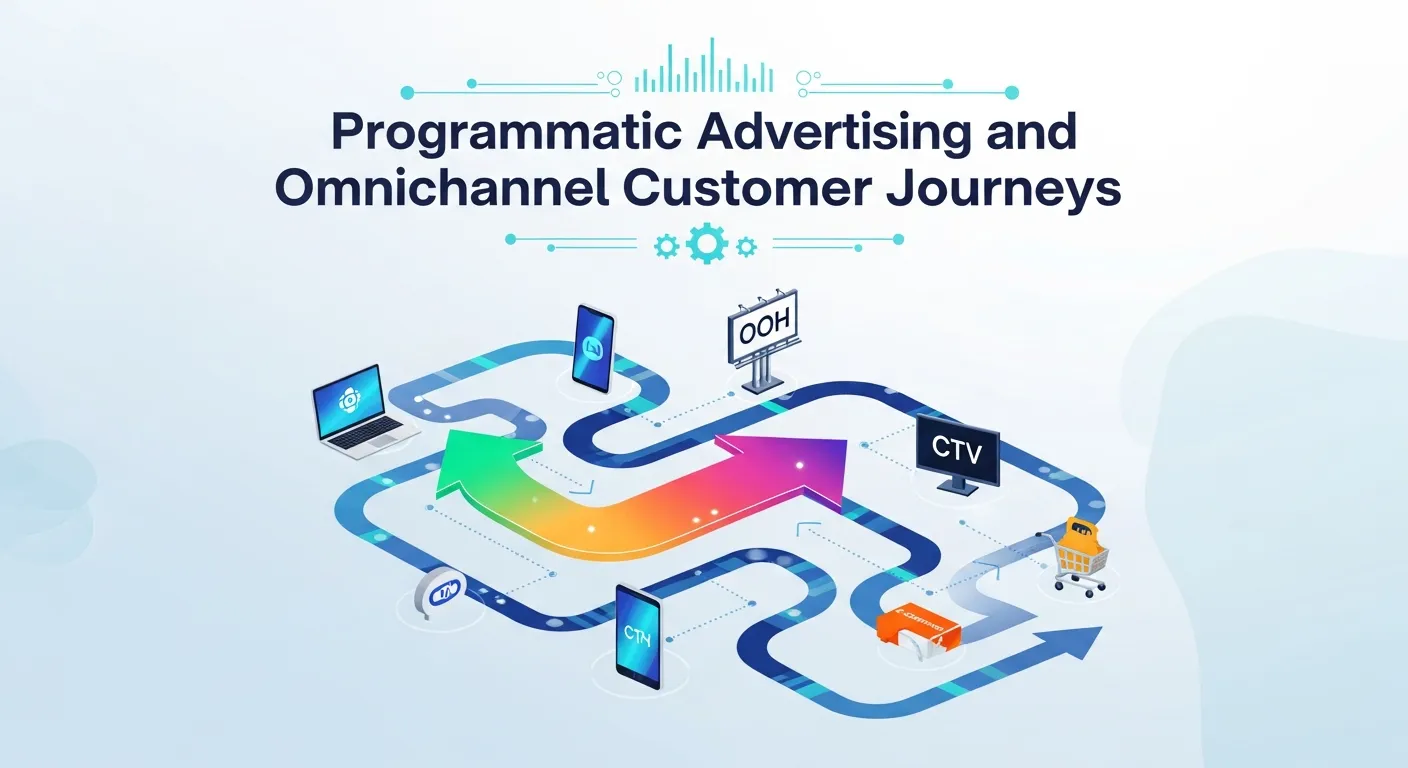
As consumers increasingly interact with multiple touchpoints, programmatic advertising is evolving to support omnichannel journeys. This approach allows brands to deliver a seamless, cohesive message across platforms—desktop, mobile, CTV, social media, and even in-store digital signage.
Why Omnichannel Matters:
- Consistent Messaging: Reinforces brand identity across channels.
- Behavioral Context: Programmatic technology tracks user behavior across platforms to deliver contextually relevant ads.
- Higher Conversions: Coordinated messaging improves recognition and encourages conversions at multiple touchpoints.
Best Practices:
- Map customer journeys across all platforms before launching campaigns.
- Use data-driven insights to determine which channels perform best for different audience segments.
- Coordinate creative assets for consistent visual and messaging alignment.
Omnichannel Programmatic Campaign Example
| Channel | Ad Format | Goal | Targeting Method |
|---|---|---|---|
| Mobile App | Native in-app ads | Drive app engagement | Location & behavior-based |
| CTV | Programmatic video ads | Build awareness | Demographics & predictive analytics |
| Social Media | Sponsored posts/stories | Increase engagement | Interest & intent-based targeting |
| Display Web Ads | Banner & native placements | Retargeting & conversions | Pixel & audience list targeting |
Leveraging Programmatic Advertising for Dynamic Creative Optimization (DCO)
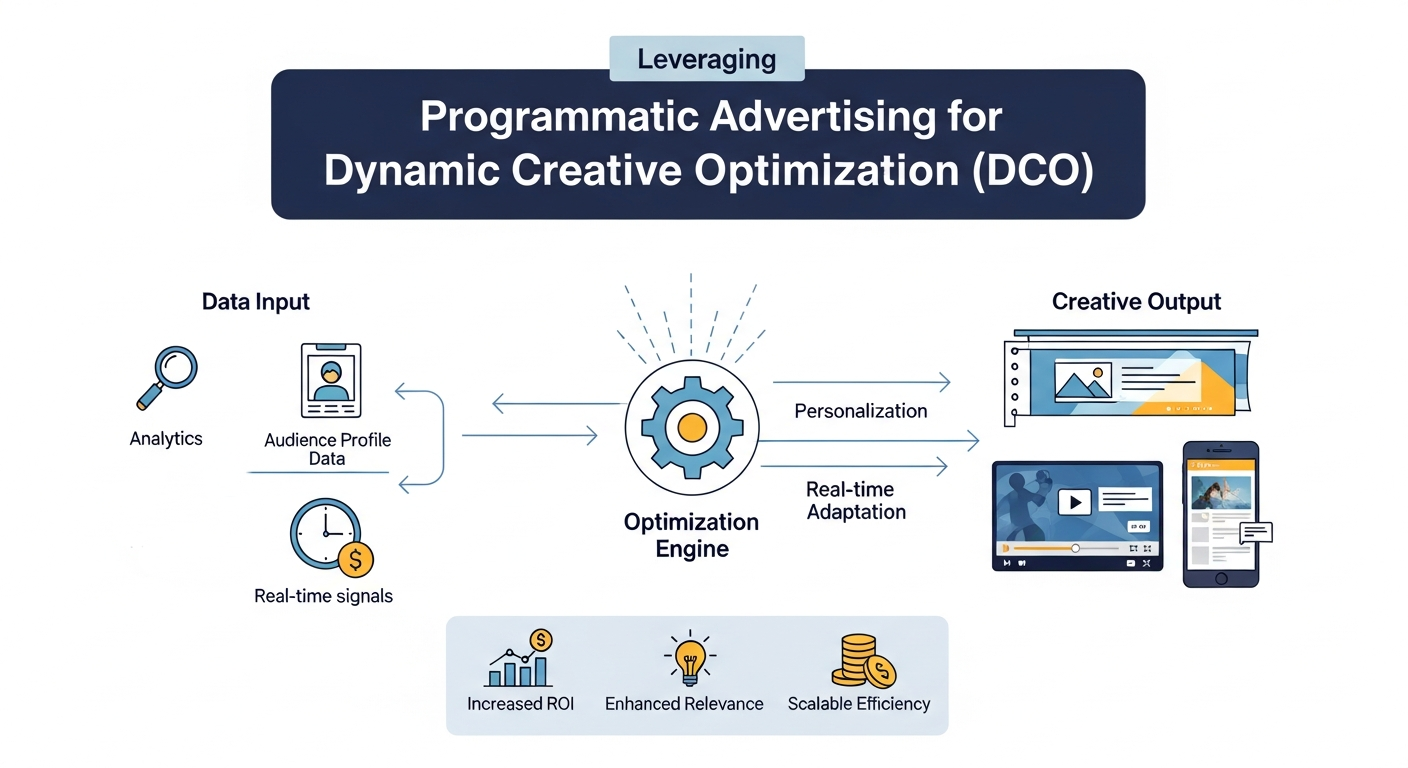
Dynamic Creative Optimization (DCO) is a growing trend in programmatic advertising that allows marketers to automatically tailor creative assets to individual users in real-time. By analyzing audience behavior, device type, location, and context, DCO ensures that the most relevant message is delivered to each viewer.
Benefits of DCO in Programmatic:
- Personalized Messaging: Customizes copy, images, or CTAs for each user segment.
- Higher Engagement Rates: Personalized ads typically outperform static ads in CTR and conversion.
- Efficient Campaign Management: Reduces the manual effort of producing multiple creative variations.
Key Implementation Strategies:
- Integrate AI-driven DCO platforms with programmatic campaigns.
- Use audience insights to create modular creatives that can dynamically adapt.
- Test variations continuously and let algorithms optimize performance automatically.
DCO Performance Metrics Comparison
| Metric | Static Ads | DCO Ads | Expected Improvement |
|---|---|---|---|
| Click-Through Rate (CTR) | 0.15% | 0.40% | +166% |
| Engagement Duration | 20 sec | 45 sec | +125% |
| Conversion Rate | 1.2% | 2.8% | +133% |
Programmatic Advertising and Sustainable Marketing Practices
Sustainability is becoming increasingly important for both consumers and brands. Programmatic advertising can support sustainability initiatives by reducing wasted impressions, lowering energy-intensive manual operations, and optimizing media spend for higher efficiency.
Why Sustainability Matters in Programmatic:
- Reduced Waste: Targeted campaigns minimize irrelevant ad placements, lowering resource consumption.
- Energy Efficiency: AI-powered automation reduces the human and computational overhead of managing campaigns manually.
- Consumer Trust: Eco-conscious audiences respond positively to brands demonstrating responsible marketing practices.
Implementation Tips for Sustainable Programmatic Campaigns:
- Prioritize high-quality, verified inventory to reduce wasted impressions.
- Optimize bidding strategies to avoid excessive ad-serving and energy consumption.
- Partner with DSPs and ad exchanges that provide transparent reporting and sustainability metrics.
Sustainability Comparison in Programmatic Campaigns
| Factor | Traditional Programmatic | Sustainable Programmatic |
|---|---|---|
| Wasted Impressions | High | Low |
| Manual Campaign Oversight | High energy use | Automated & efficient |
| Environmental Impact | Moderate-High | Reduced |
| Consumer Perception | Neutral | Positive |
How Businesses Can Prepare for the Future of Programmatic

Staying ahead requires more than just awareness of trends; it demands proactive adaptation. Here’s how you can prepare:
- Invest in AI and Data Analytics Tools
Equip your teams with the right tools that integrate AI and machine learning to enhance campaign performance.
- Focus on First-Party Data Collection
Build direct relationships with your customers to gather data ethically and compliantly.
- Test Emerging Channels
Experiment with programmatic options for connected TV, audio, and AR/VR to see what resonates with your target audience.
- Partner with Transparent Platforms
Work with ad tech companies that prioritize transparency and brand safety in their supply paths.
- Stay Educated
Digital advertising evolves rapidly. Keep your team trained on the latest programmatic technologies and regulatory changes.
Unveiling a Smarter Advertising Future
The future of programmatic advertising is not just about automation—it’s about creating intelligent, adaptive, and highly personalized ad experiences that resonate with consumers at every stage of their journey. With the integration of AI, machine learning, and advanced analytics, programmatic campaigns can predict user behavior, dynamically optimize creatives, and deliver ads that feel both relevant and timely. This means that every impression is purposeful, increasing engagement while reducing wasted spend.
Connected TV (CTV), programmatic audio, and immersive formats like AR/VR are transforming how brands reach audiences. These channels allow marketers to connect with consumers across multiple touchpoints, blending entertainment and advertising seamlessly. Coupled with privacy-first strategies and first-party data adoption, programmatic advertising is becoming a trustworthy, ethical, and measurable solution for modern marketing challenges.
For businesses, staying competitive requires more than adopting technology—it demands a strategic approach. Aligning programmatic campaigns with omnichannel strategies, continuously analyzing data, and leveraging dynamic creative optimization (DCO) ensure campaigns evolve with audience behavior. The future belongs to brands that can deliver highly relevant experiences at scale, respect consumer privacy, and demonstrate tangible ROI. By embracing these innovations today, organizations can redefine advertising success and create long-term value for both their business and their audience.
Frequently Asked Questions (FAQs) About Programmatic Advertising
1. What is Programmatic Advertising?
Programmatic advertising is the automated buying and selling of digital ad space using data-driven algorithms. It allows brands to deliver the right message to the right audience at the right time, across multiple platforms.
2. How does Programmatic Advertising work?
Programmatic advertising uses real-time bidding (RTB) or programmatic direct deals to place ads. Algorithms analyze user behavior, demographics, and contextual data to determine optimal ad placements, maximizing engagement and ROI.
3. What are the benefits of Programmatic Advertising?
Key benefits include:
- Precision targeting for relevant audiences
- Automation and efficiency in campaign management
- Scalable ad delivery across web, social, mobile, CTV, and apps
- Real-time optimization for better engagement
4. How is Programmatic Advertising different from traditional media buying?
Unlike traditional media buying, which relies on manual negotiations and fixed placements, programmatic advertising uses automated systems and real-time data to dynamically place ads. This reduces wasted spend and improves targeting accuracy.
5. Can Programmatic Advertising improve engagement?
Yes. Programmatic advertising for engagement leverages audience data to serve relevant, personalized ads, increasing click-through rates (CTR), dwell time, and conversions compared to static display ads.
6. What is Programmatic TV Advertising?
Programmatic TV advertising works by using automated systems to buy and serve ads on connected TV (CTV) platforms. Advertisers can target viewers based on demographics, interests, and viewing behavior, combining traditional TV reach with programmatic precision.
7. How does Programmatic Audio Advertising work?
Programmatic audio advertising delivers targeted ads through streaming audio platforms, podcasts, or radio apps. Ads are dynamically inserted based on listener behavior, location, or context, providing personalized and engaging audio experiences.
8. What is the difference between Programmatic Display Advertising and other programmatic formats?
Programmatic display advertising focuses on banners, native ads, or rich media across web and mobile platforms. Other programmatic formats include video, CTV, and audio, each optimized for its respective medium but using the same automated and data-driven approach.
9. Is Programmatic Advertising suitable for small businesses?
Yes. Digital programmatic advertising platforms allow small businesses to target specific audiences efficiently without large budgets. By using data-driven targeting, even limited campaigns can achieve measurable ROI.
10. How can businesses optimize Programmatic Advertising campaigns?
To optimize programmatic campaigns:
- Leverage audience segmentation and behavioral data
- Test multiple creatives using dynamic creative optimization (DCO)
- Monitor real-time performance and adjust bids
- Align programmatic ads with broader digital strategies, including SEO and multichannel campaigns
Want to learn how to set up real-time optimization for your campaigns? Check out Mastering Real Time Bidding in Programmatic Advertising