How Does Programmatic Advertising Difference From Traditional Advertising?
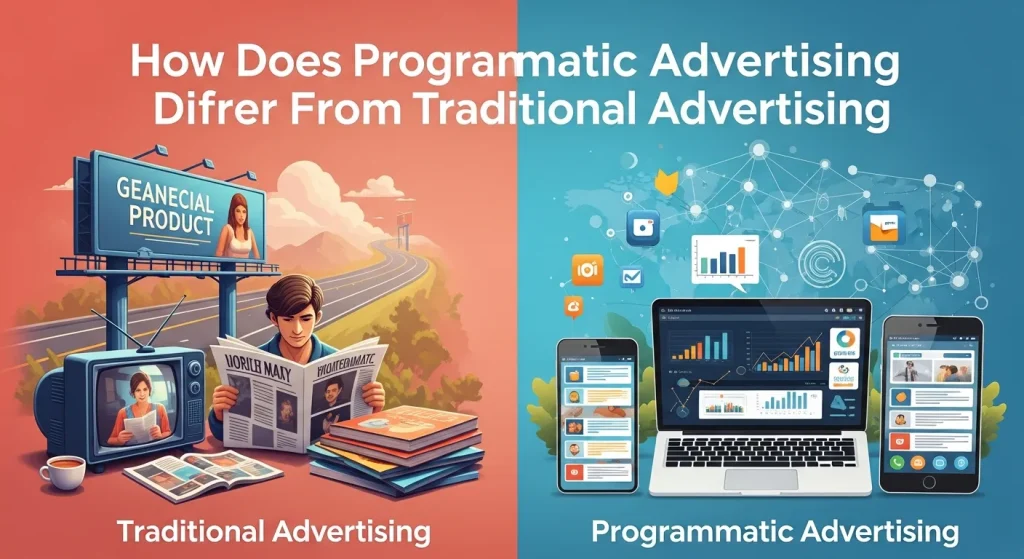
Programmatic advertising automates buying and targeting ads using data and algorithms, offering precision, efficiency, and real-time optimization, unlike traditional advertising, which relies on manual placement, fixed rates, and broader audience targeting.
Programmatic advertising and traditional advertising are terms that may sound familiar, whether you yourself are a seasoned marketer or someone trying to raise brand awareness and grow your business. Both are methods for bringing advertisements closer to consumers. But those messages can be heard, seen, and processed in numerous ways: bursting through the sound of a city’s rush hour traffic; rising from subway stations, magnifying its presence at every step or turn; aimed directly at you because it’s tailored just for your eyes and ears.
What Is Programmatic Advertising?
Automated technology enables both the purchase and sale of online ad space through programmatic advertising. This type of advertising, which is powered by real-time bidding (RTB) and artificial intelligence (AI, lets advertisers accurately target particular segments of people.
Instead of manual dealings or making bulk buys of ad space, advertisers resort to programmatic platforms such as Google Display & Video 360, The Trade Desk, or Amazon DSP. Such platforms use data to find the right people for an ad in the right place and at time–whether that is on websites, apps, streaming platforms, or even digital billboards.
How Does Programmatic Advertising Work?
Programmatic ads function through real-time bidding and data integration. Here’s a simplified explanation:
- User Visit: When someone visits a website or opens an app, their data (such as demographics or location) is shared via a Demand-Side Platform (DSP).
- Auction: Available ad spaces on the site or app are auctioned in real-time. Advertisers bid for that space based on how likely the user is to take action (e.g., make a purchase).
- Ad Delivery: The highest bid wins, and the ad is displayed instantly to that user.
The entire process happens within milliseconds and is tailored to deliver a personalized ad experience for the user.
What Is Traditional Advertising?
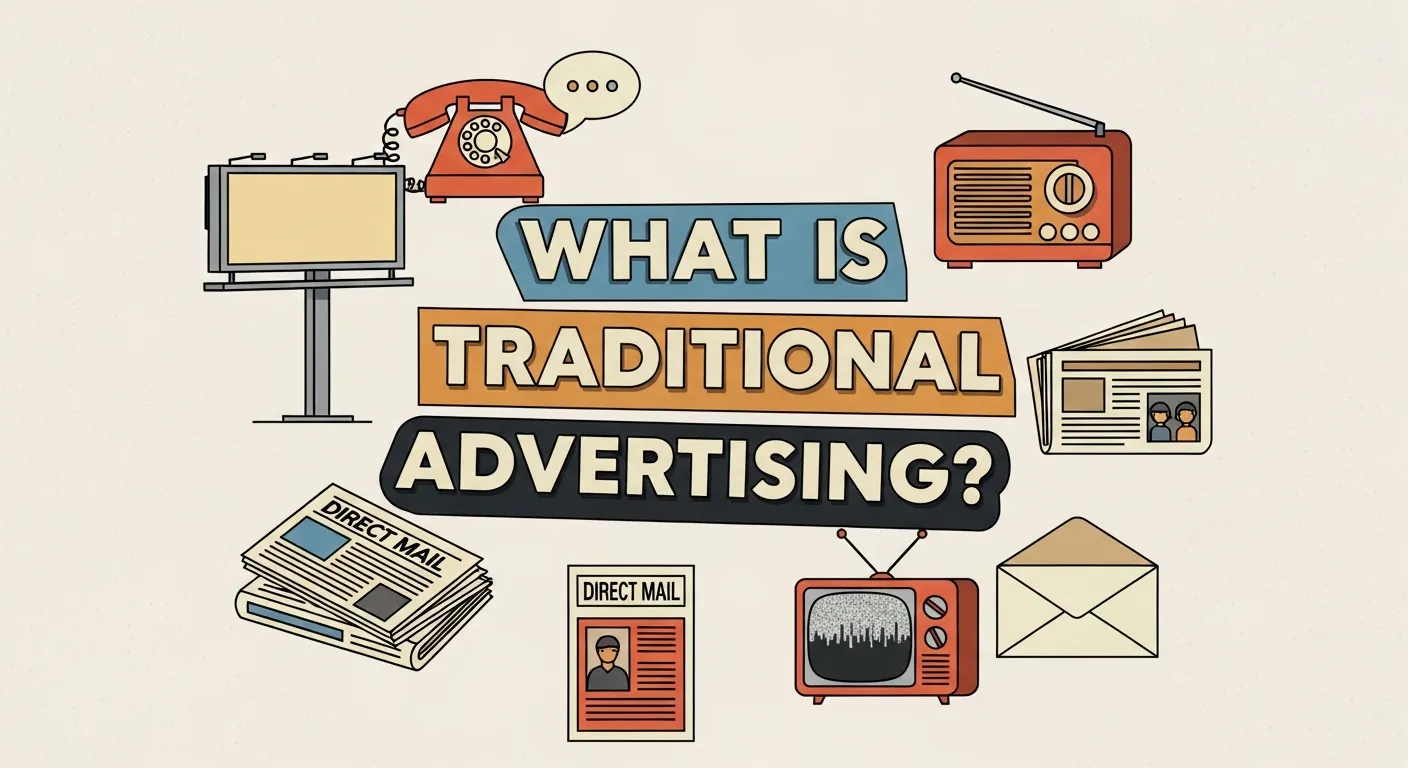
Traditional advertising involves non-digital and more static forms of marketing. This approach dates back decades and relies on tried-and-tested channels like:
- Television
- Radio
- Print media (newspapers and magazines)
- Billboards
Unlike programmatic advertising, traditional campaigns are planned, purchased, and executed manually. Advertisers work directly with publishers, media outlets, or agencies to reserve ad space. Typically, ad placements reach a broad audience rather than being hyper-targeted to specific individuals.
How Does Traditional Advertising Work?
Traditional advertising requires upfront planning and manual execution:
- Media Booking: An advertiser books a slot on a TV channel, radio station, or publishes an ad in a magazine or newspaper.
- Production: Advertisements are meticulously created to cater to the interests of the general audience.
- Broadcast: Ads are displayed in a fixed schedule (e.g., during a TV show or at a certain time in a radio program).
While traditional ads have a broad reach, they lack the nimbleness and granularity offered by programmatic ads.
Key Differences Between Programmatic and Traditional Advertising
To understand how these two methods compare, here’s a breakdown of their core differences.
1. Audience Targeting
- Programmatic Advertising: This method goes beyond basic demographic targeting. It uses data like browsing history, past purchases, geolocation, and interests to reach specific individuals. Rather than casting a wide net, programmatic ad campaigns hit precise targets most likely to convert.
- Traditional Advertising: Targeting is broad, with audiences segmented mostly via demographics or geography. For example, a TV ad during a prime-time show may reach millions, but there’s no guarantee it will resonate with individuals interested in the product.
2. Efficiency
- Programmatic Advertising: Its automated nature eliminates time-consuming negotiation processes. Ads are purchased and served in real time, making it highly efficient.
- Traditional Advertising: Time-consuming manual processes like negotiating ad placements and producing ads increase the workload, often requiring weeks or months of preparation before a campaign is live.
3. Cost
- Programmatic Advertising: Costs are more flexible because advertisers only pay for the impressions and audience they want. While highly effective, it’s important to keep an eye on budgets, as bidding wars can increase costs.
- Traditional Advertising: Television and print ads can be significantly more expensive, as their reach is broader and non-specific. Prices are fixed, meaning you’ll pay the same for an ad regardless of engagement.
4. Ad Measurement
- Programmatic Advertising: Clear, measurable insights are one of the big advantages. Advertisers gain real-time data on clicks, impressions, conversions, and ROI, allowing them to adjust strategies instantly for better performance.
- Traditional Advertising: Metrics like reach or brand awareness are harder to quantify precisely. Surveys and focus groups are often necessary to assess ad effectiveness, which increases costs.
5. Creative Flexibility
- Programmatic Advertising: Changes or optimizations to the campaign (like swapping out ad creatives, tweaking copy, or pausing underperforming ads) can be made instantly.
- Traditional Advertising: Once a TV commercial or print ad is live, adjusting its content or schedule isn’t feasible.
6. Channels
- Programmatic Advertising: Covers digital-first channels like social media platforms (Facebook, Instagram), apps, smart TVs, and even digital out-of-home (DOOH) advertising.
- Traditional Advertising: Focuses on conventional channels, such as TV, radio, billboards, and magazines.
Pros and Cons of Programmatic Advertising
Pros:
- Highly targeted campaigns ensure better efficiency.
- Real-time performance tracking.
- Easy scalability across multiple channels.
- Cost efficiency through optimized bidding.
Cons:
- Requires a learning curve or expertise in programmatic platforms.
- Relies heavily on quality data to avoid wasted ad spend.
- Ad-blocking software can hinder effectiveness in certain markets.
Pros and Cons of Traditional Advertising
Pros:
- Broad reach captures a diverse audience.
- Proven formats and channels with established success.
- Tangible, physical presence (e.g., print ads) that commands attention.
Cons:
- Higher costs and lack of targeting options.
- Difficult to measure ROI accurately.
- Longer lead times for planning and execution.
Which One Is Right for Your Business?

Choosing between programmatic and traditional advertising depends on multiple factors, such as your target audience, budget, and campaign goals.
- If your priority is to reach a specific audience with precise targeting and measurable results, programmatic advertising is the way to go.
- If you’re aiming to build broad brand awareness through trusted, traditional channels, then more conventional advertising methods may be suitable.
For many businesses, the ideal solution involves integrating both approaches. By running a mix of digital and traditional campaigns, you can maximize both reach and relevance.
Programmatic Advertising for Mobile and App Ecosystems
With mobile devices dominating user attention, programmatic advertising is increasingly being leveraged for app installs, engagement, and in-app monetization. Unlike traditional advertising that relies on broad campaigns, programmatic mobile advertising allows marketers to reach users precisely based on device type, OS, location, and app usage behavior.
Key Benefits:
- Targeted User Acquisition: Use data like app usage frequency, in-app purchases, and user behavior to drive high-quality installs.
- In-App Engagement: Dynamic ad placements can guide users toward completing specific actions, such as subscriptions or purchases.
- Cross-Device Tracking: Reach users across smartphones, tablets, and even connected TVs for cohesive campaigns.
Example Table – Mobile Programmatic Campaign Metrics:
| Metric | Programmatic Mobile | Traditional Mobile Ads |
|---|---|---|
| User Targeting | Device-level, app behavior, location | Broad demographics |
| Cost Efficiency | Pay-per-install or action | Fixed ad cost regardless of engagement |
| Optimization | Real-time adjustments based on performance | Static once deployed |
| Analytics | Detailed conversion tracking | Limited to downloads or basic impressions |
This section emphasizes the growing importance of programmatic strategies in mobile-first campaigns.
Programmatic Advertising in Video and OTT Platforms

Programmatic isn’t limited to websites or social media—it has transformed video and OTT (Over-The-Top) advertising. Unlike traditional TV campaigns that require high upfront costs and broad audience targeting, programmatic TV advertising work leverages real-time bidding, granular audience segmentation, and analytics.
Key Points:
- Audience-Level Targeting: Reach viewers based on interests, past viewing behavior, and demographic attributes.
- Dynamic Creative Optimization: Modify video content or overlays in real time to increase relevance and engagement.
- Cost and ROI Transparency: Measure metrics like completion rates, click-through rates, and conversions in near real time.
OTT Programmatic Advertising Workflow:
| Step | Description | Benefit |
|---|---|---|
| Audience Data Collection | Gather viewer demographics, interests, and viewing habits | Precision targeting |
| Real-Time Bidding | Bid on ad slots across OTT platforms | Cost-efficient ad placements |
| Ad Delivery | Serve personalized ads during streaming content | Higher engagement and retention |
| Analytics & Optimization | Track completion, clicks, and conversions | Continuous campaign improvement |
Including OTT and video programmatic advertising highlights advanced strategies for engagement beyond standard digital channels.
Programmatic Advertising for Brand Safety and Fraud Prevention
As programmatic campaigns scale, concerns about ad fraud, brand safety, and viewability arise. Unlike traditional advertising, programmatic platforms provide built-in solutions to minimize risks and maintain brand integrity.
Key Considerations:
- Fraud Detection: Programmatic platforms use AI to detect click fraud, bots, and suspicious traffic.
- Viewability and Verification: Ads are served only on verified websites and apps with a high likelihood of being seen by real users.
- Brand Safety Controls: Block placements on inappropriate or low-quality content, protecting reputation.
Comparison Table – Programmatic vs. Traditional Brand Safety:
| Feature | Programmatic Advertising | Traditional Advertising |
|---|---|---|
| Fraud Detection | AI-driven, real-time | Limited, manual checks |
| Placement Control | Automated content verification | Relies on publisher reputation |
| Viewability | Trackable, measurable | Often estimated |
| Brand Safety | Dynamic blocking and alerts | Fixed, cannot respond instantly |
This section demonstrates that programmatic advertising not only offers efficiency and targeting but also strengthens brand protection and campaign reliability.
Final Thoughts on Programmatic Advertising vs. Traditional Advertising
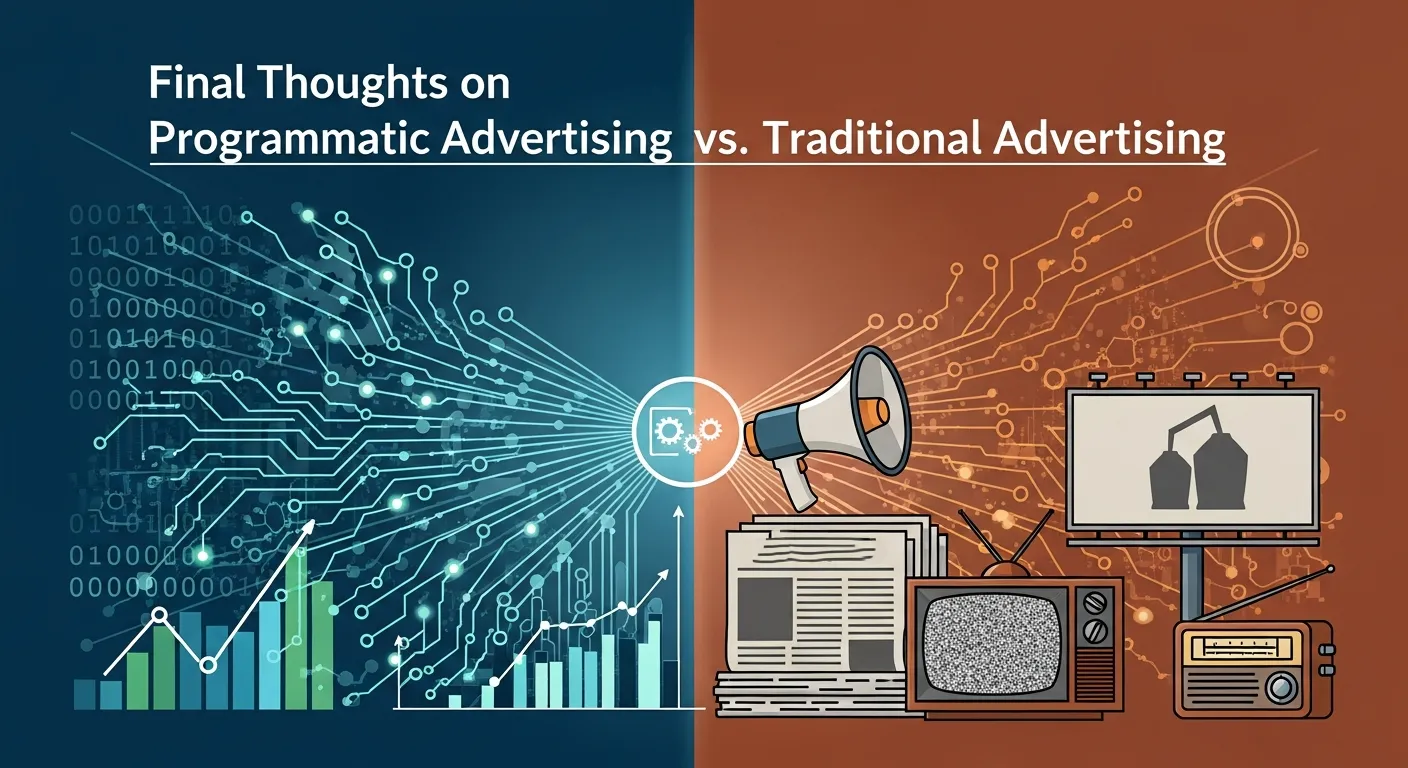
Both programmatic and traditional advertising continue to play important roles in a comprehensive marketing strategy. Traditional advertising provides a reliable, broad-reaching approach, ideal for building brand awareness across wide audiences through television, radio, print, or outdoor channels. However, as digital marketing evolves, the rise of programmatic buying vs. traditional media buying has shifted the landscape toward automated, data-driven strategies that deliver precision, efficiency, and measurable results.
With programmatic display advertising, advertisers can target users based on behavior, interests, and demographics, ensuring that ad spend is optimized for conversions rather than just impressions. Unlike traditional campaigns that require extensive planning, upfront budgeting, and manual media booking, programmatic campaigns leverage real-time bidding and AI-powered algorithms to deliver ads instantly to the right audience at the right time. This flexibility allows marketers to adjust creatives, targeting, and budgets on the fly—something almost impossible in traditional media.
Key Advantages of Programmatic Over Traditional Advertising:
- Precision Targeting: Reach highly specific audiences using data like browsing history, device type, location, and engagement patterns.
- Real-Time Optimization: Monitor performance metrics such as impressions, clicks, and conversions, and adjust campaigns instantly.
- Cost Efficiency: Pay only for relevant impressions or actions rather than broad reach, reducing wasted ad spend.
- Cross-Channel Integration: Connect campaigns across display, social media, video, mobile apps, and OTT platforms for cohesive messaging.
- Scalability: Easily scale campaigns globally or focus on niche segments with minimal manual intervention.
Despite these advantages, traditional advertising is not obsolete. It remains effective for brand storytelling, mass awareness campaigns, and markets where digital penetration is lower. Combining both approaches—using traditional advertising for broad visibility and programmatic campaigns for precise engagement—creates a hybrid strategy that maximizes reach, relevance, and ROI.
In today’s competitive landscape, marketers who embrace the balance between programmatic buying vs traditional media buying gain a significant advantage. By integrating programmatic display advertising with legacy media channels, brands can deliver personalized, timely, and impactful messaging, while still leveraging the credibility and familiarity of traditional media.
Ultimately, the choice between programmatic and traditional advertising is not about replacing one with the other but about strategically aligning campaigns with business objectives, audience behavior, and measurable outcomes. By adopting a blended, data-driven approach, businesses can ensure their marketing efforts are both effective and future-proof.
FAQs on Programmatic Advertising vs. Traditional Advertising
1. What is the difference between programmatic advertising and traditional advertising?
Programmatic advertising automates ad buying using AI, data, and real-time bidding, allowing precise targeting and optimization. Traditional advertising relies on manual placement, fixed costs, and broad audience targeting.
2. How does programmatic advertising work across digital channels?
It uses demand-side platforms (DSPs) to bid on ad inventory in real time, targeting users based on demographics, behavior, interests, and device type across web, mobile apps, CTV, and OTT platforms.
3. Can programmatic advertising improve engagement?
Yes, programmatic advertising for engagement allows personalized content, dynamic creative optimization, and audience-level targeting to drive higher interactions, clicks, and conversions compared to traditional ads.
4. What is CTV programmatic advertising?
CTV (Connected TV) programmatic advertising delivers ads on internet-connected TVs using real-time bidding. This allows precise targeting of audiences on streaming platforms rather than broad traditional TV audiences.
5. Is programmatic audio advertising effective?
Yes, programmatic audio advertising serves targeted audio ads on streaming music, podcasts, or radio apps. Advertisers can reach specific listener demographics, locations, and interests efficiently.
6. How do programmatic campaigns differ from traditional media buying?
Programmatic campaigns are automated, data-driven, and adjustable in real time. Traditional media buying is manual, requires upfront budgeting, and offers limited targeting or flexibility.
7. What are the cost advantages of programmatic advertising?
Programmatic allows pay-per-impression or pay-per-action models, reducing wasted ad spend. Costs are optimized through real-time bidding, unlike fixed pricing in traditional channels.
8. Can programmatic advertising support SEM strategy?
Yes, integrating a programmatic advertising SEM strategy helps target audiences more precisely, retarget search users, and optimize ad placements to complement search campaigns and increase ROI.
9. How do I measure the effectiveness of programmatic advertising?
Programmatic campaigns provide real-time metrics such as impressions, clicks, conversions, ROI, and viewability, making it easier to track performance than traditional advertising, which relies on surveys and estimates.
10. Should businesses combine programmatic and traditional advertising?
Yes, combining both allows a hybrid approach—using traditional advertising for broad awareness and programmatic advertising for precise targeting, engagement, and measurable ROI.
New to the concept of automated ad buying? Don’t miss our full breakdown on The Ultimate Guide to Programmatic Television Advertising