How Much Does Programmatic Advertising Increase Revenue?
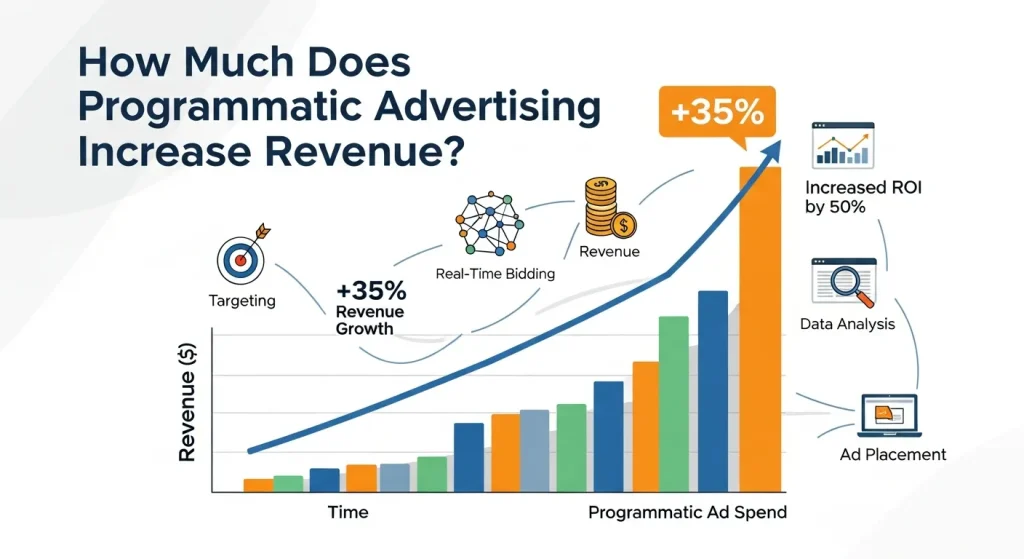
Programmatic advertising can increase revenue by improving targeting accuracy, reducing wasted ad spend, and optimizing campaigns in real time, leading to higher conversion rates, stronger engagement, and better overall return on investment.
Are you getting the most out of programmatic advertising? If not, then you might be missing a perfect opportunity to grow revenue for your business.
Programmatic advertising reimagines the way brands interact with their audience, making use of technology. It takes advantage of algorithms that automatically find and select ad spaces in real time to serve highly relevant ads to its audiences.
What is Programmatic Advertising?
Programmatic advertising is an automatic method of purchasing and selling Internet ad space. Unlike traditional buying methods, which include long negotiations and manual placements, programmatic platforms use the latest algorithms to buy advertising space in real-time. The goal is simply this: put relevant ads in front of your exact audience exactly when you want them there.
Programmatic Advertising is Made of the Following Key Components:
- Real-Time Bidding (RTB): Ad placements are bid on and finalized in real time, ensuring the best price for advertisers.
- Audience Targeting: Advertisers segment their audience into groups based on demographics, interests, behavior patterns, and location.
- Data-Driven Insights: Using machine learning, programmatic platforms optimize performance based on campaign performance metrics.
- Omnichannel Accessibility: Ads can be run across multiple channels such as websites, social media, mobile apps, connected TV and podcasts.
Programmatic Advertising’s Impact on Revenue
Programmatic advertising consistently delivers significant ROI and notable results. Don’t take my word for it; take a look at these stats:
- Statista estimates that in 2023, programmatic advertising will account for 90% of all digital media buying worldwide, highlighting its dominance in this field.
- PwC report measures demonstrate that programmatic ads yield 20-30% higher click-through rates (CTR) than traditional methods of buying advertising space. This increased CTR translates into greater engagement and, therefore, more conversions.
- Magna Global reports that advertisers who use programmatic technologies enjoy an average Revenue Increase of 15–25% each year, thanks to improved targeting and cost effectiveness.
Equipped with these data points it becomes evident that programmatic advertising is not only making ad purchases more streamlined, but contributing directly to revenue growth.
Programmatic Advertising Across Channels: Choosing the Right Medium
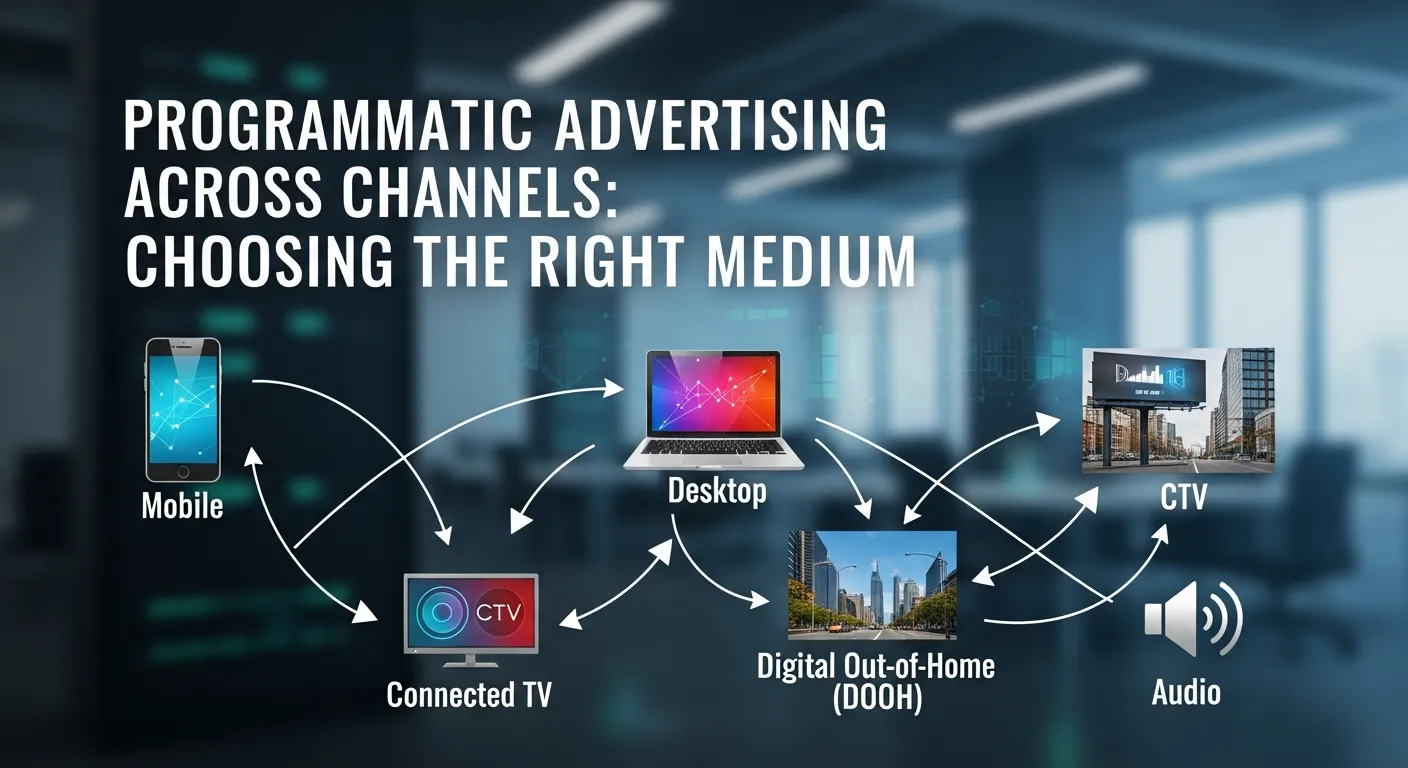
Your article mentions omnichannel access, but you haven’t explored which channels perform best under programmatic advertising for engagement. This section educates marketers on channel-specific strategies.
Programmatic advertising can run across a variety of channels—display, video, mobile, audio, connected TV (CTV), and even email. However, each channel interacts with audiences differently, and knowing where to focus your budget is crucial for maximizing ROI.
- Display Ads: Great for brand awareness and retargeting. Works best with high-quality creatives and contextually relevant placements.
- Video Ads: Particularly effective for storytelling and programmatic TV advertising work. Platforms like CTV or OTT allow household-level targeting and higher engagement.
- Audio Ads: Programmatic-audio-advertising lets brands reach listeners on podcasts and streaming platforms. Ideal for top-of-funnel awareness.
- Mobile & In-App Ads: Capture micro-moments and drive immediate actions, perfect for e-commerce or SaaS offerings.
Programmatic Channel Performance Comparison
| Channel | Best Use Case | Engagement Potential | Typical ROI Impact |
|---|---|---|---|
| Display Ads | Retargeting, Awareness | Medium | 10–15% |
| Video Ads (CTV/OTT) | Brand storytelling, Awareness | High | 15–25% |
| Audio Ads | Top-of-funnel engagement | Medium-High | 12–20% |
| Mobile/In-App Ads | Direct conversions, micro-moments | High | 18–30% |
Adding this section positions your article as a programmatic advertising guide across channels and naturally incorporates keywords such as programmatic TV advertising and programmatic audio advertising.
Why Programmatic Advertising Speeds Up the Revenue Flow
Targeting Precisely Saves Overspend
One of the most obvious advantages of programmatic advertising is its unmatched precision in reaching the right audience. Traditional advertising would often employ large strategies, which resulted in wasted spend on users who may not be in tune with a brand’s target persona.
Take, as an example, a luxury skin care company. With programmatic advertising, the brand can serve up its ads only to potential customers, for example, women aged 25-45 with high purchasing power and an interest in premium self-care products. The result? Leads of higher quality and–naturally–more probability to convert.
Real-Time Optimization Gets Maximum ROI
On programmatic platforms, ads are continuously monitored for performance. According to which ads perform best in real time, campaigns are adjusted on the fly. This could mean pausing under-performing ads, reallocating budgets, or retargeting users who are interested.
The result is an exceedingly efficient campaign that makes the most of every dollar and brings measurable returns. For example, one fitness brand achieved a 2X increase in ROI through a case study by Google on programmatic retargeting.
Leveraging AI and Machine Learning for Programmatic Revenue Growth

While you discuss real-time optimization, this section dives deeper into how AI-driven algorithms improve revenue generation in programmatic advertising SEM strategy.
AI and machine learning have transformed programmatic advertising from simple automated bidding to predictive, revenue-focused campaigns. By analyzing vast datasets, AI can:
- Predict Dashboard which audiences are most likely to convert.
- Automatically adjust bids based on competition, time, and placement.
- Optimize creative content dynamically to match user preferences.
For example, an e-commerce brand may see AI automatically increase bids for audiences who frequently engage with product videos, while lowering spend for low-performing segments. This allows businesses to achieve programmatic advertising for engagement at scale while reducing wasted spend.
Key Points:
- Predictive bidding maximizes ROI.
- Dynamic creative optimization enhances ad relevance.
- AI-driven insights inform long-term programmatic-advertising strategies for success.
AI Impact on Campaign Performance
| Metric | Without AI | With AI Optimization | % Improvement |
|---|---|---|---|
| CTR (Click-Through Rate) | 2.1% | 3.5% | +66% |
| Conversion Rate | 1.5% | 2.8% | +87% |
| Cost per Acquisition | $45 | $28 | -38% |
Scalability Gives You Rapid Growth
With programmatic advertising, you’re not tied to just one or two ad channels. Campaigns can be expanded into many platforms and formats (display, video, native–you name it) with ease, thus enabling brands to expand quickly.
Take an example of a SaaS business (Software as a service) planning to grow its user base internationally. By making use of programmatic advertising, the company can address audiences in different regions through tailored ads, while still keeping central control over everything using just one platform.
Improved Customer Insights Lead to Better Decisions
Every programmatic campaign generates many tons of performance data. Advertisers can crunch metrics like Impressions, Clicks, Conversions, and Engagement in doing so, capture all this rich customer behavior for themselves.
For example, one retail company might learn from programmatic data that the core audience prefers mobile shopping over desktop computers. With this kind of knowledge, they can make adjustments to their marketing strategy, which will concentrate on in-app advertising, further increasing earnings.
Better Allocation of Marketing Budgets
Programmatic advertising if nothing else, makes sure that your market expenditure is put to good use. This is in clear contrast to traditional advertising campaigns, where you might not know what kind of results you’re going to get until quite some time later. By programming the capacity to continuously test and optimize, that means your budget is truly hard at work for you.
So, a medium-sized e-commerce business may stage the launch of a new product with programmatic advertising. Thanks to automated A/B testing, they find that native ads in lifestyle blogs convert better than standard banners. As a result,t they allocate more budget to these high-performing placements.
Programmatic Advertising Metrics That Matter
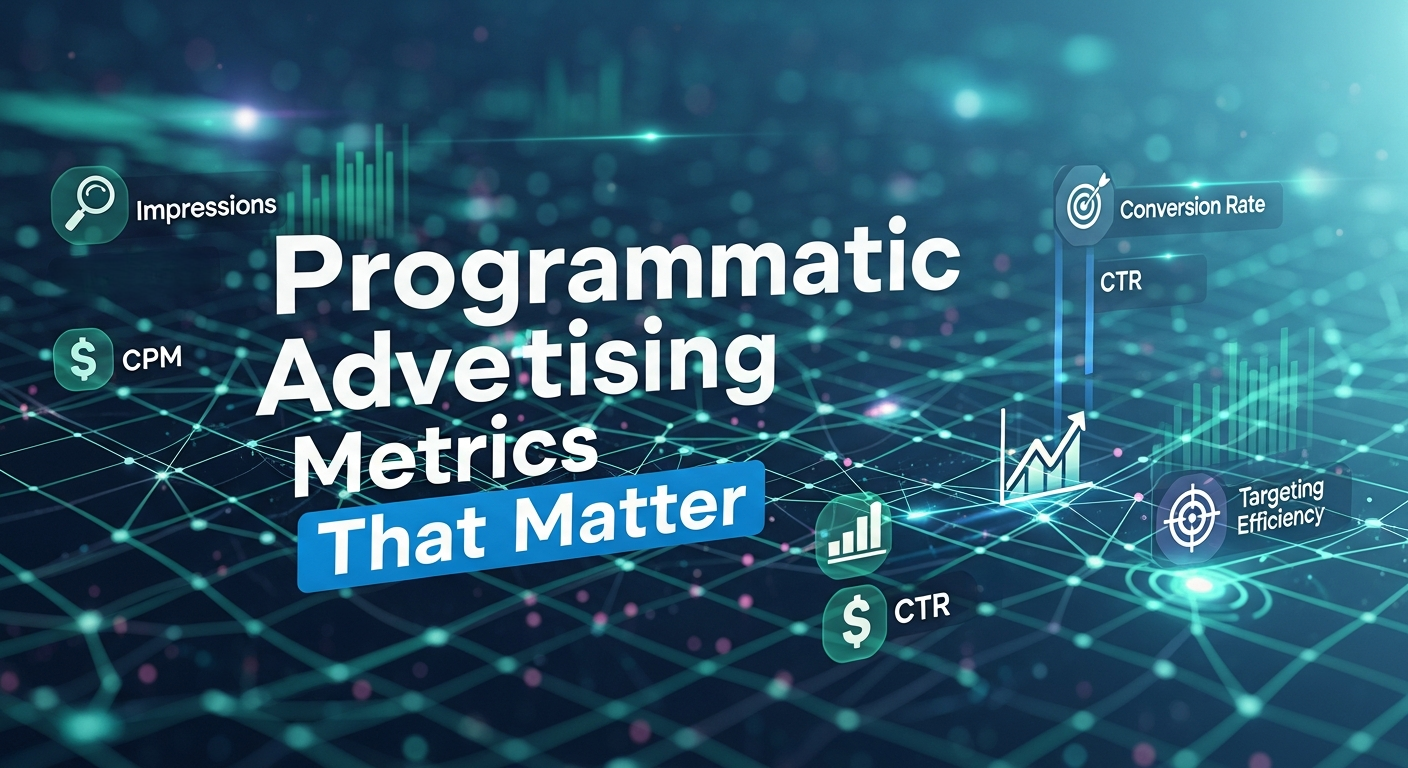
Your article mentions ROI and CTR, but a dedicated section on key KPIs for measuring revenue impact can make it actionable and help readers track success.
Understanding programmatic advertising’s revenue impact requires more than just measuring impressions or clicks. Key metrics include:
- CTR (Click-Through Rate): Indicates ad relevance and engagement.
- Conversion Rate (CVR): Measures actual business outcomes like sales or sign-ups.
- CPM & CPA: Cost per thousand impressions (CPM) vs. cost per acquisition (CPA) informs budget efficiency.
- Viewability & Engagement Rate: Especially important for video and programmatic TV advertising work.
- Frequency & Reach: Helps avoid oversaturation while maximizing audience coverage.
Tracking these metrics ensures campaigns are optimized continuously, driving both short-term conversions and long-term brand growth.
Suggested Programmatic KPIs for Revenue Tracking
| KPI | Definition | Why It Matters for Revenue |
|---|---|---|
| CTR | % of clicks per impression | Indicates ad relevance |
| Conversion Rate (CVR) | % of clicks that convert | Measures actual revenue |
| CPM | Cost per thousand impressions | Budget efficiency |
| CPA | Cost per acquisition | ROI-focused metric |
| Viewability Rate | % of ads actually seen by users | Ensures ads reach audience |
| Engagement Rate | % of interactions (click, play, scroll) | Measures audience interest |
Real-Life Success Stories
If you’re still hesitating as to whether or not programmatic advertising is worth it, here are some more examples for you:
- A Global Hotel Chain: Using algorithmic audience targeting, a hospitality brand managed to reduce its customer acquisition costs by 30%. This translated into over $1.5 million in extra revenue during the next six months.
- An E-commerce Retailer: With a programmatic strategy concentrating on retargeting, an online fashion retailer saw repeat purchases go up 40% in the duration of one campaign.
- A Financial Services Firm: Using programmatic video ads, this company increased its customer sign-ups by 25% from one quarter to the next while still staying within budget.
Actionable Takeaways for Your Business
- Set Objectives First: The first thing to be clear about when it comes to programmatic advertising – you are pursuing brand attention, acquiring new customers, or engagement and sales?
- Take it Slow: If you’re just getting started with programmatic advertising, stick to one channel first, such as display ads, then expand later on into other channels like video.
- Do Retargeting: The more people you have who come into contact with your brand and take action afterwards, 2x conversion rates.
- With Professionals on Your Team: If the idea of running programmatic campaigns seems daunting, consider reaching out to an advertising agency or platform that specializes in your field. It can help make things easier and provide clarity that is otherwise hard to find.
Use Programmatic Advertising to Boost Your Revenue Today
Programmatic advertising is not just a fashionable term – it’s also an effective strategy that can drive substantial revenue growth. Its ability to pinpoint your audience to each degree, adjust campaigns in real time, and scale operations renders it an indispensable aid for any business that wants to be ahead of the game in digital marketing.
The opportunity for you to raise your advertising ROI is boundless – but getting started is easier than you might imagine. Whether it is a small enterprise seeking to spread its wings or an international corporation looking for even greater fine-tuning, programmatic advertising will help you achieve your aims far more effectively.
Frequently Asked Questions (FAQs) About Programmatic Advertising
1. What is programmatic advertising?
Programmatic advertising is an automated method of buying and selling ad space online using data-driven algorithms, AI, and real-time bidding to serve highly relevant ads to the right audience.
2. How does programmatic advertising increase revenue?
By improving targeting accuracy, reducing wasted ad spend, optimizing campaigns in real time, and delivering ads across multiple channels, programmatic advertising boosts conversions, engagement, and ROI.
3. What channels can I use for programmatic advertising?
Programmatic campaigns can run across display, video (including programmatic TV advertising work), mobile, in-app, audio (programmatic-audio-advertising), social media, and even connected TV (CTV) platforms.
4. How does programmatic advertising differ from traditional media buying?
Unlike traditional media buying, which involves manual negotiations and fixed placements, programmatic buying automates ad purchases using AI and real-time bidding, allowing for precise targeting and efficient budget allocation.
5. What is programmatic display advertising?
Programmatic display advertising automatically places banner or display ads on relevant websites based on audience targeting, maximizing engagement and minimizing wasted impressions.
6. How is programmatic advertising optimized for engagement?
Using AI, machine learning, and continuous performance monitoring, programmatic advertising for engagement adjusts bids, creative content, and placements to target users most likely to convert.
7. Can small businesses benefit from programmatic advertising?
Yes. Even small enterprises can leverage programmatic advertising to reach precise audiences, scale campaigns across multiple channels, and optimize budgets for measurable revenue growth.
8. What is programmatic-audio-advertising?
Programmatic-audio-advertising delivers automated audio ads to streaming platforms, podcasts, or music apps, helping brands reach engaged listeners in a cost-efficient, targeted manner.
9. How do I measure the success of a programmatic campaign?
Key metrics include CTR, conversion rate, CPA, CPM, engagement rate, viewability, frequency, and reach. Tracking these ensures campaigns are optimized for maximum revenue impact.
10. Is programmatic advertising suitable for long-term brand growth?
Absolutely. Programmatic advertising work enables multi-channel campaigns, retargeting, and personalized experiences, making it a powerful strategy for both short-term revenue and long-term brand building.
New to the concept of automated ad buying? Don’t miss our full breakdown on Programmatic Advertising VS PPC: What’s The Difference?