How Does Programmatic TV Advertising Work?
Programmatic job advertising automates job ad placement using data and AI, targeting the right candidates across multiple platforms, optimizing budgets in real time, improving hiring efficiency, and enhancing recruitment outcomes.
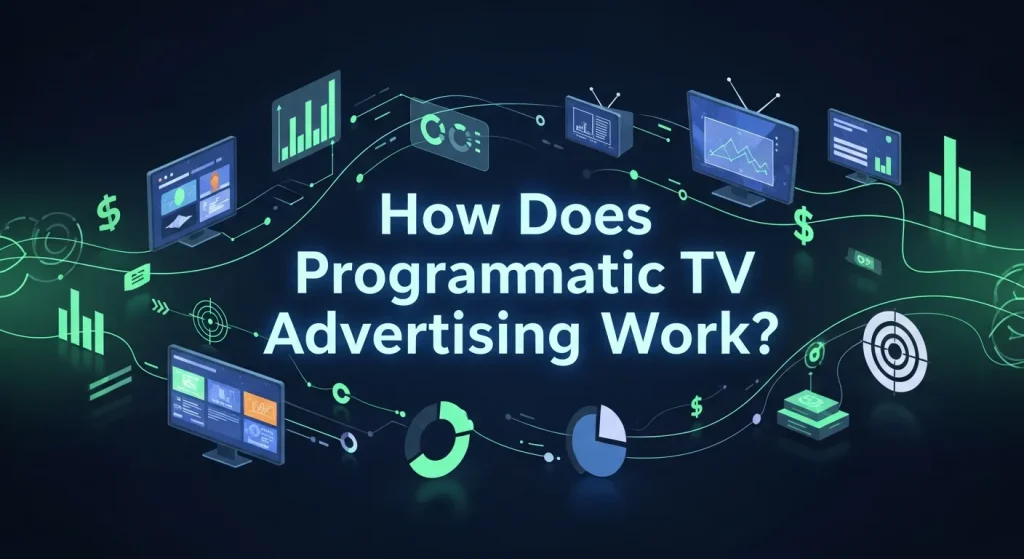
The media scenario undergoes a massive change and leads the programmatic TV advertising fee. With its ability to combine traditional TV access with data-driven accuracy of digital marketing, the programmatic TV quickly becomes one of the most powerful tools in an advertiser’s Arsenal.
What Is Programmatic TV Advertising?
In its core, programmatic TV advertising means buying and optimizing a TV advertising portfolio using automated technology and data. Unlike the methods for buying traditional ads, which often involve interactions on deals on the telephone or e-mail, use software to streamline the programmatic advertising process.
Programmatic TV makes it possible to target specific audiences across various platforms, including:
- Traditional linear TV
- Connected TVs (CTV) and streaming services
- Video-on-demand (VOD) platforms
Instead of broadcasting an ad to a common audience, programming TV advertisers allow zero on special demographics or behavior patterns, ensuring the right message when the right audience at the right time.
How Is Programmatic TV Different From Traditional TV Advertising?
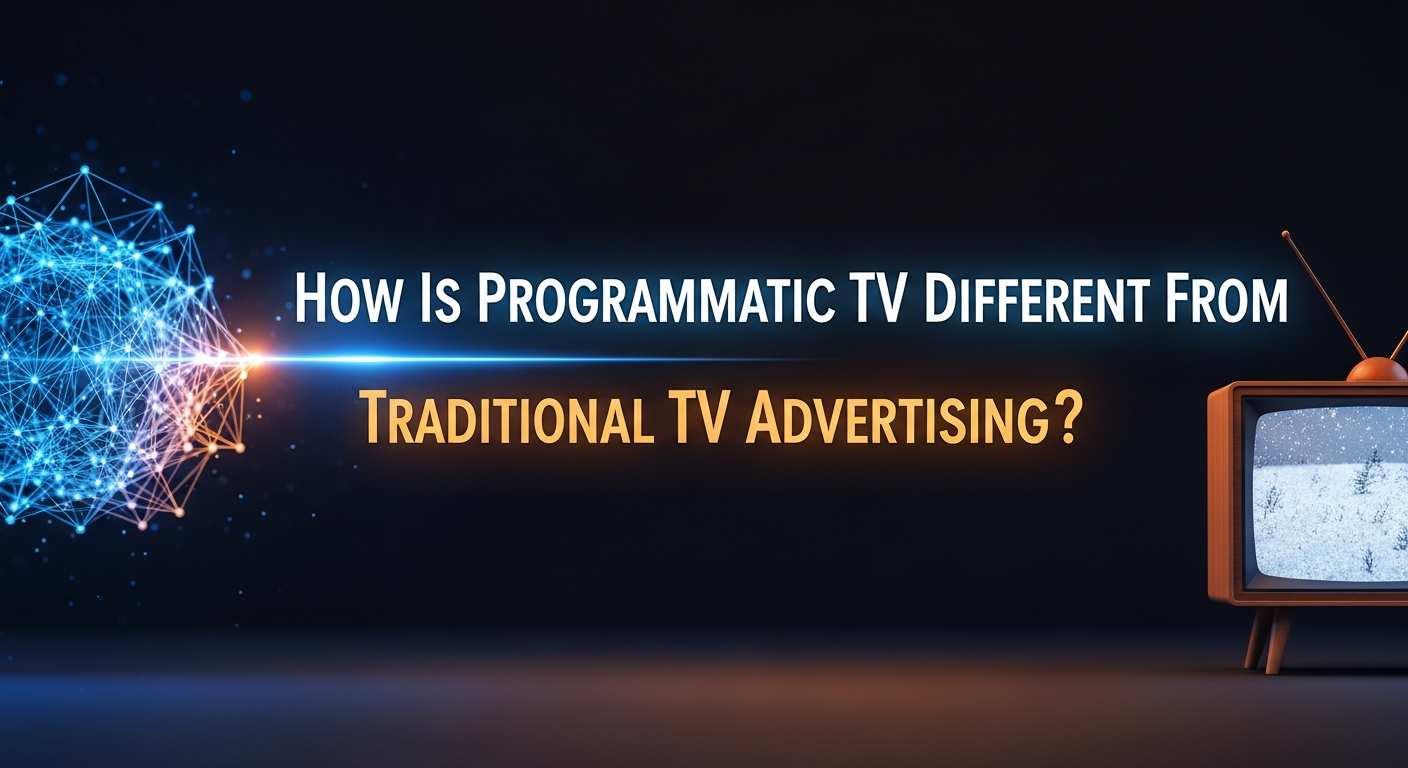
The primary difference lies in the data and technology. Traditional TV advertising often relies on broad demographic segments (e.g., “Women aged 25-34”) and manual processes. On the other hand, programmatic TV combines automation and real-time data to deliver highly personalized targeting and reporting.
For example:
- Traditional buying might involve booking a slot in a prime-time show to reach a wide audience.
- Programmatic buying uses data to target households likely to be interested in your product, even if they’re watching less traditional content, like a niche show on a streaming platform.
This data-driven approach enables advertisers to track effectiveness more accurately and make real-time adjustments to campaigns as needed.
How Programmatic TV Advertising Works
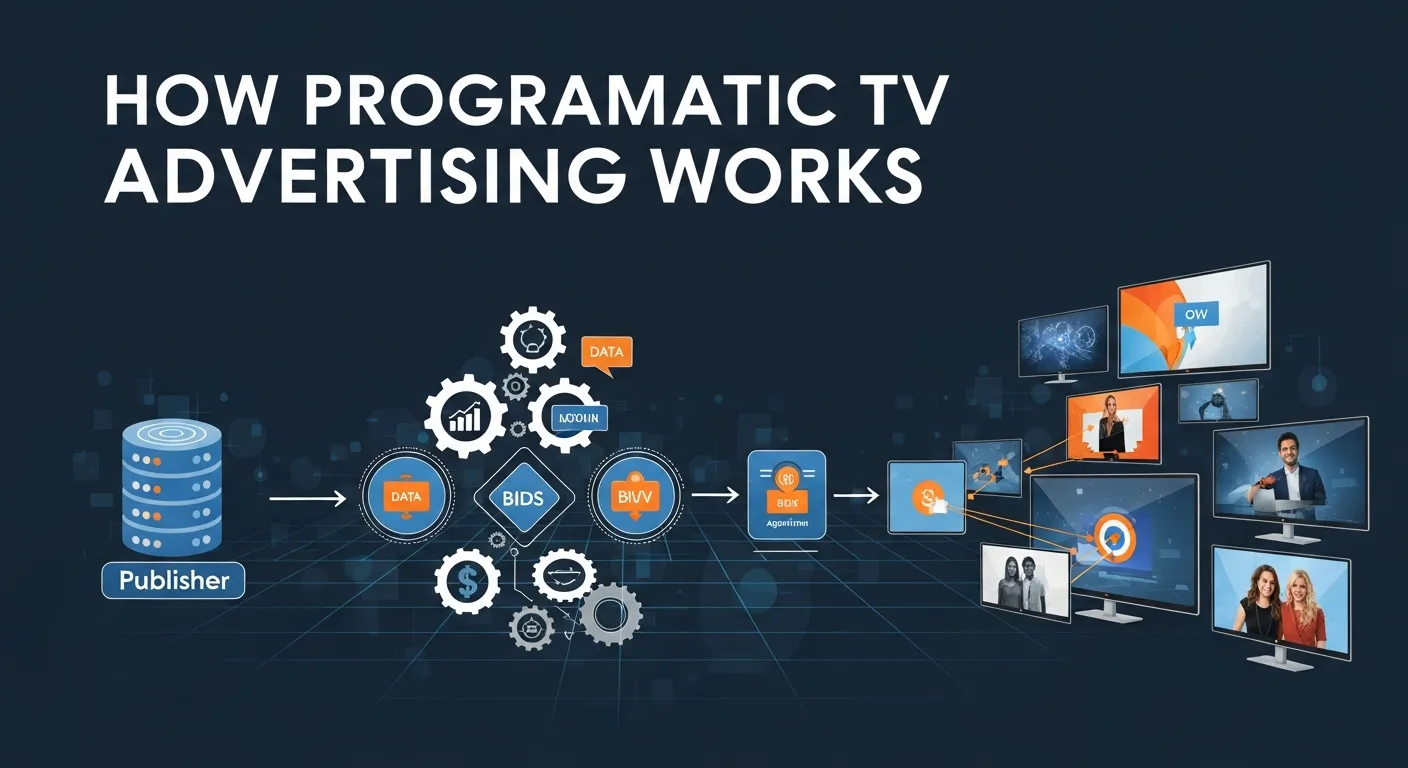
To grasp how programmatic TV advertising work functions, it’s essential to understand the process from start to finish. Here are the key steps:
1. Audience Identification
Before launching a campaign, advertisers first identify their target audience. This could involve:
- Building personas based on demographic information like age, gender, location, and income.
- Leveraging behavioral data, such as past purchases, browsing history, or content preferences.
- Utilizing customer relationship management (CRM) data or third-party data sets for even deeper insights.
A car company may want to target mid-income households researching new vehicles or families likely to purchase an SUV.
2. Access to TV Inventory
Advertisers gain access to available TV ad inventory through programmatic platforms. These platforms connect buyers (advertisers) with sellers (TV networks, connected TV platforms, and streaming providers), functioning much like a stock exchange for ad slots.
Some popular platforms for accessing programmatic TV inventory include:
- Demand-Side Platforms (DSPs): Where advertisers bid for ad inventory based on their target audience and campaign goals.
- Supply-Side Platforms (SSPs): Used by publishers or broadcasters to sell their ad slots.
- Ad Exchanges: Marketplaces where advertisers and publishers trade ad space in real time.
3. Automated Ad Buying
Once you’ve identified your audience and accessed a platform, the actual buying process begins. This relies on real-time bidding (RTB), where advertisers bid for impressions in milliseconds. Advertisers who bid the highest for a given audience segment win the placement.
For example:
An advertiser selling fitness gear might bid high for impressions targeting health-conscious individuals watching a fitness show on a streaming platform.
If their bid wins, their ad will be shown to that audience instantly.
4. Dynamic Ad Delivery
Once the ad is purchased, it’s delivered to the desired audience in real-time. Depending on the platform, this could be on a traditional TV channel, via a connected TV device like Roku or Apple TV, or through an on-demand service like Hulu.
Thanks to advanced data segmentation, these ads are tailored and personalized to ensure maximum relevance and engagement.
5. Performance Tracking & Optimization
One of the most significant benefits of programmatic TV advertising is its ability to measure performance. Advertisers receive detailed analytics on:
- Impressions delivered
- Viewer engagement
- Conversions (if applicable)
With these metrics, campaigns can be continuously optimized for better results, such as reallocating budget to high-performing segments or updating creatives to increase viewer response.
Types of Programmatic TV Advertising
There are a few distinct categories of programmatic TV advertising, and understanding them can help you select the right approach for your campaigns:
-
Programmatic Linear TV
This includes traditional TV content distributed on satellite or cable. Ads buy advertising tracks based on the profiles of the audience, similar to traditional methods, but the process is automated and supported by data. -
Addressable TV
Addressable TV allows advertisers to target specific households rather than delivering ads to all viewers of a particular channel. For instance, a car manufacturer can target households known to be interested in new cars, even if they’re all watching different shows. -
Connected TV (CTV)
CTV refers to ads delivered via internet-connected devices like smart TVs or services like Netflix and Amazon Prime. This format allows granular targeting and the ability to reach cord-cutters who no longer use traditional cable. -
Over-the-Top (OTT) Ads
OTT refers to streaming content delivered directly over the internet. Advertisers use programmatic technology to insert ads into popular streaming platforms, such as YouTube TV, Disney+, or Hulu.
Why Programmatic TV Advertising Is a Game-Changer
Programmatic TV advertising is transforming the way brands reach audiences by combining the broad reach of traditional television with the precision of digital marketing. Unlike conventional TV advertising, which often relies on broad demographic categories, programmatic TV leverages real-time data, automation, and analytics to deliver messages to the right audience at the right time. This approach not only increases engagement but also ensures that advertising budgets are spent more efficiently.
Key Advantages of Programmatic TV Advertising
- Precision Targeting:
Programmatic TV allows advertisers to target viewers down to the household or even individual level. By using data such as viewing habits, purchase history, and online behavior, campaigns reach only those audiences most likely to be interested in the product or service. This reduces wasted ad spend and increases the relevance of each impression.
Example: A fitness brand can target households that frequently watch health and wellness content instead of broadcasting ads to all viewers of a general network. - Improved ROI:
Detailed analytics track every aspect of a campaign, from impressions delivered to viewer engagement and conversions. Advertisers can monitor which creative works best, which time slots generate the highest response, and adjust campaigns in real time. This data-driven approach ensures higher return on investment and more effective allocation of ad budgets. - Flexibility and Scalability:
Programmatic TV campaigns can easily scale from hyper-local initiatives to national or even global campaigns. Advertisers can experiment with different creative formats, test messaging across segments, and adapt campaigns quickly without being constrained by the traditional long lead times of TV bookings. - Reach Cord-Cutters and Multi-Platform Audiences:
As traditional linear TV viewership declines, programmatic TV enables brands to reach audiences across connected TVs (CTV), streaming platforms, and over-the-top (OTT) services. This ensures that advertisers can engage viewers who have shifted away from cable or satellite TV, maintaining relevance in a fragmented media landscape.
Challenges in Programmatic TV Advertising
While programmatic TV offers significant advantages, it also comes with unique challenges that advertisers must navigate:
- Fragmentation:
The media ecosystem is highly fragmented, with multiple platforms, streaming services, and networks. Managing campaigns across these platforms requires sophisticated tools, coordination, and strategy to ensure consistency and avoid overlap or wasted impressions. - Data Privacy Concerns:
Programmatic TV relies heavily on audience data, raising concerns around privacy compliance and regulation (e.g., GDPR, CCPA). Advertisers must ensure that targeting practices are transparent and ethical, maintaining trust with viewers while leveraging insights for campaign optimization. - Cost Considerations:
Although programmatic advertising can be more efficient in the long term, the initial investment in platforms, technology, and high-quality audience data can be higher than traditional TV buying. Advertisers must weigh upfront costs against the benefits of precise targeting and measurable performance. - Complex Measurement:
Measuring cross-platform performance, comparing linear TV results to OTT or CTV outcomes, and understanding attribution can be complicated. Advertisers need robust analytics solutions to assess true ROI and optimize campaigns effectively.
Expanded Key Takeaways
- Programmatic TV combines the reach of traditional television with digital targeting for maximum efficiency.
- Real-time data allows advertisers to optimize campaigns continuously, increasing engagement and reducing waste.
- Despite higher upfront costs and complexity, programmatic TV delivers measurable results and improved ROI.
- Brands can reach diverse audiences, including cord-cutters, across multiple screens and devices.
- Advertisers must navigate fragmentation, privacy regulations, and measurement challenges to succe
Role of AI and Machine Learning in Programmatic TV Advertising
Paragraph:
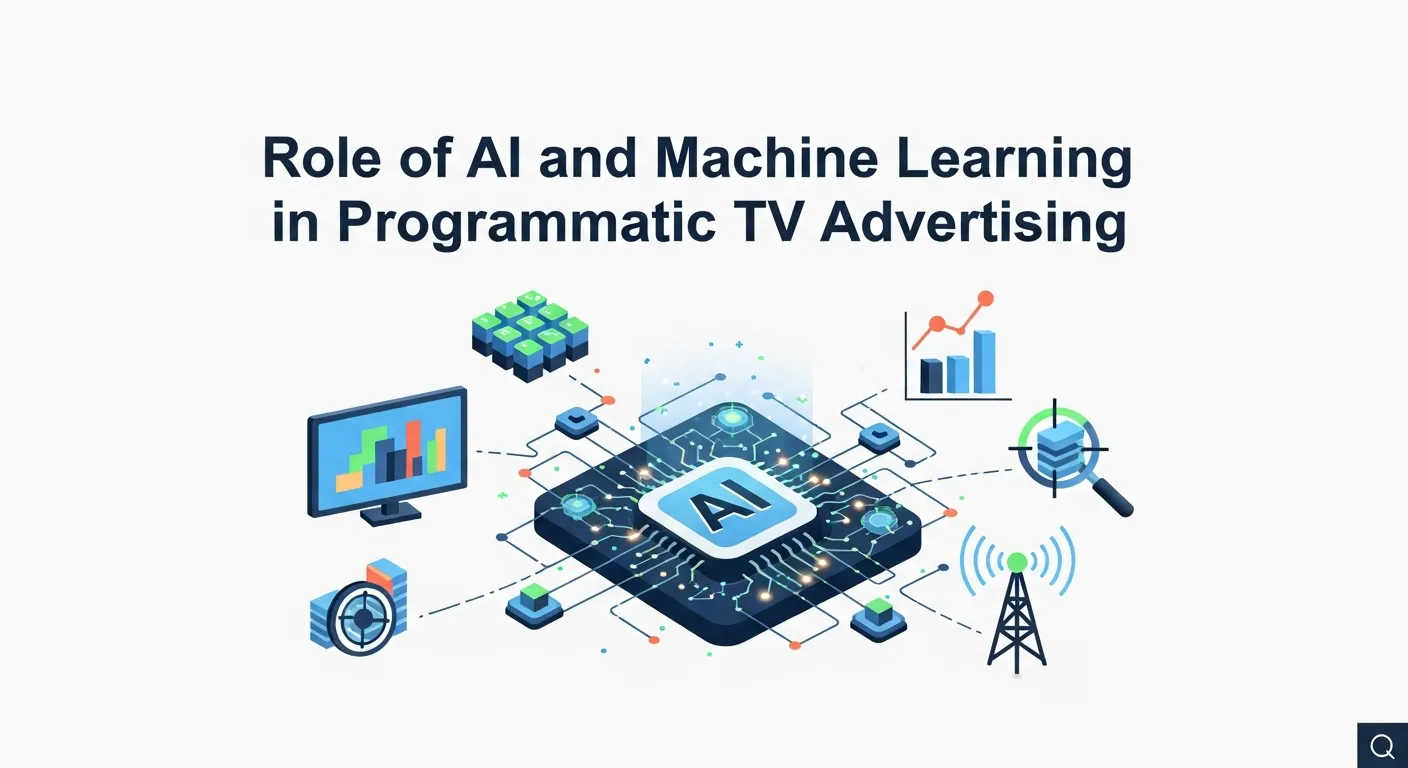
Artificial intelligence (AI) and machine learning (ML) are the engines behind programmatic TV advertising. They analyze massive datasets—from viewing habits to behavioral patterns—to predict which audiences are most likely to engage with your ads. ML algorithms continuously learn from campaign performance, optimizing ad placement, frequency, and creative content to maximize ROI. This means campaigns become smarter over time, improving precision targeting and reducing wasted ad spend.
Key Points:
- Predicts viewer behavior and content preferences
- Optimizes ad delivery in real-time based on engagement
- Learns which creatives perform best for specific audience segments
- Reduces guesswork in campaign planning
AI & ML Functions in Programmatic TV
| Function | Description | Benefit |
|---|---|---|
| Audience Prediction | Uses past data to forecast who will watch and engage | Higher relevance, fewer wasted impressions |
| Ad Optimization | Adjusts creatives, frequency, and placement automatically | Maximizes ROI |
| Real-Time Learning | Continuously analyzes campaign performance | Campaign improves over time |
| Content Personalization | Matches ads to viewer interests | Higher engagement and conversion rates |
Cost-Effectiveness and Budget Management in Programmatic TV
Paragraph:
While upfront costs may appear higher than traditional TV campaigns, programmatic TV allows advertisers to allocate budgets more efficiently. By using real-time bidding and performance analytics, marketers can invest in ad slots that deliver the highest engagement and avoid wasting money on low-performing impressions. Budget management tools also let advertisers pause underperforming segments or shift spending to audiences delivering the best ROI.
Key Points:
- Real-time bidding ensures cost-effective placements
- Budget reallocation based on performance improves ROI
- Eliminates wasteful spending on irrelevant audiences
- Enables flexible scaling from local to national campaigns
Budget Management Strategies in Programmatic TV
| Strategy | How It Works | Benefit |
|---|---|---|
| Real-Time Bidding | Ads compete in milliseconds for audience segments | Ensures highest ROI for each impression |
| Dynamic Budget Allocation | Moves spend to high-performing slots and platforms | Optimizes campaign effectiveness |
| Frequency Capping | Limits ad exposure per viewer | Prevents ad fatigue and wasted spend |
| Cost-Per-View (CPV) Monitoring | Tracks actual cost per engaged viewer | Helps stay within budget |
Future Trends in Programmatic TV Advertising
Paragraph:
The programmatic TV landscape is rapidly evolving. Emerging technologies, changing viewer habits, and cross-platform integrations are shaping the next generation of campaigns. Advertisers who stay ahead of these trends can leverage programmatic TV to deliver even more precise, interactive, and measurable advertising.
Key Points:
- Integration with AR/VR and interactive content for immersive campaigns
- Growth of addressable CTV and OTT platforms for micro-targeting
- Cross-device measurement to track audiences across TV, mobile, and desktop
- Predictive analytics to forecast future audience behavior and trends
Emerging Trends in Programmatic TV Advertising
| Trend | Description | Potential Impact |
|---|---|---|
| Interactive Ads | Ads allowing viewers to engage directly | Higher engagement and brand recall |
| Cross-Device Targeting | Tracks and serves ads across multiple screens | Better reach and conversion tracking |
| Predictive Analytics | Forecasts audience behavior and trends | Smarter campaign planning |
| AR/VR Integration | Immersive ad experiences through new tech | Unique brand experiences and higher engagement |
FAQ: Digital Programmatic Advertising
1. What is Digital Programmatic Advertising?
Digital Programmatic Advertising is the automated buying and selling of online ad space using AI and advanced algorithms. It enables brands to reach specific audiences efficiently across websites, apps, video platforms, and more.
2. How does programmatic advertising work?
Programmatic advertising works through a combination of Demand-Side Platforms (DSPs), Supply-Side Platforms (SSPs), Ad Exchanges, and Real-Time Bidding (RTB), which together automate ad placement in milliseconds.
3. What are the benefits of using Digital Programmatic Advertising?
Benefits include unmatched efficiency, precise audience targeting, cost optimization, flexibility to adjust campaigns in real-time, and scalable advertising across multiple channels.
4. What types of programmatic advertising exist?
Digital programmatic advertising includes display ads, video ads, programmatic TV advertising, programmatic audio advertising, native ads, and connected TV (CTV) ads for omnichannel reach.
5. How can programmatic advertising improve SEM campaigns?
By using programmatic advertising for SEM, marketers can automate bid management, target high-intent users, optimize ad copy in real time, and integrate cross-channel campaigns for higher conversions.
6. What role does analytics play in programmatic advertising?
Analytics in programmatic advertising track engagement, viewability, conversion attribution, and user behavior across devices. Predictive insights help optimize campaigns and prevent ad fraud.
7. What is programmatic advertising buying?
Programmatic advertising buying is the automated purchase of ad space in real time. Advertisers set targeting parameters, budgets, and goals, while AI places the ad in front of the most relevant audience.
8. Is programmatic advertising suitable for small businesses?
Yes. Even small businesses can use programmatic advertising advanced tools to target audiences efficiently, scale campaigns, and maximize ROI without extensive manual effort.
9. Are there challenges in using programmatic advertising?
Challenges include ad fraud, privacy compliance with regulations like GDPR and CCPA, and the learning curve to effectively use platforms and analytics for campaign optimization.
10. What is the future of Digital Programmatic Advertising?
The future involves increased AI-driven optimization, omnichannel programmatic campaigns, advanced programmatic advertising techniques, and growth in programmatic TV advertising and programmatic audio advertising to reach audiences wherever they engage.
Learn more…New to the concept of automated ad buying? Don’t miss our full breakdown on Mastering Real Time Bidding in Programmatic Advertising