The Role of Artificial Intelligence in Programmatic Advertising
Artificial Intelligence (AI) is shaping the future of numerous industries, and the world of advertising is no exception. Programmatic advertising, which automates the buying and placement of ads in real-time, has become a cornerstone of modern marketing strategies. But with the integration of AI, programmatic advertising is reaching new heights, transforming how advertisers connect with their audiences and optimize their campaigns.
This blog explores how AI enhances programmatic advertising, from precise audience targeting to real-time optimizations. Whether you’re an advertising professional, a marketer, or a business seeking to get ahead of the competition, you’ll learn how AI is revolutionizing the way ads are delivered, measured, and refined.
What Is Programmatic Advertising?
Before breaking down the impact of AI, let’s define programmatic advertising. At its core, programmatic advertising automates the buying, placement, and optimization of digital ad inventory through a digital exchange. Instead of human negotiations, this process uses advanced algorithms and real-time bidding (RTB) to manage ad space.
Why It Matters:
Programmatic advertising eliminates the tedious negotiating process that has traditionally slowed down ad placement. According to Statista, global spending on programmatic advertising rose to over $147 billion in 2021, and this number is projected to rise significantly as the technology evolves.
But as programmatic evolves, it faces challenges like ad fraud, irrelevant targeting, and poor personalization. Enter artificial intelligence.
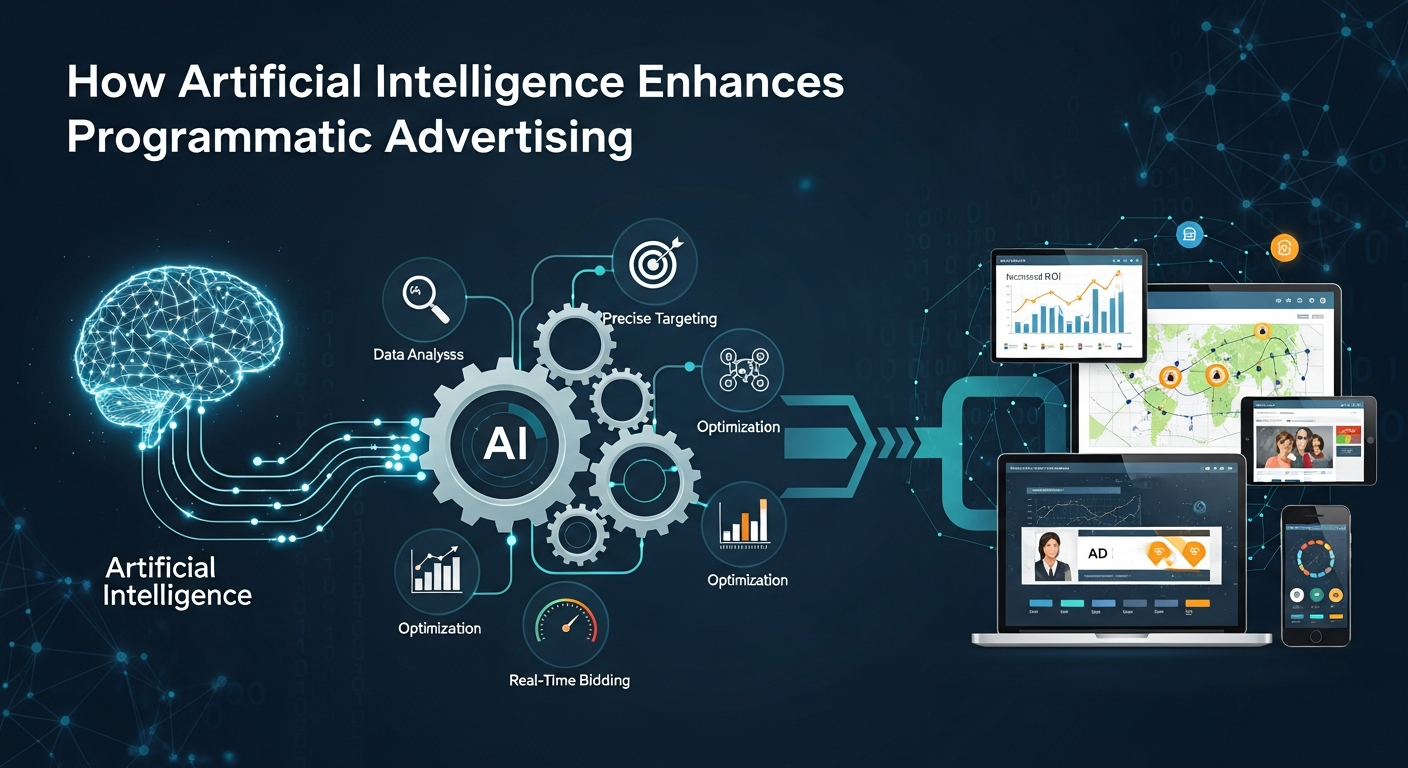
How Artificial Intelligence Enhances Programmatic Advertising
1. Advanced Audience Targeting
AI enables advertisers to go beyond basic demographic information by analyzing vast amounts of user data to create highly detailed audience segments.
AI systems can study behavioral data, browsing habits, and purchase patterns to predict user intent. This allows advertisers to deliver ads that anticipate customer needs and improve click-through rates.
Example Use Case:
A fitness brand could use AI to identify users who are not just searching for activewear but are likely to convert based on previous engagement, workout app usage, or social media behaviors. Ads are then delivered to these high-intent users, saving budget and maximizing ROI.
2. Dynamic Creative Optimization (DCO)
AI doesn’t just place ads; it helps create them. Dynamic Creative Optimization uses AI to tailor ad creatives to specific audiences in real-time.
Instead of using one-size-fits-all ads, AI personalizes visuals, messages, and calls-to-action based on a viewer’s preferences. For example, an ad might display summer vacation destinations to one audience and city getaways to another, based on browsing history or weather data.
Impact:
This ability to hyper-personalize ads leads to campaigns that feel relevant and engaging, increasing both conversions and user satisfaction.
3. Real-Time Campaign Optimizations
One of AI’s most powerful assets in programmatic advertising is its ability to analyze real-time performance data and adjust campaigns instantly.
Gone are the days when marketers had to wait for post-campaign reports to make optimizations. AI evaluates ad interactions, CTRs (Click-Through Rates), and engagement metrics in real time, reallocating budgets to high-performing channels or tweaking underperforming creatives on the fly.
Example:
Imagine running a campaign across multiple platforms like Google Ads, Facebook, and display networks. If AI detects that CTRs are higher on Facebook but lagging on display networks, it can automatically shift more budget to Facebook without requiring manual adjustments.
4. Mitigating Ad Fraud
Ad fraud continues to plague the advertising industry, with bots and fake traffic generating billions in wasted ad spend annually.
AI combats this problem by identifying invalid clicks and impressions, flagging fraudulent activity, and ensuring ad budgets aren’t wasted. AI-powered platforms analyze patterns and inconsistencies in traffic behavior, making it harder for fraudsters to game the system.
Fact:
According to the World Federation of Advertisers, AI-driven fraud detection systems can reduce ad fraud losses by up to 25%.
5. Enhanced Predictive Analytics
What if you could understand campaign outcomes before they even begin? Predictive analytics, powered by AI, processes historical data and applies machine learning algorithms to forecast future trends.
This enables advertisers to craft strategies that are data-driven and proactive. Instead of waiting to analyze what worked, predictive analytics helps advertisers get ahead, ensuring campaigns align with customer expectations and market conditions.
6. Cost Efficiency
By automating decisions and maximizing relevance, AI reduces wasted impressions and increases cost-efficiency. Campaigns are no longer dependent on trial-and-error; they thrive on data-driven decision-making, ensuring every ad dollar works harder.
A study by eMarketer confirms that AI-powered programmatic technology can reduce CPA (Cost Per Acquisition) by at least 30% when compared to traditional methods.
Benefits of AI-Powered Programmatic Advertising
To recap, here’s why AI is an indispensable force in programmatic advertising:
- Hyper-Personalization: Deliver unique, tailored experiences that resonate with every audience segment.
- Efficiency: Save time and reduce costs with automation and real-time optimizations.
- Accuracy: Avoid guesswork, thanks to AI’s data-driven audience insights and targeting capabilities.
- Fraud Protection: Keep ad budgets safe from bots and fraudulent clicks.
- Scalability: Whether you’re placing ads for a local store or a global company, AI scales efficiently without losing precision.
With these benefits, it’s easy to see why top advertisers are investing heavily in AI for programmatic campaigns.
AI in Cookieless Targeting and Privacy-First Programmatic Advertising
As third-party cookies phase out, privacy-first advertising is becoming essential. AI plays a critical role in helping programmatic advertising adapt to this new landscape. Instead of relying on invasive tracking, AI leverages contextual signals, first-party data, and probabilistic modeling to maintain relevance without compromising user privacy.
AI-powered contextual engines analyze page content, sentiment, keywords, and engagement signals in real time to serve highly relevant ads — without needing personal identifiers.
This shift marks a major evolution in understanding programmatic advertising in a privacy-compliant way.
Key Components of AI-Driven Cookieless Targeting:
- Contextual Intelligence: Matches ads to content themes and sentiment.
- First-Party Data Modeling: Uses owned customer data to build privacy-safe audience segments.
- Probabilistic Identity Graphs: Estimates user behavior patterns without storing personal data.
- Consent-Based Optimization: AI adapts targeting based on user consent signals.
AI-Powered Privacy Solutions in Programmatic Advertising
| Technology Type | How It Works | Privacy Compliance Level | Performance Impact |
|---|---|---|---|
| Contextual AI Targeting | Analyzes page meaning & sentiment | High | Stable CTR with lower risk |
| First-Party Data Modeling | Uses owned customer data | Very High | Strong retention & ROAS |
| Identity Graph Modeling | Predictive user clustering | Medium-High | Improved cross-device reach |
| Consent-Based Optimization | Adjusts delivery based on permissions | Very High | Trust-driven engagement |
Real-World Examples of AI in Advertising
Google Ads
Google leverages AI to automate bidding strategies, helping advertisers achieve maximum value across CPC or CPA campaigns. Its machine learning models also enhance search ad placements and keyword targeting.
Amazon DSP
Amazon’s Demand-Side Platform (DSP) uses AI to deliver highly targeted programmatic ads for e-commerce businesses. It learns from purchasing trends and user behavior to boost sales effectively.
The Trade Desk
One of the leading programmatic platforms, The Trade Desk relies heavily on AI for audience segmentation, creative optimization, and performance tracking at scale.
AI-Driven Attribution Modeling in Programmatic Advertising
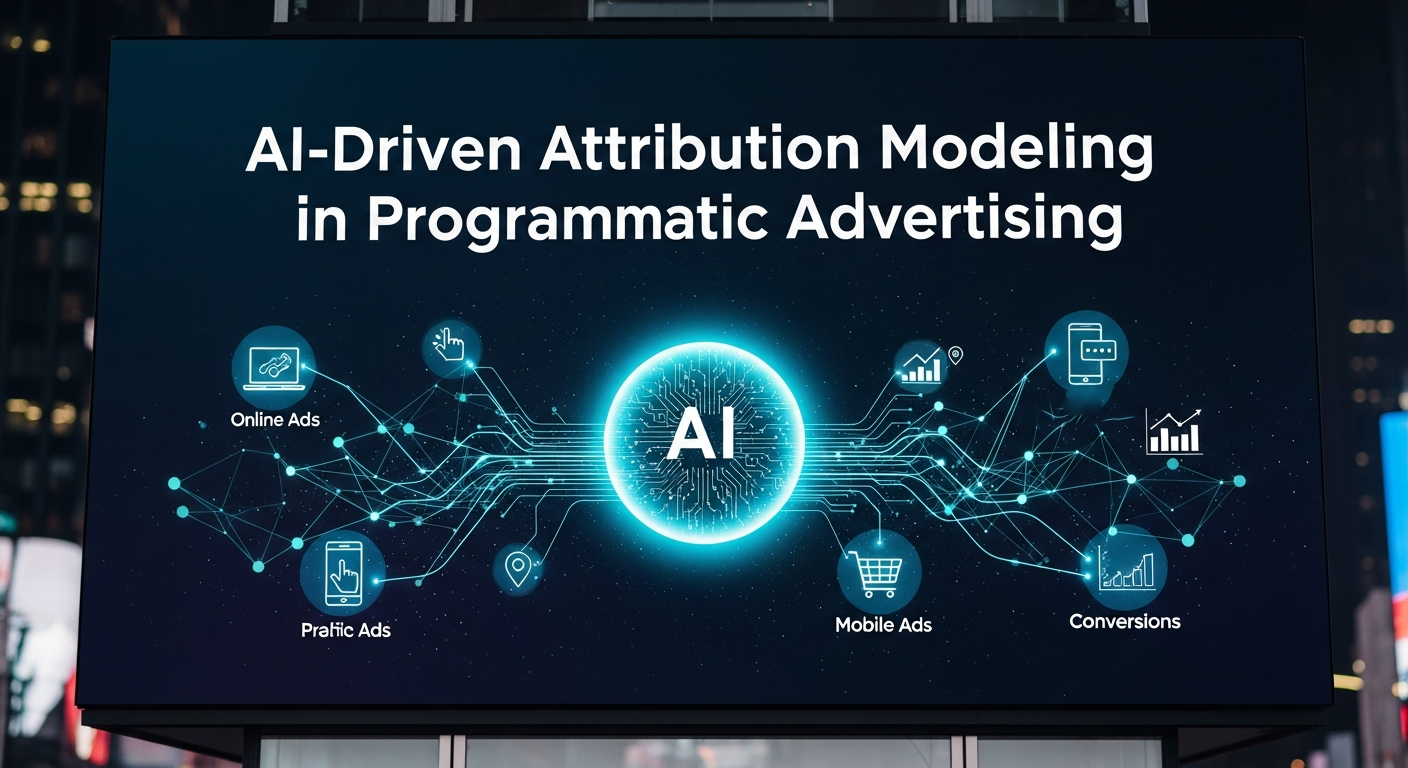
Most advertisers struggle with identifying which touchpoints truly drive conversions. AI improves attribution modeling by analyzing complex, multi-channel journeys in real time.
Instead of relying on last-click attribution, AI-powered programmatic advertising distributes credit across display, video, search, programmatic TV advertising work, and social touchpoints.
This creates more accurate budget allocation and improves long-term programmatic-advertising strategies for success.
Why AI-Based Attribution Matters:
- Multi-Touch Attribution (MTA): Identifies how each ad interaction contributes to conversions.
- Cross-Channel Intelligence: Connects search, display, TV, and social data.
- Incrementality Testing: Determines what would have happened without the ad exposure.
- Budget Optimization Modeling: Automatically reallocates spend to high-impact channels.
Table: Attribution Models Compared
| Attribution Model | How Credit Is Assigned | Accuracy Level | Best For |
|---|---|---|---|
| Last Click | 100% to final touchpoint | Low | Short sales cycles |
| First Click | 100% to first interaction | Low | Awareness campaigns |
| Linear | Equal credit to all touches | Medium | Balanced strategy |
| AI Multi-Touch | Weighted credit using ML | High | Full-funnel programmatic advertising |
AI-Powered Programmatic Advertising for Customer Lifetime Value (CLV)
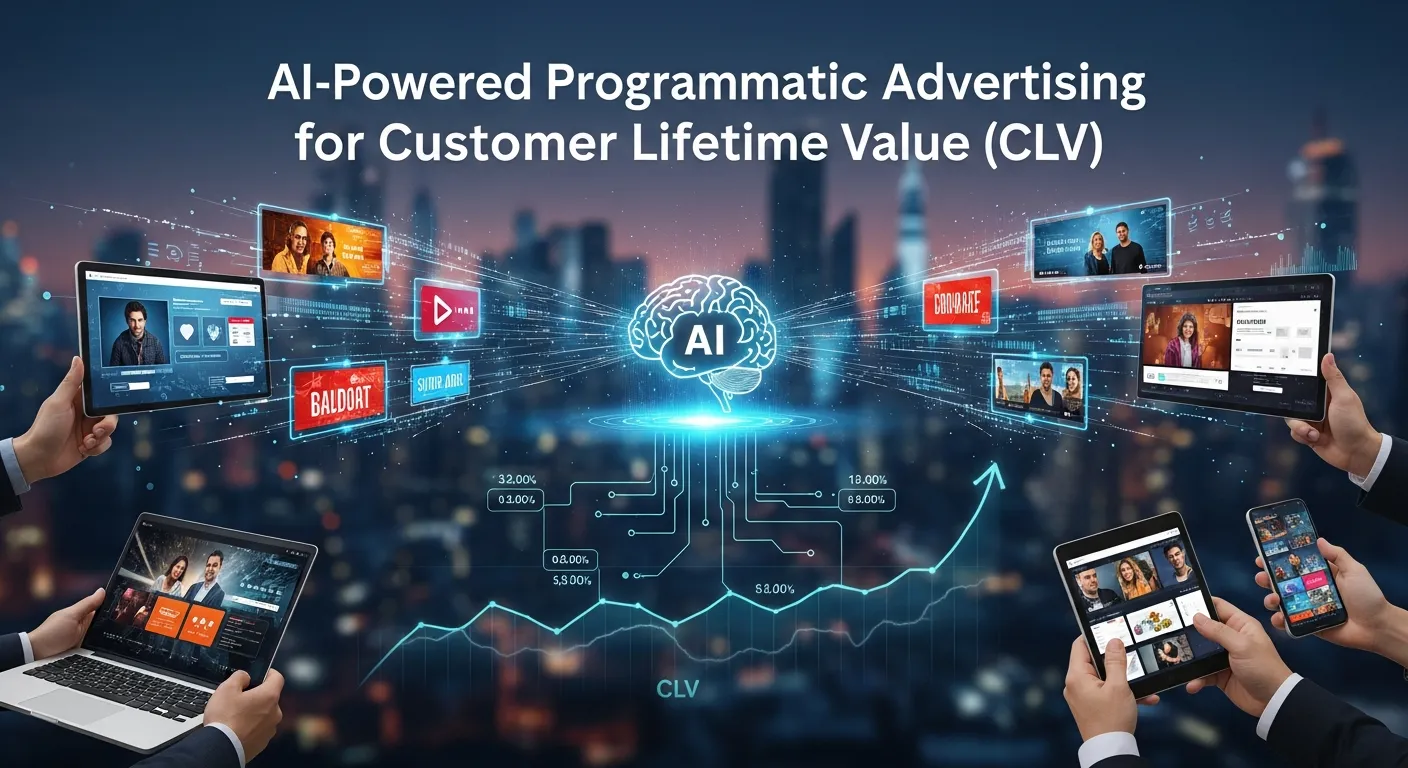
While many campaigns focus on immediate conversions, AI enables programmatic advertising for engagement and long-term profitability by optimizing for Customer Lifetime Value (CLV).
Instead of targeting users most likely to click, AI identifies users most likely to become repeat buyers, subscribers, or brand advocates. This transforms programmatic advertising from a short-term acquisition tool into a long-term revenue engine.
How AI Optimizes for CLV:
- High-Value Audience Prediction: Identifies customers with strong repeat purchase probability.
- Retention-Based Bidding: Bids higher for users likely to generate long-term value.
- Personalized Sequential Messaging: Serves ads based on purchase stage.
- Churn Risk Detection: Identifies users likely to disengage.
Short-Term vs CLV-Focused Programmatic Strategy
| Strategy Type | Focus Metric | ROI Horizon | Business Impact |
|---|---|---|---|
| Conversion-Based | Immediate CPA | Short-term | Fast revenue spikes |
| Click-Based | CTR | Very short-term | Traffic growth |
| CLV-Based AI Strategy | Lifetime revenue | Long-term | Sustainable growth |
| Retention Optimization | Repeat purchase rate | Medium-long term | Higher profit margins |
Actionable Advice for Businesses Considering AI
If your business hasn’t yet tapped into the potential of AI-driven programmatic advertising, consider these steps to get started:
- Define Goals: Be clear on what you want from an AI-powered advertising campaign (e.g., better ROI, improved targeting).
- Choose the Right Platform: Evaluate solutions like Google Ads, Amazon DSP, or The Trade Desk to find a tool that fits your needs.
- Leverage Expertise: Partner with agencies or consultants who specialize in programmatic advertising to ensure proper setup and execution.
- Monitor Results: Stay actively involved by reviewing campaign metrics regularly to ensure they align with business objectives.
Programmatic Advertising Meets the Future with AI
Artificial intelligence has undoubtedly advanced programmatic advertising beyond simple automation. From hyper-relevant targeting to fraud prevention and dynamic campaign optimization, AI empowers businesses to grow their impact in an increasingly competitive digital landscape.
If you’re ready to elevate your advertising strategy, now is the perfect time to explore AI-driven solutions. By integrating AI into your campaigns, you can stay ahead of the curve, maximizing both creativity and efficiency.
Your next successful campaign could be one click away. Are you ready to transform your advertising results with AI?