Understanding Programmatic Buying Advertising & How It Works
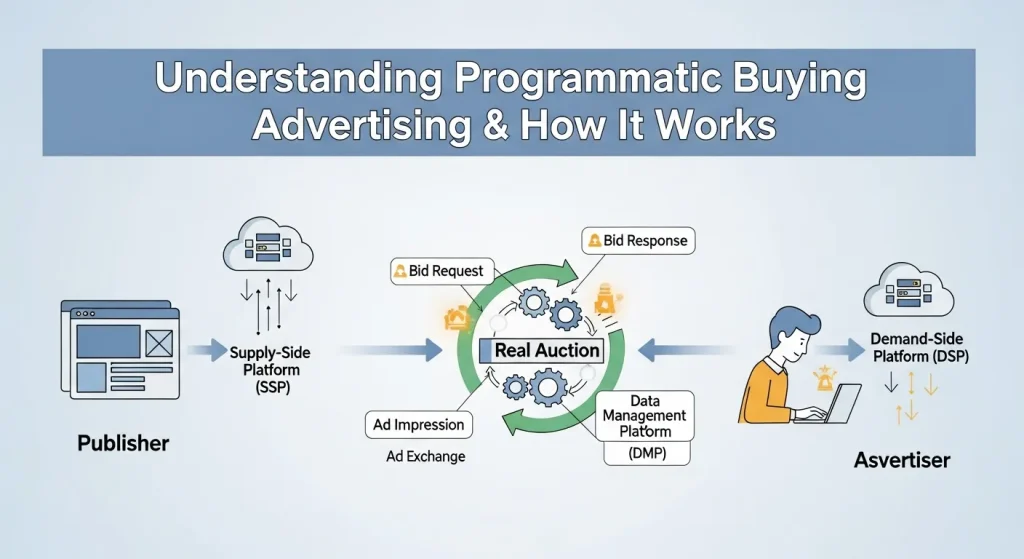
Programmatic buying is the automated purchase of digital ads using software and data. It targets specific audiences in real-time, optimizing ad placement, cost, and performance efficiently across platforms.
Programmatic buying advertising is a term that dominates conversations in this world of rapidly evolving digital advertising. If you don’t know this, or have seen the hype about programmatic buying advertising but don’t quite know what it involves or how to use it, let me tell you now.
What is Programmatic Buying Advertising?
Advertising for programmatic buying is fundamentally the automation of digital media buys. Using artificial intelligence and data, it replaces human negotiation, with a brand only needing to input their own information once they’ve created an account
No longer do advertisers have to call ad networks and ask for ad placements one by one. All this programmatic technology handling advertising work is done in real-time.
For example, advertisements may be sold off through an auction at Real-Time Bidding (RTB). Advertisers bid on available ad space during this process.
Programmatic buying ads covers various ad types, including display ads, video ads, and even outdoor digital signage. The precision and efficiency of programmatic systems make them an attractive option for marketers looking for tightly targeted and economically feasible campaigns.
Key Players in Programmatic Buying
To understand programmatic buying advertising better, it’s crucial to familiarize yourself with those involved:
- Demand-Side Platforms (DSPs): Tools that help advertisers purchase ad space across multiple publishers.
- Supply-Side Platforms (SSPs): Tools that assist publishers in selling their available ad inventory.
- Ad Exchanges: Digital marketplaces where SSPs and DSPs connect to execute ad transactions.
- Data Management Platforms (DMPs): These platforms collect and analyze user data to enhance audience targeting.
Together, these components operate seamlessly to automate advertising transactions and deliver ads to the right audience at the right time.
How Programmatic Buying Advertising Works
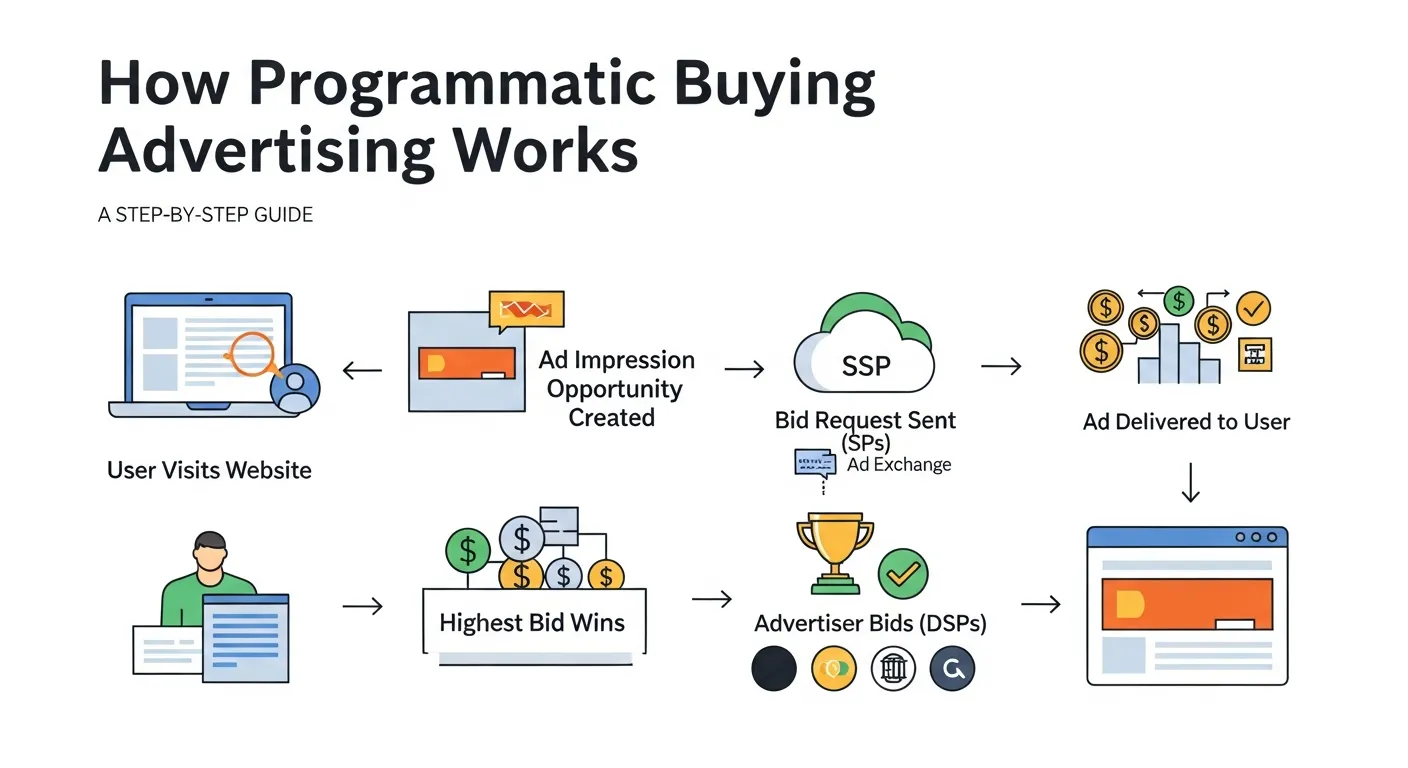
The process of programmatic buying might seem complex, but it can be boiled down to three key steps:
Step 1: Access User Data
Advertisers utilize first-party, second-party, and third-party data to identify their target audience. First-party data might include information the company already collects on its customers, while third-party data gathers external insights to expand the targeting scope.
Step 2: Set Campaign Parameters
Before launching a campaign, advertisers define their goals, such as the target audience (based on demographics, behaviors, etc.), desired platforms, and budget. These parameters are set within the DSP.
Step 3: Real-Time Auction
When a user visits a web page, the website’s SSP offers the ad inventory for auction in an ad exchange. DSPs evaluate this opportunity, considering whether the user matches the targeted audience, and submit bids in real time. The winning ad is then displayed to the user almost instantaneously.
This automated and real-time process ensures that every impression is optimized for the right audience, maximizing the impact of the campaign.
Why Choose Programmatic Buying Advertising?
Programmatic buying of advertising has revolutionized the way businesses reach their target audiences. Here are some key benefits:
Precision Targeting
With programmatic advertising, you can target audiences with laser-sharp precision. Filters like location, behavior, interests, and demographic details ensure your ads reach users most likely to convert.
Cost Efficiency
The ability to bid for ad space automatically and in real-time allows marketers to work within their budgets effectively. Campaigns are optimized to spend on impressions likely to drive results.
Unparalleled Scale
Programmatic buying offers access to millions of websites, apps, and devices. Whether you’d like to focus on a global audience or a hyper-local campaign, programmatic makes it possible.
Real-Time Optimization
Programmatic platforms provide immediate feedback on campaign performance. This allows marketers to adjust targeting, creatives, or bidding strategies in real time, ensuring consistent improvement in ad effectiveness.
Time Savings
Gone are the days of manual negotiations for ad placements. Programmatic buying eliminates lengthy admin processes, freeing up time for strategic planning and creative ideas.
Advanced Analytics
Programmatic platforms often come with robust analytics. Insights like CTR, ROI, impressions, and audience behavior allow advertisers to evaluate and improve campaigns with actionable data.
Pro tip: These benefits make programmatic advertising especially appealing for performance-driven industries, such as e-commerce, travel, and technology.
Advanced Programmatic-Advertising Strategies for Success
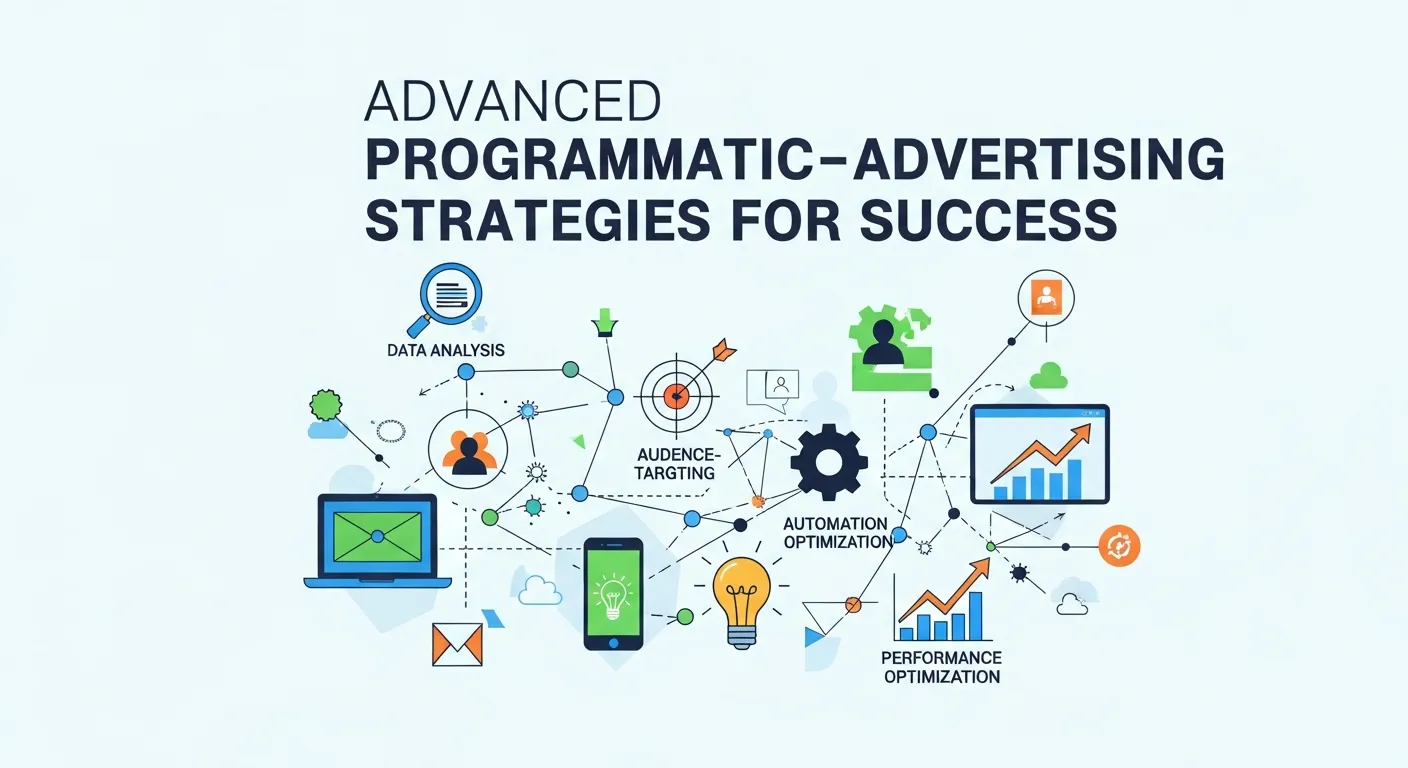
Once the basics are in place, brands need structured programmatic-advertising strategies for success that go beyond simply launching campaigns. Strategic layering is what separates average results from exceptional performance.
A. Full-Funnel Programmatic Strategy
Programmatic buying advertising is most powerful when aligned to the entire marketing funnel:
- Top of Funnel (Awareness):
Use broad audience targeting, contextual placements, and high-impact video formats to build brand recognition. - Mid-Funnel (Consideration):
Deploy sequential messaging, interactive formats, and storytelling creatives to nurture interest. - Bottom of Funnel (Conversion):
Focus on retargeting, lookalike modeling, and high-intent audience segments.
B. Audience Layering & Data Stacking
Instead of relying on one targeting parameter, combine:
- Behavioral signals
- Purchase intent data
- Contextual alignment
- Geo-targeting
- Device targeting
This stacking approach improves efficiency and reduces wasted impressions.
C. Private Marketplace (PMP) & Programmatic Guaranteed Deals
For brands concerned about transparency and premium inventory:
- Private Marketplace (PMP): Invite-only auctions with premium publishers
- Programmatic Guaranteed: Fixed-price deals with guaranteed impressions
These approaches balance automation with control.
Strategy Comparison Table
| Strategy Type | Best For | Cost Level | Control Level | Performance Potential |
|---|---|---|---|---|
| Open Exchange | Scale & reach | Low–Medium | Low | Moderate |
| Private Marketplace | Brand safety | Medium | Medium–High | High |
| Programmatic Guaranteed | Premium campaigns | High | Very High | Very High |
| Data-Layered Targeting | Performance marketing | Medium | High | Very High |
This layered strategic approach turns programmatic buying advertising into a predictable growth engine.
Real-World Applications of Programmatic Buying Advertising
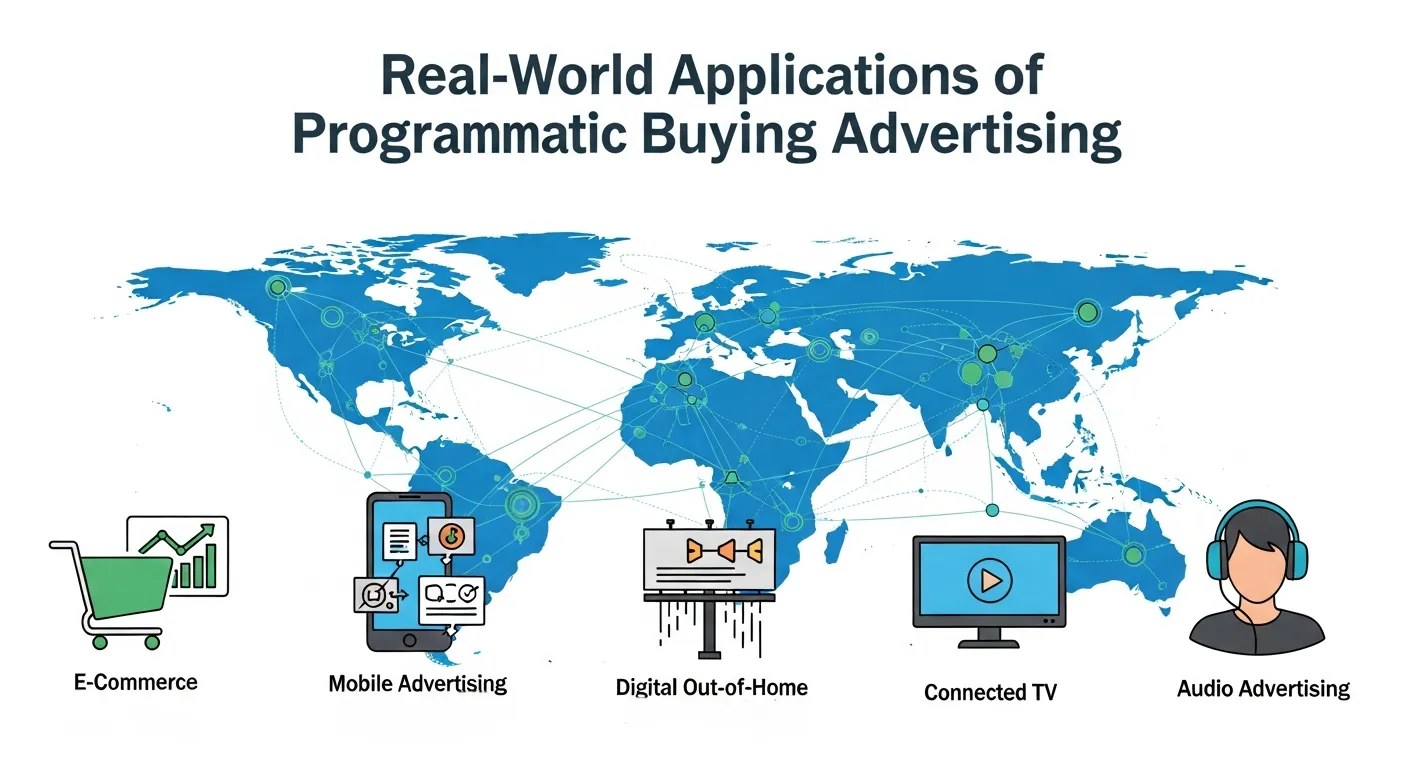
Now that we’ve explored what programmatic advertising is and its benefits, let’s take a look at some examples of its practical applications.
1. Retargeting Campaigns
Ever looked at a product online only to see ads for that exact product everywhere afterward? That’s programmatic retargeting in action. Using cookies and data, programmatic platforms retarget customers who’ve visited a brand’s website but didn’t make a purchase.
2. Cross-Device Advertising
Programmatic buying makes it easier to deliver ads across multiple devices, from smartphones and tablets to desktop computers. This ensures your message stays consistent, no matter how users interact with your brand.
3. Dynamic Creative Optimization (DCO)
With programmatic advertising, you can deliver personalized ad creatives with DCO. For instance, for someone searching “best running shoes,” the algorithm can serve an ad showing the latest running shoe that matches their interests.
4. Expanding Brand Awareness
By leveraging advanced targeting during programmatic campaigns, businesses can drive awareness among the right consumers who might not have encountered the brand otherwise.
Programmatic TV Advertising: How It Works and Why It Matters
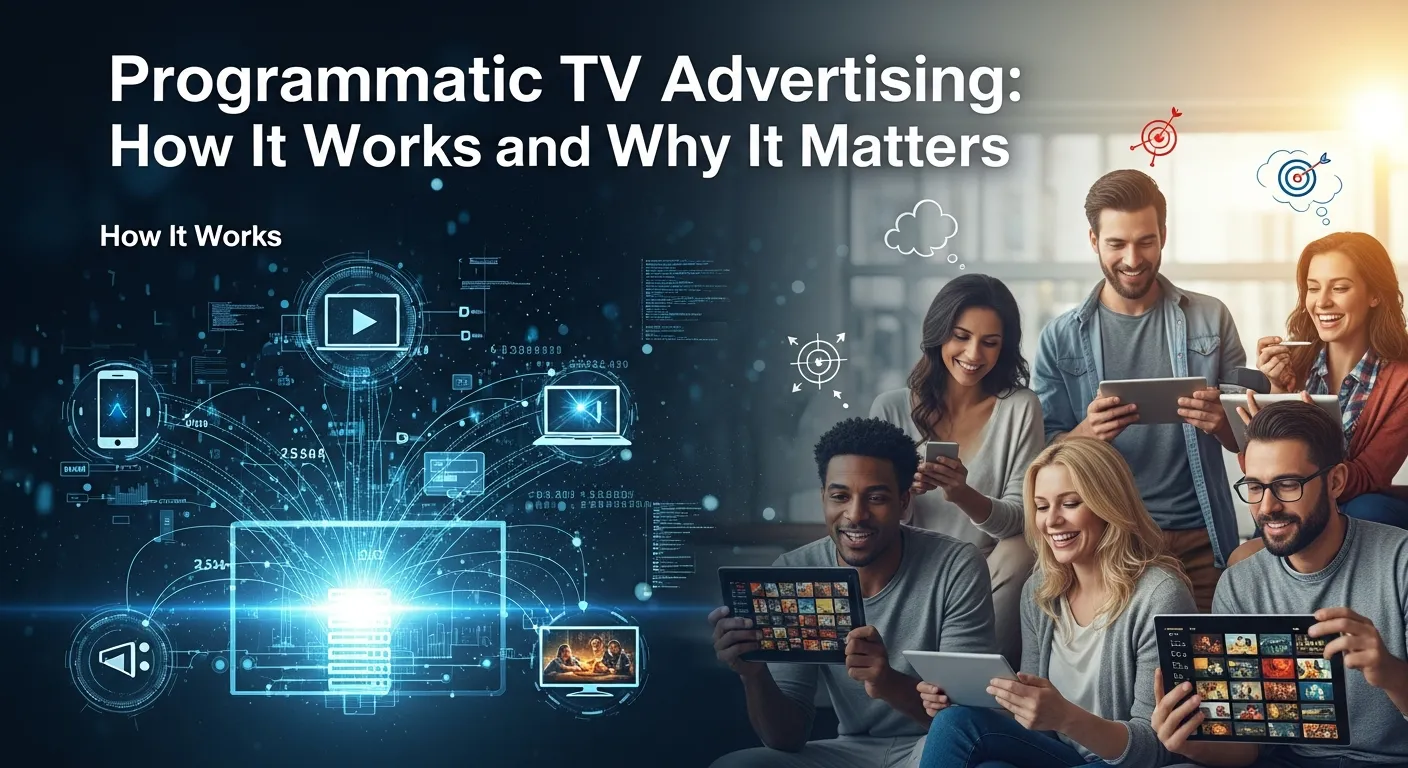
While your article covers digital formats broadly, adding a focused section on programmatic TV advertising work strengthens the content significantly.
Programmatic TV is the automation of buying and selling ad inventory across connected TV (CTV), over-the-top (OTT), and smart TV environments.
How Programmatic TV Advertising Works
- Viewers stream content via smart TVs or streaming devices.
- Ad slots are made available programmatically.
- Advertisers bid using audience data rather than traditional TV demographics.
- Ads are served in real time to households that match targeting criteria.
Unlike traditional TV buying (based on estimated ratings), programmatic TV relies on:
- Deterministic data
- Household-level targeting
- Cross-device measurement
Benefits of Programmatic TV
- Advanced household targeting
- Reduced media waste
- Cross-channel consistency
- Higher engagement rates
- Measurable attribution
Traditional TV vs Programmatic TV
| Feature | Traditional TV | Programmatic TV |
|---|---|---|
| Buying Process | Manual negotiation | Automated |
| Targeting | Age/Gender demos | Behavioral & household data |
| Measurement | GRPs | Real-time analytics |
| Optimization | Post-campaign | In-flight adjustments |
| Transparency | Limited | High |
As streaming adoption grows, programmatic buying of advertising increasingly includes TV as a core component of omnichannel strategy.
Challenges of Programmatic Buying in Advertising

While programmatic advertising is transforming the ad industry, it comes with its own challenges:
- Ad Fraud: Bots and fraudulent websites can falsely inflate click-through rates and impressions.
- Transparency: The automated nature of programmatic buying can create complexity, making it difficult to understand exactly where ads are placed.
- Data Dependence: Programmatic’s success largely depends on high-quality data. Without it, targeting becomes less effective.
That said, advancements in ad technology are making these issues increasingly easier to overcome.
Measuring Performance: KPIs, Attribution & Engagement Optimization
Many brands focus on launching campaigns—but long-term success comes from measurement. A strong programmatic advertising guide should explain how to measure performance correctly.
Key Metrics to Track
Different goals require different KPIs:
- CTR (Click-Through Rate) – Measures engagement
- Viewability Rate – Ensures ads are actually seen
- Conversion Rate – Measures action completion
- CPA (Cost Per Acquisition) – Measures efficiency
- ROAS (Return on Ad Spend) – Revenue performance
Attribution Models in Programmatic Advertising
Understanding attribution improves budgeting decisions:
| Attribution Model | Description | Best Use Case |
|---|---|---|
| Last-Click | Credits final interaction | Short sales cycles |
| First-Click | Credits first interaction | Brand awareness |
| Linear | Equal credit to all touchpoints | Multi-touch journeys |
| Time Decay | More credit to recent touchpoints | Consideration-heavy funnels |
| Data-Driven | AI-based credit assignment | Advanced performance marketing |
Optimizing Programmatic Advertising for Engagement
To improve programmatic advertising for engagement:
- Use dynamic creative testing
- Optimize frequency caps
- Run A/B testing on audience segments
- Use interactive ad formats
- Align creative messaging to the audience stage
Programmatic Advertising + SEM Strategy Integration
Combining a programmatic advertising SEM strategy creates synergy:
- Use search intent data to build display audiences
- Retarget paid search visitors programmatically
- Align messaging between search and display
- Use programmatic to amplify high-performing SEM keywords
When search and programmatic work together, engagement and conversion rates typically increase significantly.
How to Get Started with Programmatic Advertising
If you’re ready to integrate programmatic buying into your marketing strategy, here are a few steps to get started:
- Define Campaign Goals: Clearly outline what you want to achieve with your advertising efforts.
- Choose a DSP: Platforms like The Trade Desk, MediaMath, and Google Display & Video 360 are great for managing programmatic campaigns.
- Leverage Data: Use data-driven insights to shape your campaigns for maximum effect.
- Test and Learn: Start with a small budget, gather insights, and refine your approach before scaling up.
Remember, working alongside programmatic experts can accelerate your path to success in this exciting space.
Programmatic Buying Can Revolutionize Your Advertising Strategy
Programmatic buying of advertising is no longer just a niche thing. It has become the way to effectively make digital marketing successful for your brand or business.
No longer is programmatic buying advertising something you need to be looking into for expansion or to increase the precision of your targeting. Try programmatic advertising and reap benefits at scale.
Are you ready to harness the power of programmatic buying for advertising? Give platforms a try, get your hands on some data, and run tests; then see how things can start happening for you.
It’s time for businesses to revolutionize the way they reach their audience.
Frequently Asked Questions (FAQs) About Programmatic Buying Advertising
1. What is Programmatic Buying Advertising?
Programmatic Buying Advertising is the automated process of purchasing digital ad space using data, algorithms, and artificial intelligence. Instead of negotiating manually with publishers, advertisers use technology platforms to bid on ad impressions in real time, ensuring ads are delivered to the most relevant audience efficiently and at scale.
2. How does programmatic advertising work?
Programmatic advertising works by analyzing user data, setting campaign parameters within a demand-side platform, and bidding on available ad inventory through real-time auctions. When a user visits a website or app, the system evaluates whether they match the advertiser’s targeting criteria and instantly serves the most appropriate ad.
3. What is the difference between programmatic buying vs traditional media buying?
The key difference between programmatic buying vs traditional media buying is automation and targeting precision. Traditional media buying relies on manual negotiations and broad demographic targeting, while programmatic buying uses automated systems, behavioral data, and real-time bidding to reach specific audiences with measurable performance tracking.
4. What types of ads are included in digital programmatic advertising?
Digital programmatic advertising includes multiple formats such as programmatic display advertising, video ads, native ads, connected TV ads, digital out-of-home placements, and programmatic audio advertising. This allows brands to execute omnichannel campaigns across websites, mobile apps, streaming platforms, and digital media environments.
5. What is programmatic display advertising?
Programmatic display advertising refers to the automated buying of banner and visual ads across websites and mobile apps. These ads are targeted using audience data such as browsing behavior, demographics, interests, and location, helping improve relevance, engagement, and overall campaign performance.
6. How does programmatic TV advertising work?
Programmatic TV advertising work involves automating the purchase of ad inventory across connected TV (CTV) and over-the-top (OTT) platforms. Instead of targeting broad audience segments, advertisers use household-level and behavioral data to deliver relevant ads to specific viewers in real time, improving efficiency and measurement accuracy.
7. What is programmatic audio advertising?
Programmatic audio advertising enables brands to deliver targeted audio ads across streaming platforms, podcasts, and digital radio. Ads are served using data such as listening behavior, device usage, time of day, and geographic location, making audio campaigns more personalized and measurable compared to traditional radio advertising.
8. Is programmatic advertising effective for engagement?
Programmatic advertising for engagement is highly effective because it targets users based on real-time behavior and intent signals. By using dynamic creatives, frequency optimization, and cross-device targeting, advertisers can improve click-through rates, increase user interaction, and drive higher conversion performance.
9. Is Programmatic Buying Advertising suitable for small businesses?
Yes, Programmatic Buying Advertising can be suitable for small businesses because campaigns can be launched with flexible budgets and scaled over time. With proper targeting and data optimization, even modest investments can generate measurable results and improved return on ad spend.
10. How can businesses measure the success of programmatic advertising work?
Businesses measure programmatic advertising work using key performance indicators such as click-through rate (CTR), conversion rate, cost per acquisition (CPA), return on ad spend (ROAS), and viewability rate. Advanced attribution models and real-time analytics allow marketers to continuously optimize campaigns and improve performance outcomes.
Want to learn how to set up real-time optimization for your campaigns? Check out Understanding Programmatic Buying Advertising and How It Works