What Is Programmatic Audio Advertising and Why Does it Matter?
Audio advertisements have moved away from traditional commercial broadcasts on the radio. With digital platforms booming, listening habits have changed dramatically. Programmatic audio brings in this new advertising era.
Programmatic audio advertising makes a significant difference in business. By taking advantage of this latest technological breakthrough, electronic advertisers are now able to more accurately target consumers in far more personal ways than ever before.
What Is Programmatic Audio Advertising?
At its heart, programmatic audio advertising is the automated buying and selling of audio ad space using technology. Rather than purchasing ad space traditionally through direct sales or negotiations, programmatic audio uses algorithms and machine learning to place ads in real time.
This kind of advertising spreads across various audio platforms. For example, music streaming services (such as Spotify and Pandora), digital radio stations, and even podcasts. Through seamless automation, programmatic audio enables advertisers to deliver tailored messages to particular audience segments based on demographic or location as well as interest and listening habits.
Why Does Programmatic Audio Matter?
Unlike traditional on-air ads, programmatic audio combines data-backed targeting with the personal feel of the audio format. This means brands can now send the correct message to the most accurate audience at the most convenient time, creating more efficient and effective campaigns.
How Programmatic Audio Advertising Works
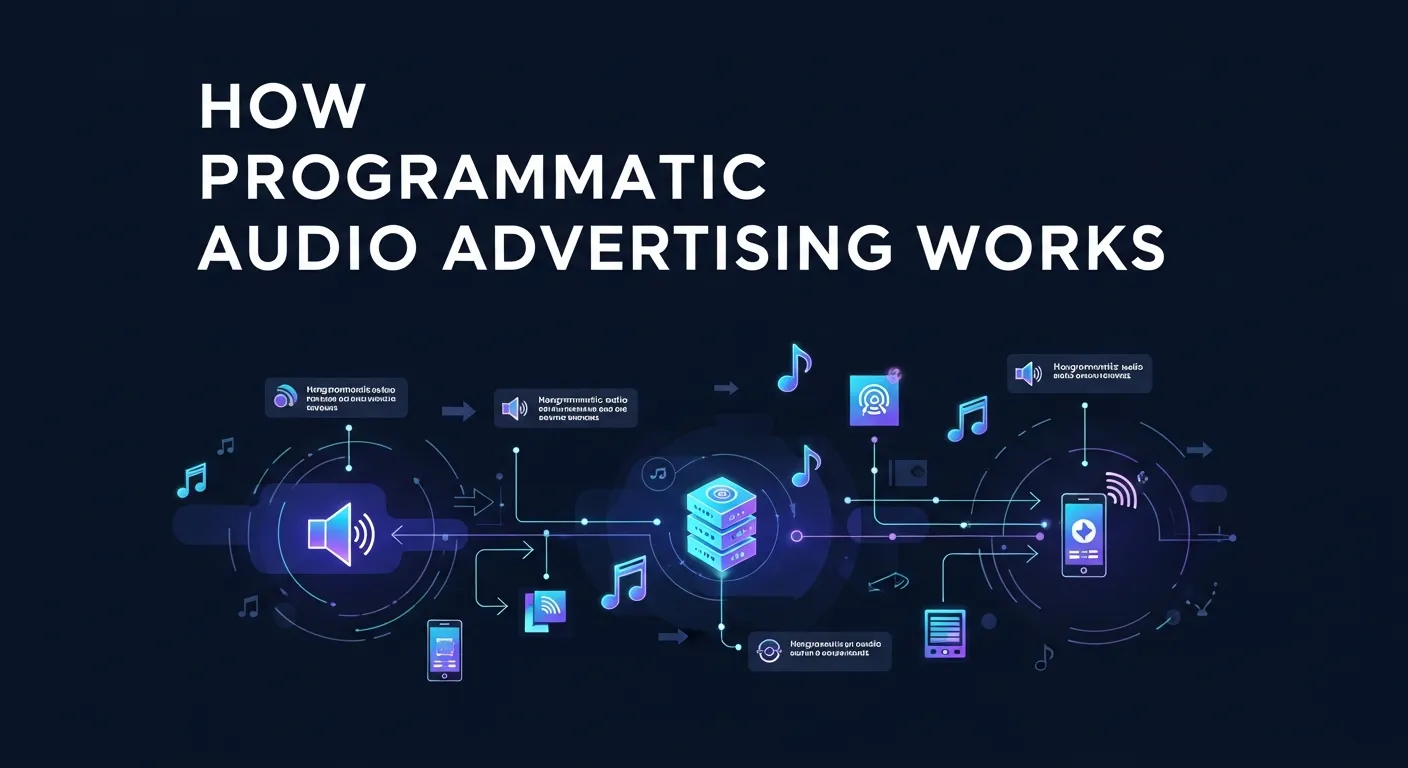
Although the term “programmatic audio” may sound arcane, the process can be divided into four key components. Again, borrowing heavily from Wikipedia:
Ad Inventory
Audio publishers such as Spotify, iHeartRadio, Pandora, and podcast networks make their ad space available for purchase. This space is called “inventory”.
Programmatic Platforms
Advertisers and buyers get the facility of using Demand Side Platforms ( DSPs ) to enter the market. DSPs such as The Trade Desk and AdsWizz, Google Display & Video 360 allow brands to decide exactly when and where their advertising should be shown.
Data Targeting
Advanced algorithms deal with user data such as age, location, device type, listening history, and even mood-related playlists to match ads with the most relevant listeners.
Easy to Access
Programmatic audio platforms? Make the task of serving ads simpler. In many cases, you can get zero-cost ad serving within a script, ad pod, or channel, and in no time at all, fitting up your podcast to run ads through some other service.
Real-Time Bidding (RTB)
With programmatic audio, much of the buying relies on real-time bidding. Advertisers compete for space to serve ads to listeners within milliseconds. When a listener clicks on play for different podcasts, the system forthwith makes up its mind which ad will be used for this season.
Major Inefficiencies Ironed Out
With this degree of automation and accuracy, programmatic audio eliminates waste and maximizes return on ad spend (ROAS).
Programmatic Audio Advertising vs Traditional Audio Advertising
While your article touches on the advantages of programmatic audio, a dedicated comparison with traditional audio advertising will help readers understand its transformative power.
Overview:
Traditional audio advertising typically involves pre-booked slots on radio stations or podcasts with fixed pricing. Programmatic audio, on the other hand, automates buying, targeting, and optimization, delivering ads dynamically to the right audience.
Key Differences Between Programmatic and Traditional Audio
| Feature | Traditional Audio | Programmatic Audio Advertising |
|---|---|---|
| Buying Process | Manual negotiations and contracts | Automated via DSPs with real-time bidding |
| Targeting | General demographics (e.g., age, region) | Advanced targeting using behavioral, contextual, and location data |
| Optimization | Limited post-campaign | Continuous, real-time optimization |
| Measurement | Reach and ratings | Impressions, engagement, conversions, ROI |
| Cost Efficiency | Often fixed, may involve wasted impressions | Pay only for relevant audience, maximizing ROAS |
Benefits of Programmatic Over Traditional Audio:
- Improved targeting accuracy for better ROI
- Ability to run multiple campaigns simultaneously
- Flexible ad formats and placements
- Quick adaptability to audience behavior and trends
This section strengthens your understanding of programmatic advertising by showing real-world advantages over traditional methods.
The Advantages of Programmatic Audio Advertising
You might be puzzling over why the present programmatic thrust into audio advertising is making such a sensation for you. Here’s how it will transform your advertising:
Hyper-Targeting Capabilities
Programmatic audio lets you target your audience very precisely. Whether you want to reach millennial podcast listeners in New York or Gen Z students who stream lo-fi beats, advanced targeting assures your advertisements hit home with the right people.
Enhanced Personalization
Audio is a very personal medium, speaking directly to individuals in a non-intrusive manner. Programmatic platforms facilitate dynamic creative optimization (DCO), allowing you to tailor elements such as message, tone, and even language for different segments of your audience.
Cross-Device Reach
The days when audio was confined to the car radio are over. Today, programmatic ads can reach users on several devices, including smartphones, smart speakers, and laptops, ensuring a full spectrum of listening for your audience.
Measurable Results
Unlike traditional audio, programmatic audio serves up both transparency and analytics. Users can keep track of critical metrics such as impressions, engagement rate, conversion rate, and in the end assess how well it’s all ending up–and then adjust campaigns for future operations accordingly.
Cost Effectiveness
Say goodbye to spurned ad budgets! Through real-time bidding and automated processes, programmatic ad buying ensures you’re only paying for impressions that are in line with your desired audience, which makes it a more efficient choice.
Popular Programmatic Audio Platforms
Here are some standout platforms that are dominating in programmatic audio:
- Spotify Ad Studio – A self-service platform for creating ads on Spotify that are tailored to anyone listening.
- Pandora Ads – Offers its listeners multi-format audio, display, and video ad solutions whilst staying true to its roots.
- AdsWizz – Advertisers can reach music streaming services and podcasts around the world through AdsWizz’s platform.
- iHeart Media – Uses both traditional audio and its own digital inventory to capture a wide listener base.
Each of these platforms has sophisticated tools and analytics to help advertisers tweak strategies and improve ROI.
Integrating Programmatic Audio Advertising With Other Marketing Channels
Programmatic audio does not work in isolation. Combining it with other digital channels can amplify engagement and ROI.
Integration Strategies:
- With Programmatic Display Ads: Reinforce audio messaging with visual ads on websites and apps.
- With Social Media Campaigns: Retarget users who heard audio ads with social posts or paid campaigns.
- With Programmatic TV Advertising Work: Reach viewers across both audio and visual channels for omnichannel impact.
- With SEM & Paid Search Campaigns: Use insights from audio campaigns to optimize search targeting.
Benefits of Cross-Channel Integration:
- Creates consistent brand messaging across platforms
- Increases audience touchpoints, driving higher conversions
- Enables performance attribution across multiple channels
| Marketing Channel | Integration Example | Expected Outcome |
|---|---|---|
| Audio + Display | Retarget podcast listeners with display banners | Higher brand recall and click-through rate |
| Audio + Social Media | Promote Instagram content to users who engaged with audio ads | Better engagement and multi-platform interaction |
| Audio + CTV | Deliver audio ads followed by programmatic TV campaigns | Unified omnichannel audience reach |
| Audio + Paid Search | Use audio data to refine search keyword targeting | Increased conversions and improved SEM ROI |
This section introduces a programmatic-advertising strategy from a success perspective that’s actionable for marketers.
Best Practices for Programmatic Audio Advertising
If you’re ready to jump into programmatic audio feet first, let’s move step by step:
-
Set Your Objectives First
Do you want to improve brand awareness, increase web page hits, or increase sales? Setting clear aims for your campaign will help you shape and measure it. -
Understand Your Audience
Use deep insights into your audience to make ads that really work. Who are they? What are their needs? What kind of content do they consume and when? -
Invest in Quality Creative
The sound in audio ads is the key. Therefore, develop an attractive and interesting script, use a professional voice-over actor, and make sure the tone is in harmony with your brand. -
Use Data Insights
Make the data capabilities of programmatic work hard for you. Test different targeting options, analyze the results, and continually optimize your approach based on performance measures. -
Try Different Ad Formats
It is not only traditional fifteen or thirty-second spots that programmatic audio accommodates. Try sponsored playlists, pre-roll advertisements, or even a branded segment of the podcast for a novelty change.
Compliance and Privacy Considerations in Programmatic Audio Advertising
With advanced data targeting, privacy compliance has become a critical consideration in programmatic audio campaigns. This section will educate readers on responsible practices and regulatory adherence.
Key Privacy Concerns:
- Collecting listener data responsibly
- Complying with GDPR (for EU audiences) and CCPA (for US audiences)
- Ensuring opt-in consent for personalized ads
Best Practices for Compliance:
- Use anonymized or aggregated listener data when possible
- Clearly inform users about data collection and usage
- Implement robust data security measures to protect listener information
- Regularly audit platforms for compliance with local regulations
| Compliance Area | Programmatic Audio Approach | Benefit |
|---|---|---|
| Data Collection | Use first-party or anonymized data | Reduces legal risk and increases trust |
| Consent Management | Ensure opt-in for personalized ads | Builds transparency and user confidence |
| Regional Regulations | Follow GDPR, CCPA, or other local laws | Prevents fines and reputational damage |
| Data Security | Encrypt listener data and restrict access | Protects sensitive information and ensures compliance |
Highlighting compliance provides a practical guide for marketers, aligns with programmatic-advertising SEM strategy, and differentiates your article from general “how it works” guides.
The Future of Programmatic Audio Advertising
With digital audio consumers growing exponentially and popular platforms emerging, programmatic audio appears set for explosive growth. According to Statista, global digital audio ad spend will be projected to break barriers. In fact, it’s expected to reach $7 billion by 2027.
From attracting the younger, tech-savvy audiences to integrating seamlessly with AI and machine learning, there is no end in sight for the potential of programmatic audio. Brands that adopt this technology now are in a position to maintain a competitive edge in a digital-first economy.
Let Your Next Campaign Be Heard
Programmatic audio advertising is more than just a trend—it’s a powerful tool that lets brands connect with audiences in a personal, relevant, and measurable way. Unlike traditional approaches where marketers push messages broadly, programmatic audio allows you to truly “speak” to your listeners, delivering content that resonates with them at the right time and in the right context.
By embracing programmatic audio, you’re not just running ads—you’re creating experiences. Whether it’s a dynamic pre-roll on a podcast, a curated playlist sponsorship, or an interactive audio ad, each touchpoint can engage listeners meaningfully and build lasting connections. This personal approach fosters brand loyalty and helps your campaigns stand out in a crowded digital landscape.
Actionable Steps to Maximize Your Programmatic Audio Campaigns
- Experiment With Formats: Test different ad types such as short pre-rolls, mid-rolls, branded segments, or interactive audio to see what drives the most engagement.
- Leverage Data Insights: Use listener demographics, location, behavior, and engagement metrics to fine-tune your targeting. Every adjustment helps make your ads more relevant and cost-effective.
- Integrate With Other Channels: Amplify your messaging by aligning audio campaigns with display ads, social media content, or programmatic TV campaigns for an omnichannel strategy.
- Focus on Creative Excellence: Sound quality, voice-over talent, and scriptwriting matter. Memorable audio creates emotional resonance, increasing recall and conversions.
- Monitor, Measure, Optimize: Use real-time analytics to track impressions, completion rates, and conversions. Optimize campaigns continuously to improve ROI.
Why Start Now
Digital audio consumption is growing rapidly, and platforms are increasingly adopting programmatic solutions. Brands that invest in programmatic audio early gain a competitive edge, capturing attention from tech-savvy listeners who are less reachable through traditional channels. By starting today, you can test innovative formats, refine targeting strategies, and establish your brand as an audio-first leader in your industry.
In short, programmatic audio advertising empowers you to be heard, remembered, and acted upon—turning passive listeners into engaged customers. So, craft your next campaign thoughtfully, leverage the tools available, and watch your message resonate across devices, platforms, and audiences.
Frequently Asked Questions (FAQs) About Programmatic Audio Advertising
1. What is programmatic audio advertising?
Programmatic audio advertising is the automated buying and selling of audio ad space using technology. It allows brands to target audiences across streaming services, podcasts, and digital radio in real-time, improving precision and efficiency.
2. How does programmatic audio differ from traditional audio advertising?
Unlike traditional audio ads that rely on fixed radio slots or podcast sponsorships, programmatic audio uses algorithms and real-time bidding to deliver personalized ads to the right audience at the right time, maximizing ROI.
3. What platforms support programmatic audio advertising?
Popular platforms include Spotify Ad Studio, Pandora Ads, AdsWizz, and iHeart Media. These platforms provide tools for targeting, real-time bidding, and analytics to optimize campaigns.
4. Can programmatic audio advertising integrate with other marketing channels?
Yes. Programmatic audio can complement display ads, social media campaigns, programmatic TV advertising, and Google Ads programmatic advertising, creating a cohesive omnichannel strategy that increases engagement and conversions.
5. How does targeting work in programmatic audio advertising?
Targeting uses listener data such as demographics, location, device type, listening habits, and behavior. Advanced algorithms ensure ads reach the most relevant audience segments, improving engagement and campaign performance.
6. What are the benefits of using AI in programmatic audio advertising?
Artificial intelligence helps with predictive targeting, dynamic creative optimization, and real-time bidding decisions. AI ensures ads are more personalized, efficient, and cost-effective across large audiences.
7. Is programmatic audio advertising cost-effective?
Yes. Through real-time bidding and audience-focused targeting, brands only pay for relevant impressions, reducing wasted ad spend compared to traditional audio campaigns.
8. How can advertisers measure the success of programmatic audio campaigns?
Success is measured using analytics like impressions, engagement rates, conversion rates, ROI, and brand lift. Platforms provide real-time dashboards to monitor performance and optimize campaigns accordingly.
9. What are the compliance considerations for programmatic audio advertising?
Advertisers must follow regulations such as GDPR and CCPA, ensure opt-in consent for personalized ads, protect listener data, and use anonymized or aggregated data when possible to maintain privacy and build trust.
10. Why should marketers start using programmatic audio advertising now?
With digital audio consumption growing rapidly and programmatic solutions maturing, early adoption allows brands to engage tech-savvy audiences, test innovative ad formats, and gain a competitive edge in a data-driven marketing landscape.
Learn more…New to the concept of automated ad buying? Don’t miss our full breakdown on Best Books on Programmatic Advertising to Level Up Your Skills.