Understanding Programmatic Advertising on Google
Programmatic Advertising on Google uses automated technology and real-time bidding across platforms like Google and Google Ads to target audiences efficiently, optimize campaigns, and maximize ROI through data-driven ad placements and performance tracking.
You may have come across the term “programmatic advertising” in your continual quest to refine your digital marketing strategy. Far from being just the latest buzzword, it’s set to radically change online selling protocols. As one of the Chinat pacesetters in this fresh manner of advertising, Google is ranked with a star in terms of advancing Programmatic Advertising. Among the tech giants that enable this innovative style, Google stands as a prominent player in Programmatic Advertising.
This guide speaks in depth about what programmatic advertising is, how it works on Google, and why you should include in your marketing strategy. You’ll also gain practical tips for setting up your programmatic campaigns and keeping them running smoothly.
What Is Programmatic Advertising?
Programmatic advertising refers to the automated buying and selling of online ad space. Unlike traditional advertising, which often involves manual negotiations and orders, programmatic advertising uses real-time technology to target the right audience with precision.
The core of programmatic advertising lies in its ability to leverage algorithms and data. By analyzing user behavior, demographics, and interests, the technology ensures that ads are displayed to the most relevant audience at the right time.
Why Google Is a Leader in Programmatic Advertising
In the programmatic landscape, Google holds a special place. With Google Ads, YouTube, and the Google Display Network all under its umbrella, its vast ecosystem allows advertisers access to millions of websites, apps, or video channels from a cornucopia of choices. With that said, Google also boasts a wealth of data technology so that it can fulfill advanced targeting and reporting functions. This makes Google the first choice for anyone who wants to run programmatic market campaigns.
How Programmatic Advertising Works on Google
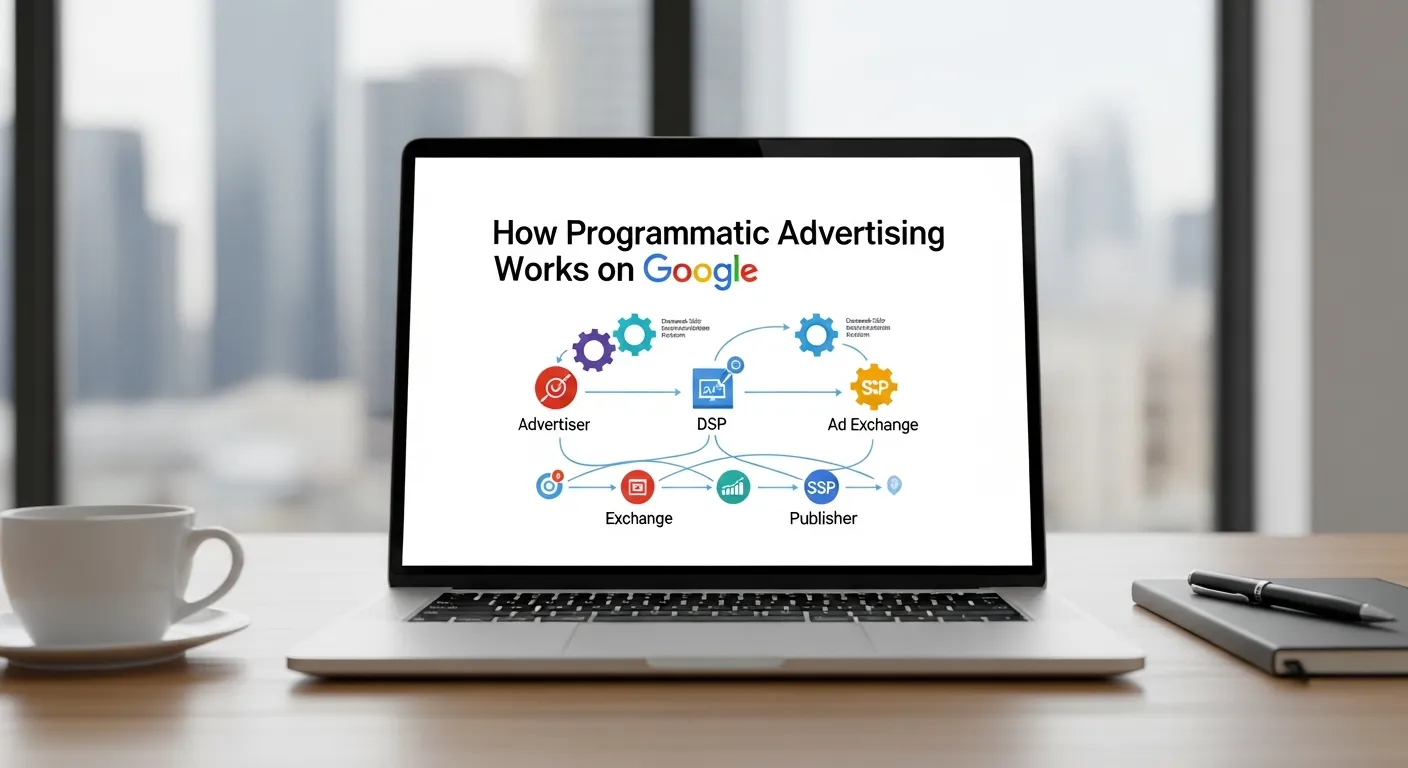
For advertisers new to Google’s programmatic ecosystem, understanding its functioning is crucial.
1. Real-Time Bidding (RTB)
Real-time bidding is the backbone of Google’s programmatic advertising. This process automates the auction of ad impressions. When a user visits a website or interacts with an app, advertisers bid for the ad placement in real-time. The highest bidder ensures that their ad is displayed to the user instantaneously.
2. Audience Segmentation
Google allows advertisers to create and target specific audience segments. These could be based on:
- Demographics (age, gender, income level)
- Interest categories (hobbies, shopping preferences)
- Behavioral data (engagement history, purchase behavior)
For instance, an e-commerce company can use Google’s demographic data to target users who frequently shop online, ensuring their ads reach potential buyers.
3. Dynamic Creative Optimization (DCO)
Google leverages DCO to enhance ad relevance. This feature enables advertisers to automatically tailor their creatives to audience preferences. For example, an apparel brand can use DCO to show winter wear ads to users in colder regions and summer wear ads to those in warmer climates.
4. Integration with Google’s Ecosystem
Programmatic campaigns on Google aren’t limited to the Display Network. They also extend to Gmail, YouTube, and even third-party websites via the Google Ad Manager. This gives advertisers incredible scalability for their campaigns.
Benefits of Using Programmatic Advertising on Google
Programmatic advertising on Google is not just about automation; it’s about making smarter, data-driven decisions. Here are the key benefits:
1. Enhanced Targeting Capabilities
With programmatic, advertisers can tap into granular targeting options, ensuring their message reaches the right audience. Google’s algorithm takes factors like behavior, location, and time of interaction into account, maximizing the potential for conversions.
2. Better ROI
The automated bidding process ensures cost-efficiency. Advertisers only pay for impressions or clicks that target their audience. Over time, the campaign learns and optimizes, delivering better ROI.
3. Real-Time Optimization
Unlike traditional methods, where results are analyzed post-campaign, Google’s programmatic system provides real-time insights. This allows marketers to tweak and improve their campaigns on the go.
4. Access to Premium Inventory
Google’s programmatic platform offers access to premium ad spaces on high-traffic websites and applications. This ensures that your brand is seen in reputable and relevant digital spaces.
Advanced Programmatic Advertising Strategies for Success
To truly master Programmatic Advertising on Google, marketers must move beyond basic setup and focus on advanced optimization frameworks. Strong programmatic-advertising strategies for success combine automation with strategic oversight.
1. First-Party Data Activation
With increasing privacy regulations, first-party data is becoming the backbone of sustainable targeting. Using CRM lists, customer match data, and remarketing audiences inside Google Ads allows advertisers to:
- Re-engage past customers
- Upsell existing buyers
- Build high-value lookalike segments
- Reduce dependency on third-party cookies
2. Full-Funnel Programmatic Structure
Instead of running isolated campaigns, structure programmatic into funnel stages:
- Awareness – Broad targeting via display and video
- Consideration – Custom intent audiences
- Conversion – Remarketing & dynamic ads
- Retention – Loyalty campaigns
This improves programmatic advertising for engagement across the customer journey.
3. AI-Driven Bid Strategy Alignment
Align bidding strategy with campaign goals:
- Target CPA → Lead generation
- Target ROAS → E-commerce
- Maximize Conversions → Scaling growth
When aligned properly, programmatic advertising becomes a scalable SEM extension rather than just a display tactic.
Setting Up a Successful Programmatic Campaign on Google
Now that you understand the value of programmatic advertising, here’s how to get started with Google’s platform.
1. Define Your Goals
Determine what you aim to achieve with your campaign. Are you looking to drive traffic, generate leads, or increase sales? Clear objectives will guide your targeting and optimization efforts.
2. Research Your Audience
Use Google’s audience insights tools to understand your target demographic thoroughly. The more detailed your audience persona, the more effective your campaign will be.
3. Choose the Right Ad Formats
Google offers a range of programmatic ad options, including display ads, video ads, and shopping ads. Choose the format that aligns with your product or service and audience preferences.
4. Set Up Your Campaign
Use Google Ads or Google Display & Video 360 (DV360) to configure your campaign. Some key settings to focus on:
- Budget and bids: Allocate your budget and set the bidding strategy.
- Creative assets: Upload eye-catching and relevant ad creatives.
- Targeting: Specify your audience parameters.
5. Monitor and Optimize
Once your campaign is live, use Google’s reporting tools to analyze performance. Look at metrics like click-through rates (CTR), conversion rates, and cost per acquisition (CPA). Use these insights to make data-driven adjustments.
6. A/B Test for Better Results
Run split tests to determine the effectiveness of different ad creatives, targeting criteria, or bidding strategies. Continuous testing will help refine your approach.
Programmatic Advertising vs. Other Platforms (Google vs. Meta & TV)
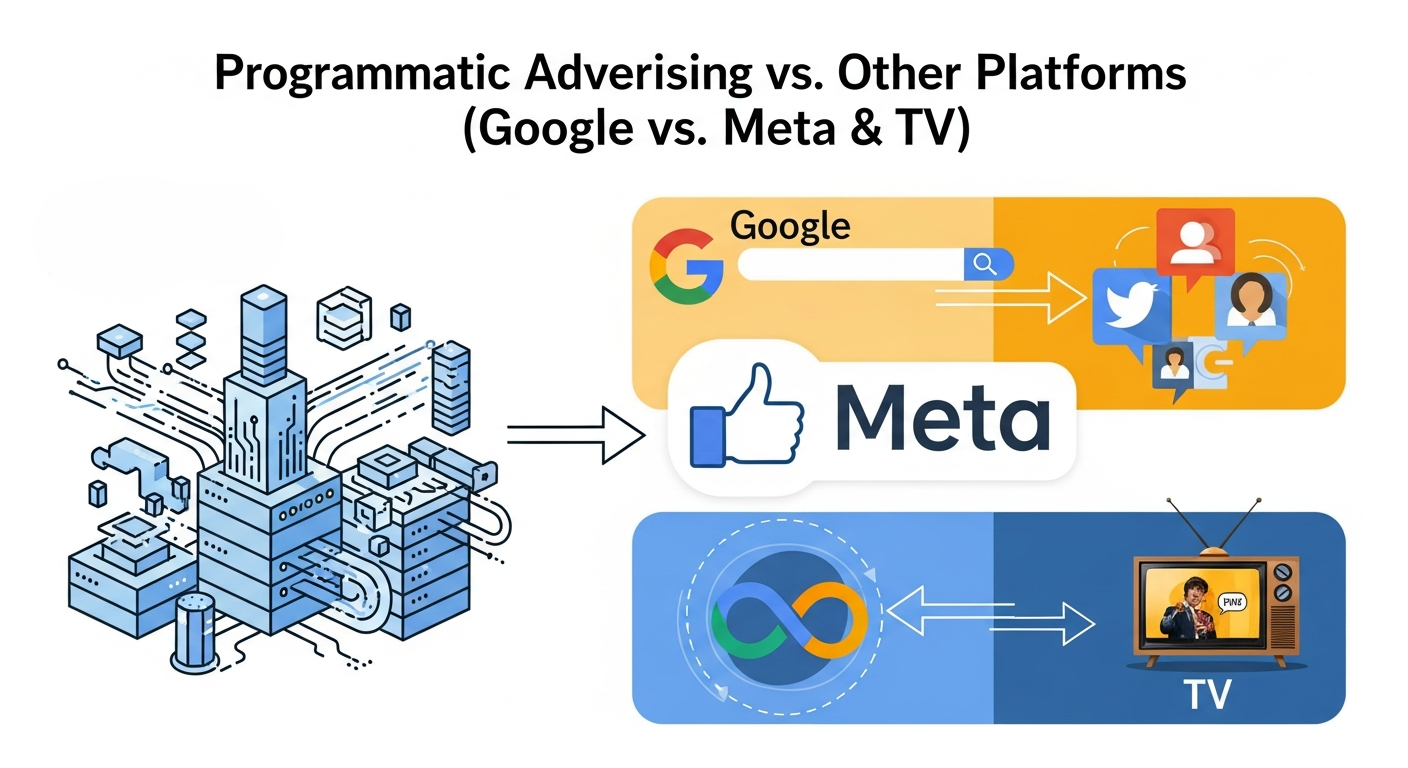
For marketers seeking a broader programmatic advertising guide, understanding how Google compares to other ecosystems is essential.
Google vs. Meta Programmatic Advertising
While Programmatic Advertising on Google dominates search and display intent, platforms like Meta Platforms operate differently in social ecosystems.
| Feature | Google Programmatic | Meta Programmatic Advertising Complete |
|---|---|---|
| User Intent | High (search-driven) | Discovery-based |
| Inventory | Display, YouTube, Search, Apps | Facebook, Instagram, Audience Network |
| Targeting Strength | Keyword + behavior | Social interest & behavioral |
| Best For | Direct response & performance | Engagement & brand building |
| Bidding Model | RTB + Smart Bidding | Auction-based AI bidding |
Google excels in capturing existing demand, while Meta excels in creating demand.
How Programmatic TV Advertising Works
Another rapidly growing area is connected TV (CTV). Through platforms like Display & Video 360, advertisers can buy inventory across streaming services and smart TVs. Unlike traditional TV buys:
- Ads are audience-targeted rather than time-slot-based
- Performance metrics are measurable
- Budget allocation is flexible
This answers the common question: How does programmatic TV advertising work?
It uses the same RTB infrastructure as digital display but delivers ads through streaming environments.
Challenges to Keep in Mind
While Programmatic Advertising on Google offers automation, precision targeting, and scalable performance, it also comes with operational and strategic challenges. Understanding these risks helps you build a stronger, more sustainable digital programmatic advertising strategy.
1. Ad Fraud and Invalid Traffic
Ad fraud remains one of the biggest concerns in programmatic display advertising. Fraudulent clicks, bot traffic, and fake impressions can waste budget and distort performance metrics.
Although platforms like Google Ads and Display & Video 360 include built-in invalid traffic detection systems, advertisers should still:
- Use third-party verification tools (IAS, DoubleVerify, Moat)
- Monitor suspicious spikes in traffic or conversions
- Track engagement metrics beyond clicks (time on site, bounce rate)
- Exclude low-quality placements regularly
Proactive monitoring reduces financial loss and protects campaign integrity.
2. Steep Learning Curve
Programmatic advertising work involves understanding bidding strategies, audience layering, conversion tracking, attribution models, and analytics dashboards. For beginners, this ecosystem can feel overwhelming.
Common complexity areas include:
- Smart bidding strategy selection (Target CPA vs ROAS)
- Conversion tracking setup and event mapping
- Audience segmentation refinement
- Frequency capping and placement exclusions
To overcome this challenge:
- Invest in structured training
- Start with simplified campaign objectives
- Gradually test advanced features
- Consider consulting a certified expert
Without proper understanding, automation can amplify mistakes rather than optimize performance.
3. Budget Mismanagement and Overspending
Because programmatic advertising operates in real-time auctions, costs can fluctuate quickly depending on competition, audience demand, and seasonality.
Key risks include:
- Overbidding in competitive niches
- Spending too aggressively during learning phases
- Ignoring frequency caps, causing ad fatigue
- Scaling too quickly without stable ROI
To maintain budget control:
- Set daily and campaign-level spending limits
- Use portfolio bid strategies carefully
- Monitor Cost Per Acquisition (CPA) consistently
- Pause underperforming ad groups promptly
Disciplined budget monitoring ensures programmatic advertising for engagement remains profitable rather than expensive.
4. Data Privacy and Compliance Risks
With increasing global privacy regulations (GDPR, CCPA), data handling is becoming more complex. Over-reliance on third-party cookies may reduce targeting accuracy over time.
Advertisers must:
- Prioritize first-party data collection
- Use consent management platforms (CMPs)
- Prepare for cookieless measurement solutions
- Strengthen contextual targeting strategies
Privacy compliance is no longer optional—it is a strategic necessity.
5. Brand Safety and Placement Control
Automated systems sometimes place ads on websites or content that may not align with your brand values.
To protect brand reputation:
- Use placement exclusion lists
- Apply content category filters
- Enable brand safety settings
- Regularly review placement reports
Maintaining strong placement governance ensures your ads appear in credible and relevant environments.
Final Thought on Challenges
Programmatic advertising is powerful, but it is not “set it and forget it.” Success requires continuous monitoring, data analysis, and strategic refinement. When managed carefully, the benefits far outweigh the challenges, making Programmatic Advertising on Google a high-impact digital growth channel.
Privacy, Cookieless Future & The Evolution of Programmatic Advertising

As digital advertising evolves, privacy regulations and tracking limitations are reshaping the industry. Understanding these shifts is critical when building a long-term programmatic advertising SEM strategy.
The Shift Away from Third-Party Cookies
With browsers limiting third-party cookies, advertisers must:
- Strengthen first-party data collection
- Implement server-side tracking
- Use modeled conversions
- Focus on contextual targeting
Google’s Privacy Sandbox initiatives aim to maintain targeting while protecting user data.
Contextual Targeting Resurgence
Contextual targeting is making a comeback. Instead of tracking user behavior, ads are placed based on:
- Page content
- Keywords
- Topic categories
This approach ensures compliance while maintaining relevance.
Future Trends in Programmatic Advertising
| Trend | Impact on Marketers |
|---|---|
| AI-driven automation | Reduced manual campaign management |
| Cross-device identity solutions | Improved attribution |
| Retail media integration | New revenue channels |
| Advanced predictive analytics | Better campaign forecasting |
The future of Understanding Programmatic Advertising lies in blending automation, privacy-first data practices, and cross-channel integration.
Programmatic Advertising: The Future of Targeted Marketing
Google’s programmatic advertising represents a powerful tool for businesses aiming to maximize their digital advertising efforts. Its data-driven approach saves time, reduces costs, and ensures that your ads reach the right people.
If you’re ready to take your advertising strategy to the next level, programmatic advertising on Google is a great place to start. Automate smarter, target sharper, and achieve more with this revolutionary technology.
Frequently Asked Questions (FAQs) About Programmatic Advertising on Google
1. What is Programmatic Advertising on Google?
Programmatic Advertising on Google is the automated process of buying and placing digital ads using real-time bidding and AI-driven algorithms across platforms like Search, Display, YouTube, and partner websites. It allows advertisers to target audiences precisely and optimize performance in real time.
2. How does programmatic advertising work on Google?
Programmatic advertising works through automated auctions (RTB). When a user visits a webpage or app, advertisers bid instantly for that ad impression. Google’s system selects the highest relevant bid, and the winning ad appears within milliseconds.
3. What is the difference between programmatic buying vs traditional media buying?
Programmatic buying uses automated systems and data-driven bidding to purchase ad inventory in real time. Traditional media buying involves manual negotiations, fixed placements, and less precise targeting. Programmatic is faster, more efficient, and performance-focused.
4. Is programmatic display advertising part of Google Ads?
Yes. Programmatic display advertising is a core part of Google’s ecosystem. Through Google Ads and Display & Video 360, advertisers can run automated campaigns across the Google Display Network and partner sites using audience targeting and smart bidding.
5. How does programmatic TV advertising work?
Programmatic TV advertising works through connected TV (CTV) platforms where advertisers buy streaming ad inventory using automated bidding systems. Instead of buying fixed TV time slots, ads are served based on audience data and targeting criteria.
6. What is digital programmatic advertising?
Digital programmatic advertising refers to automated ad buying across digital channels such as display, video, mobile apps, search, audio, and connected TV. It uses machine learning and real-time data to improve targeting and campaign performance.
7. Can programmatic advertising improve engagement?
Yes. Programmatic advertising for engagement uses behavioral data, dynamic creatives, and audience segmentation to deliver more relevant ads. Personalized ads increase click-through rates, time spent, and conversion likelihood.
8. What is programmatic audio advertising?
Programmatic-audio-advertising allows brands to place ads on streaming platforms, podcasts, and digital radio through automated bidding systems. These ads are targeted based on listener behavior, demographics, and interests, similar to display or video programmatic campaigns.
9. Is programmatic advertising suitable for small businesses?
Yes. Small businesses can use Programmatic Advertising on Google with controlled budgets and smart bidding strategies. Automated optimization helps maximize ROI even with limited ad spend.
10. What are the biggest challenges in programmatic advertising?
Common challenges include ad fraud risks, complex setup processes, data privacy regulations, and budget mismanagement. However, with proper monitoring, first-party data strategies, and campaign optimization, these challenges can be effectively managed.