Unlocking the Potential of Programmatic DOOH Advertising
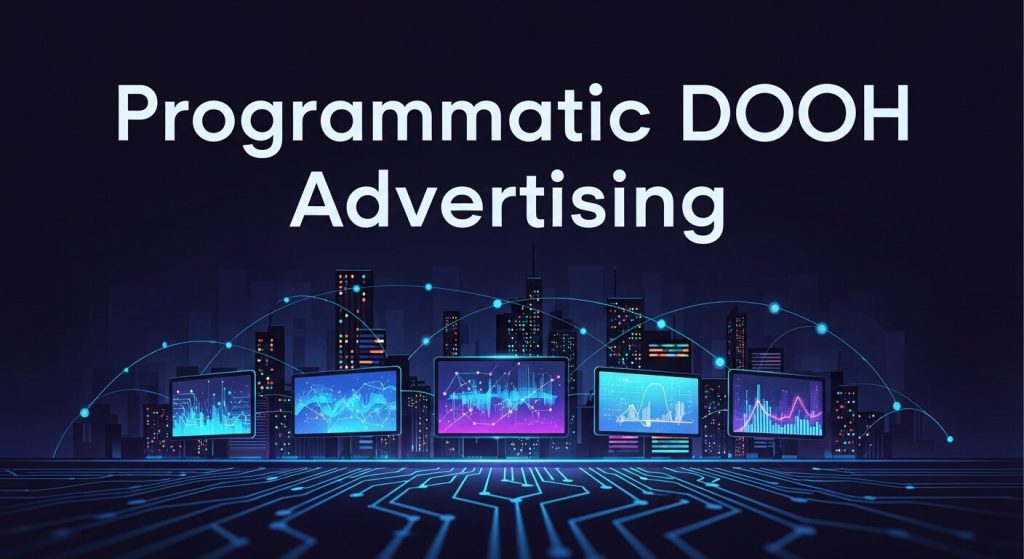
Programmatic advertising has been a major game-changer for marketers worldwide. When used in conjunction with TimePlay’s Digital Out-Of-Home (DOOH) advertising, it becomes a highly effective way to interact with a live audience on a massive scale. Whether you’re in Times Square or on the freeway staring at a digital billboard on your morning commute, you’re probably already getting a taste of the programmatic DOOH in practice.
The Basics of Programmatic DOOH Advertising
What Is Programmatic DOOH Advertising?
Programmatic DOOH advertising converts traditional out-of-home ads such as billboards, posters, transit ads, and more into a programmatic platform. It allows advertisers to purchase, place, and manage digital screen ads in real time using automated software. Think of it as digital precision meets mass-market impact.
While old-school OOH ads are typically locked for a specific duration, for a buy on programmatic DOOH, an advertiser can trigger a DOOH ad out of home, like this one, based on a specific timeframe, weather, or specific audience look. This versatility means the right message can be displayed for the right audience, in the right location, at the right time!
Why Is Programmatic DOOH a Game-Changer?
- Real-Time Updates
With programmatic DOOH, campaigns can adapt to live data. If a forecast predicts rain, a clothing brand can showcase raincoats immediately to match the weather.
- Audience Targeting
Advertisers can reach specific audiences based on factors like location, viewing times, and demographics. For example, a coffee chain might target early-morning commuters with breakfast ads.
- Cost Efficiency
Automated bidding ensures more budget-friendly campaigns. You only pay for impressions when they’re most likely to resonate with your audience.
- Measurability
Modern programmatic DOOH platforms provide analytics that help gauge campaign success, including metrics like impressions, engagement, and foot traffic influenced by the campaign.
How Programmatic DOOH Advertising Works
Programmatic DOOH functions through a streamlined pipeline involving DSPs (Demand Side Platforms) and SSPs (Supply Side Platforms). Here’s how it works step by step:
1. Campaign Setup
Advertisers create a campaign on a DSP, defining budgets, objectives (e.g., brand awareness or foot traffic), targeting parameters, and creative assets.
2. Real-Time Bidding
The DSP communicates with SSPs, which manage available DOOH inventory (e.g., digital billboards, bus stops, mall screens). Through an auction system, the best ad slot is purchased.
3. Trigger-Based Delivery
Ads are delivered dynamically based on trigger conditions like weather, time, or audience density. For instance, a gym ad promoting evening yoga classes can appear after 5 PM in a city’s busiest districts.
4. Performance Tracking and Optimization
Advertisers track campaign performance in real-time using data from geofencing, audience impressions, or consumer interactions. This allows for real-time adjustments and optimization to maximize ROI.
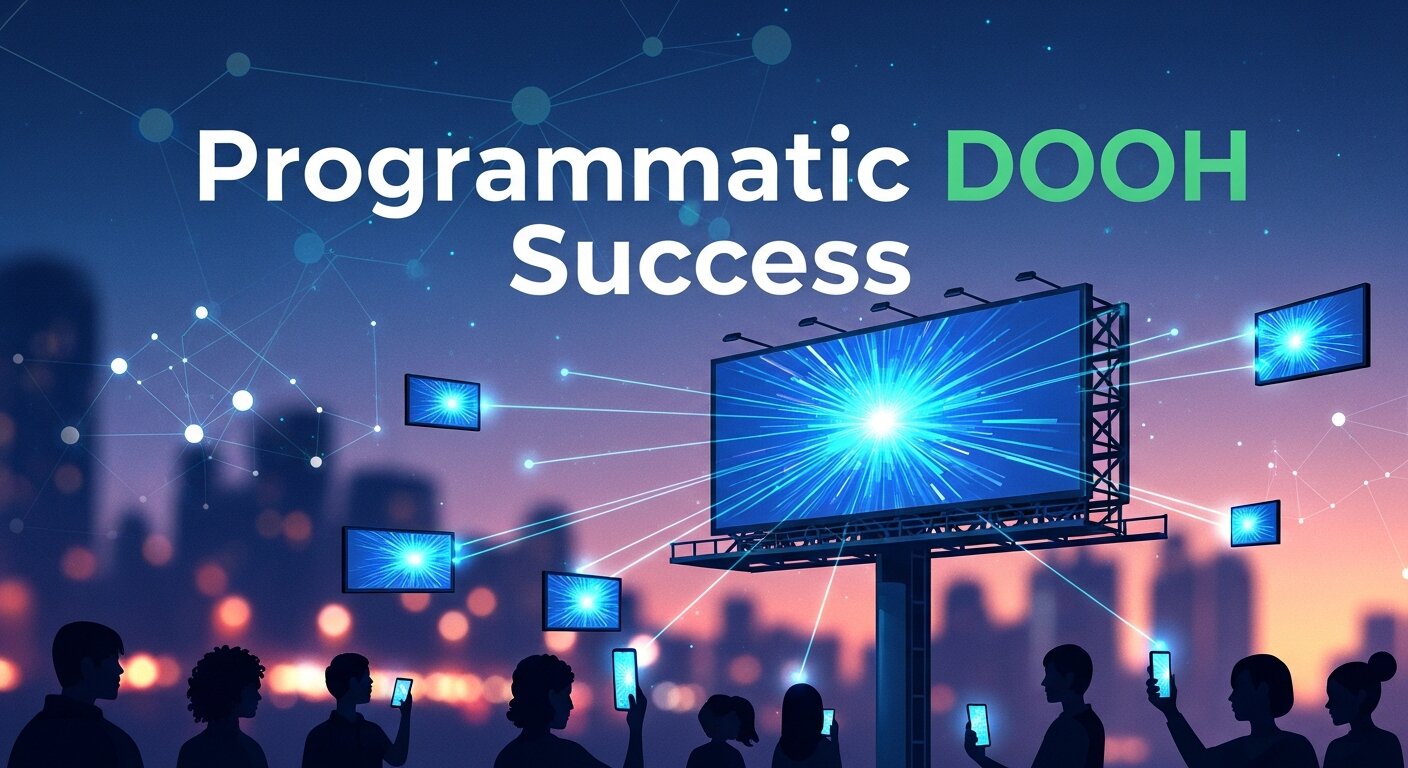
Real-Life Examples of Programmatic DOOH Success
A Retailer Driving Foot Traffic
A global retail brand employed programmatic DOOH to increase store visits during its holiday sale. By targeting high-traffic shopping areas and displaying ads during peak hours, the campaign resulted in a 20% increase in footfall compared to the previous year.
A QSR Targeting Weather Conditions
A quick-service restaurant (QSR) chain leveraged programmatic DOOH with weather triggers. On hot, sunny days, screens within a five-mile radius of their locations displayed ads for refreshing summer drinks. The result? A 40% spike in beverage sales during the campaign period.
Financial Services: Enhancing Brand Awareness
A financial services company used programmatic DOOH to showcase their sponsorship of a major marathon. Ads were directed toward areas along the marathon route, resulting in increased brand awareness and positive sentiment among their target audience.
Best Practices for Programmatic DOOH Advertising
Prioritize Contextual Relevance
Programmatic DOOH thrives on delivering the right message in the right context. Align your ad creatives with triggers like events, seasons, or locations to amplify impact.
Design for Outdoor Environments
Eye-catching, concise, and bold visuals work best for DOOH. Use high-contrast colors and clear messaging to ensure readability from a distance.
Leverage Data Insights
Take advantage of targeting data to refine audience selection and campaign elements. Metrics like foot traffic and time spent at specific locations can help identify high-impact placements.
Experiment and Optimize
Programmatic DOOH enables real-time optimization. Launch A/B tests with varying creatives, messaging, and targeting to find the most effective combinations.
Incorporate Omnichannel Integration
Combine programmatic DOOH with other digital channels for maximum impact. Use DOOH to drive awareness, and follow up with retargeting ads on mobile and social platforms.
Why Programmatic DOOH Is the Future of Advertising
Digital advertising is increasingly saturated, with audiences constantly bombarded by online ads. Programmatic DOOH offers a fresh opportunity to engage audiences in the physical world while retaining the precision and scalability of digital.
Its ability to combine automation, dynamic delivery, and impactful visuals makes it an exciting frontier for brands looking to stand out. Whether it’s creating hyper-relevant campaigns or building brand awareness at scale, programmatic DOOH equips marketers with the tools to achieve their objectives effectively.
Contextual Intelligence That Drives Real-World Impact

One of the biggest strengths of programmatic DOOH is its ability to understand and react to real-world context. Unlike static advertising, campaigns can shift messaging based on live conditions such as weather, traffic flow, or local events. This contextual intelligence allows brands to stay relevant in moments that matter most. When messaging aligns with what people are experiencing in real time, recall and engagement increase significantly. Instead of interrupting audiences, ads feel helpful and timely. This approach mirrors the evolution seen in Programmatic Ads across digital channels, where relevance determines success. In physical environments, contextual alignment creates stronger emotional connections and improves the overall effectiveness of brand communication.
Reaching Audiences Beyond Screens and Scrolls
Consumers today are overwhelmed by online ads, often tuning them out subconsciously. Programmatic DOOH provides a way to reach audiences outside their personal devices, in environments where attention is naturally higher. Whether commuting, shopping, or attending events, people are more receptive to visual messaging in physical spaces. This format complements digital efforts by reinforcing brand presence beyond social feeds and websites. Similar to how Programmatic Online Advertising expanded reach across the web, DOOH extends that reach into the physical world. The result is a balanced media strategy that captures attention across multiple environments without relying solely on clicks or screen time.
Enhancing Brand Recall Through Repetition and Scale
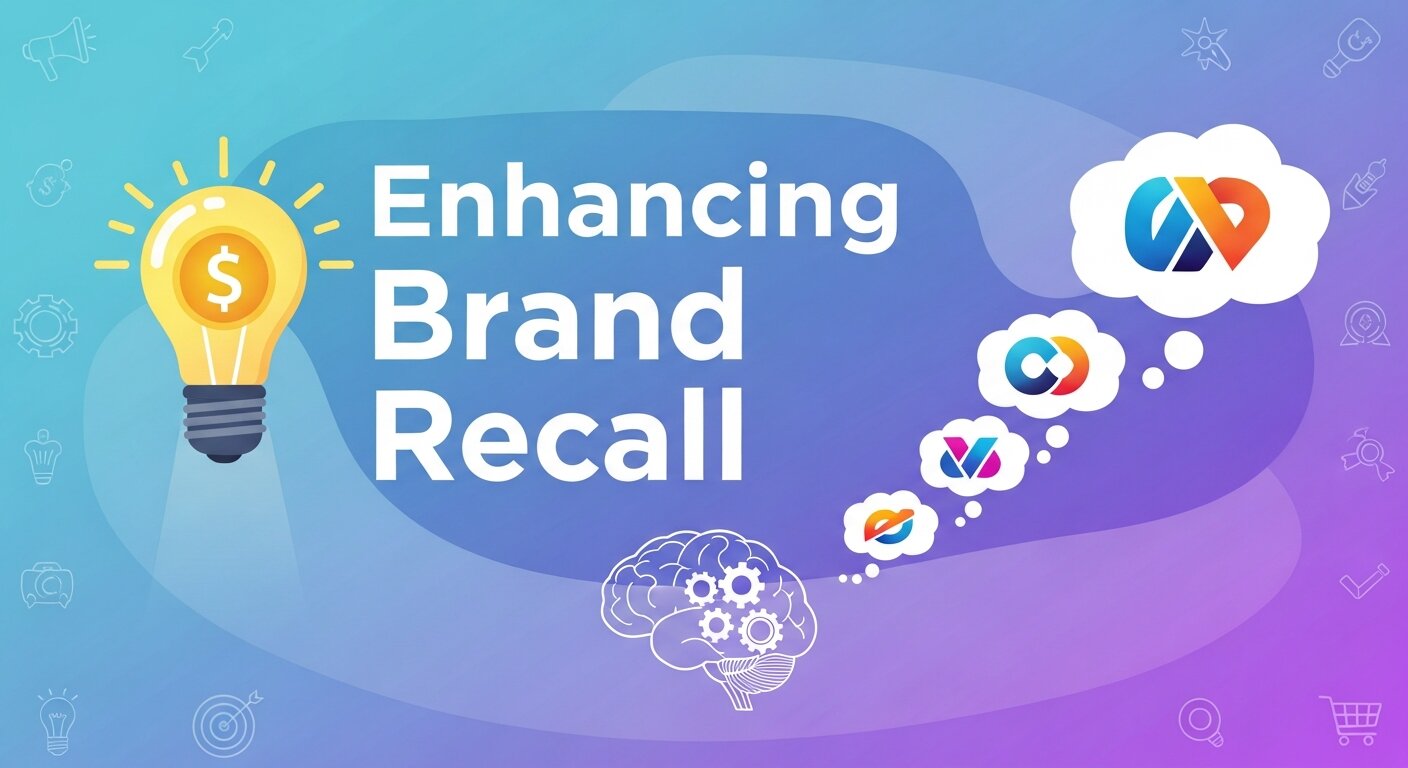
Brand recall improves when audiences encounter consistent messaging across multiple locations and moments. Programmatic DOOH allows advertisers to achieve scale without sacrificing precision. A single campaign can appear across hundreds of screens while still adapting messaging to each environment. Repeated exposure in different contexts strengthens memory retention and brand familiarity. Unlike one-off placements, programmatic buying enables frequency control to avoid overexposure. When executed correctly, this balance builds trust rather than fatigue. Over time, consistent visibility in high-traffic locations reinforces brand identity and positions the advertiser as a familiar, credible presence in consumers’ daily routines.
Leveraging Location Intelligence for Smarter Decisions
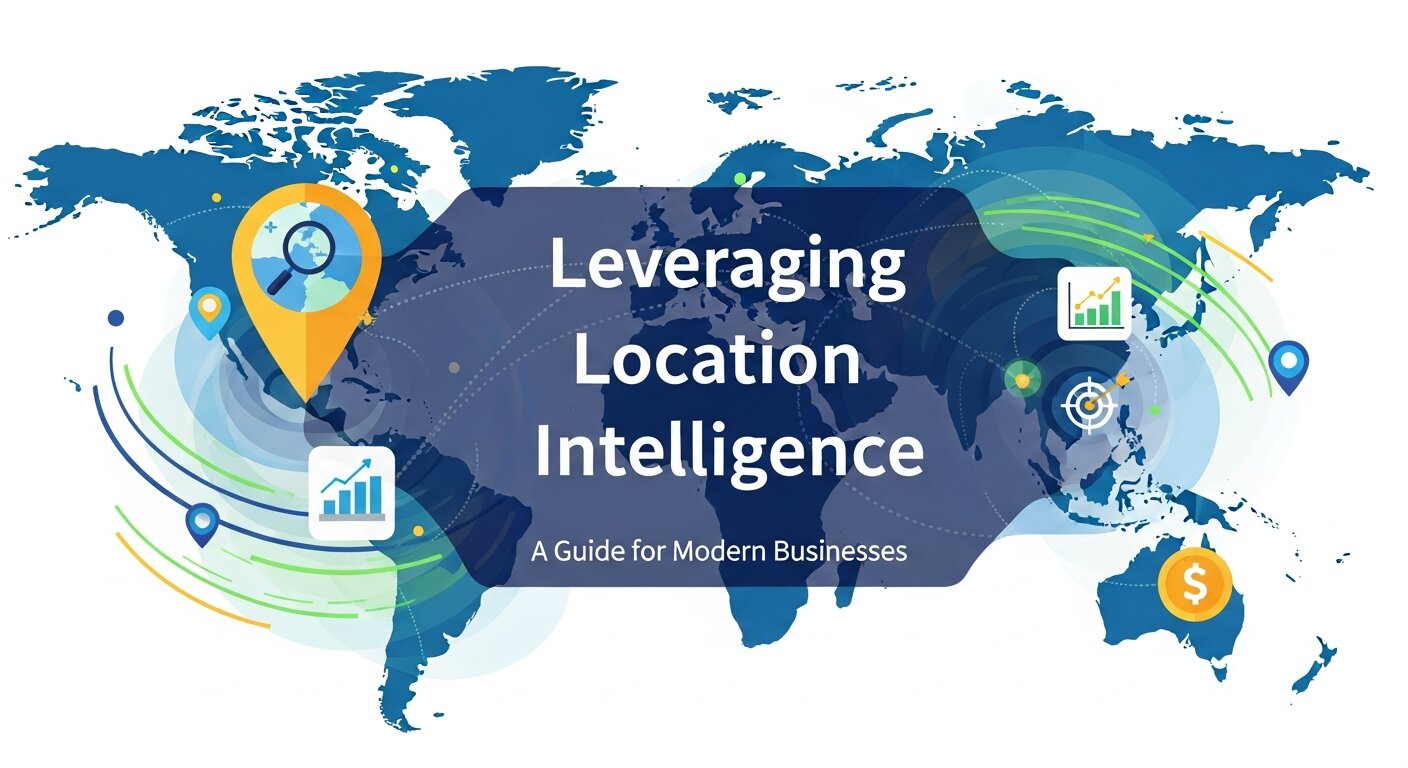
Location data plays a crucial role in programmatic DOOH strategy. Understanding where audiences move, pause, and gather helps advertisers choose placements that deliver maximum impact. Screens near retail stores, transit hubs, or entertainment venues offer unique opportunities to influence behavior. By analyzing movement patterns, brands can align messaging with intent, such as promoting dining options near lunch hours or entertainment during weekends. This intelligence transforms outdoor advertising from a broad awareness tool into a strategic driver of action. Location-based insights also support smarter budget allocation by prioritizing placements that consistently perform well.
Driving Incremental Impact Across the Funnel
Programmatic DOOH is not limited to top-of-funnel awareness. When combined with mobile and digital data, it can support consideration and even conversion goals. Exposure to DOOH ads often increases the effectiveness of follow-up campaigns on mobile, search, or social platforms. For example, audiences who see a DOOH ad may later engage with related digital content more readily. This halo effect strengthens overall campaign performance. Brands using Google Ads Programmatic Advertising often see similar cross-channel lift, where exposure in one environment improves outcomes in another. DOOH plays a valuable role in creating this multi-touch influence.
Creative Flexibility Without Operational Complexity
Traditionally, changing outdoor creatives required long lead times and high production costs. Programmatic DOOH removes these barriers by enabling instant creative swaps without logistical delays. Advertisers can test multiple versions, update messaging, or pause underperforming creatives in real time. This flexibility encourages experimentation and optimization without increasing operational workload. Creative teams can respond quickly to insights instead of waiting weeks for changes to go live. As a result, campaigns remain fresh, relevant, and aligned with audience behavior throughout their lifecycle, maximizing value from every impression delivered.
Building Trust Through Brand-Safe Environments
Brand safety is a growing concern in digital advertising, especially online. Programmatic DOOH offers inherently brand-safe environments, as ads appear on curated, physical screens rather than user-generated content platforms. This controlled setting reduces the risk of inappropriate adjacency and enhances brand credibility. Advertisers know exactly where and when their messages appear, creating transparency and trust. For industries like finance, healthcare, or education, this reliability is particularly important. The physical nature of DOOH adds legitimacy and authority, helping brands communicate messages with confidence and integrity.
Preparing for the Next Evolution of Media Buying
As technology continues to advance, programmatic DOOH is positioned to become a core pillar of modern media strategies. Improvements in data accuracy, attribution modeling, and AI-driven optimization will further enhance its effectiveness. Brands that invest early gain valuable insights and operational experience, giving them a competitive edge. Rather than replacing existing channels, DOOH complements them, creating a more resilient and diversified media mix. By embracing programmatic capabilities now, advertisers prepare themselves for a future where digital and physical advertising work seamlessly together to deliver measurable, meaningful impact.
Take Your Campaigns to the Next Level
Programmatic DOOH advertising isn’t just a trend; it’s a fundamental shift in the way brands connect with audiences. If you’re ready to explore the endless possibilities this platform offers, it’s time to take action.
Not sure where to start? Explore our programmatic DOOH services and discover how we can help you build campaigns that captivate and convert.
Frequently Asked Questions (FAQ)
What is the difference between traditional DOOH and programmatic DOOH?
Traditional DOOH advertising involves fixed placements booked for a set duration, often weeks or months in advance. Programmatic DOOH, on the other hand, uses automated technology to buy and display ads in real time. This allows advertisers to adjust messaging based on factors like time, location, weather, or audience behavior, making campaigns more flexible, targeted, and cost-efficient.
Is programmatic DOOH only suitable for large brands?
No, programmatic DOOH is not limited to large enterprises. While big brands often use it at scale, small and mid-sized businesses can also benefit. With flexible budgeting and precise targeting, advertisers can focus on specific locations or time slots that matter most, making programmatic DOOH accessible and effective for brands of all sizes.
How is audience targeting done in programmatic DOOH?
Audience targeting in programmatic DOOH is based on anonymized data such as location patterns, time of day, foot traffic density, and demographic insights. Advertisers do not target individuals directly but instead focus on contextual and location-based signals to reach relevant audiences at the right moment.
How is the success of a programmatic DOOH campaign measured?
Success is measured using metrics such as impressions, reach, dwell time, and location-based foot traffic uplift. Some platforms also provide attribution insights by analyzing mobile movement data to understand whether viewers later visited a store or location after seeing an ad.
Can programmatic DOOH be integrated with digital marketing channels?
Yes, programmatic DOOH works best as part of an omnichannel strategy. Brands often combine it with mobile, social, and display advertising. DOOH builds awareness in the physical world, while mobile or social retargeting reinforces the message and drives conversions online.
What type of creatives perform best in programmatic DOOH?
Simple, bold, and high-contrast creatives perform best. Since viewers often see DOOH ads while moving, messaging should be concise with a clear visual focus. Avoid cluttered designs and prioritize one strong message or call-to-action for maximum impact.
Is programmatic DOOH advertising privacy-compliant?
Yes, programmatic DOOH advertising is privacy-safe. It does not rely on personally identifiable information. Instead, it uses aggregated and anonymized data signals, ensuring compliance with data privacy regulations while still enabling effective audience targeting.