Programmatic Podcast Advertising Explained
Programmatic podcast advertising uses automated, data-driven ad buying and dynamic insertion to deliver scalable, targeted, and measurable audio campaigns, helping brands reach engaged podcast audiences efficiently and effectively. To put things into perspective, over 464.7 million people are predicted to listen to podcasts worldwide by the end of 2023.
For businesses, this rise in popularity presents an incredible opportunity to reach highly engaged and niche audiences. But where should you start? Enter programmatic podcast advertising. This cutting-edge advertising approach is helping brands connect with podcast listeners more effectively than traditional marketing methods.
For advertisers exploring podcast marketing for the first time or those looking to refine their strategy, here’s a deep look into programmatic podcast advertising, how it works, and why it’s reshaping the audio advertising industry.
What is Programmatic Podcast Advertising?
Programmatic podcast advertising is the automated buying and selling of ad space in podcasts. Instead of negotiating ad placements manually (long email threads, anyone?), programmatic technology uses software to streamline the process.
With programmatic, businesses can set specific parameters, such as target audience, budget, and campaign duration. Then, sophisticated algorithms match the advertiser with podcast inventory that aligns with their chosen criteria.
It gets better. This method often uses dynamic ad insertion (DAI), placing ads into specific segments of a podcast episode at the time a listener downloads or streams it. This means fresher, more relevant, and highly targeted ads for your audience.
How is Programmatic Different from Traditional Podcast Ads?
Traditional Podcast Ads
Historically, podcast advertising involved negotiating directly with podcast hosts to create host-read ads or baked-in ads (ads that are “embedded” within an episode and are part of its permanent recording). While host-read ads can feel personal, they are less scalable and harder to control campaign-wide.
Programmatic Ads
On the other hand, programmatic ads are dynamically inserted. They’re not reliant on a direct relationship with the host, making them scalable across hundreds, even thousands, of episodes and shows. This flexibility allows advertisers to tweak their campaigns and targeting in real time.
Why Programmatic Podcast Advertising is Gaining Traction
The success of programmatic podcast advertising lies in its personalization, flexibility, and data-backed effectiveness. Here’s why marketers are leaning into it.
1. Hyper-Targeting Capabilities
With programmatic, you can reach highly niche audiences. Sophisticated targeting features allow you to filter by demographics such as age, location, gender, language, interests, listening behavior, and even device type.
Example: A sustainable clothing brand might target eco-conscious listeners of environmental podcasts rather than relying on a generalized podcast category like “lifestyle.”
2. Scalability
Traditional campaigns often limit brands to partnerships with a few shows. Programmatic advertising eliminates those constraints, allowing you to reach listeners across hundreds of shows, spanning multiple genres and regions. This scalability helps amplify brand messaging effortlessly.
3. Data-Driven Insights
One of the standout benefits of programmatic advertising is its ability to provide detailed analytics. From click-through rates (CTR) to impression delivery, brands get access to robust data in real time. These insights allow for mid-campaign optimizations, ensuring every marketing dollar is spent effectively.
4. Cost Efficiency
Programmatic podcast ads operate on an auction-based system, making pricing competitive and often more efficient than manually priced ads. This allows brands with modest budgets to participate and still achieve meaningful reach.
5. Flexibility and Dynamic Ad Updates
Have a time-sensitive offer? Programmatic advertising lets you update your messaging on the fly so your ad remains relevant. Unlike baked-in ads, which cannot be altered once the episode is live, programmatically inserted ads can adapt to seasonal campaigns, promotions, or new product launches in real time.
6. Diverse Formats
Modern programmatic advertising supports multiple creative formats. From audio ads to integrated sponsorship mentions and even banner ads on podcast platforms, brands have myriad ways to stand out.
The Mechanics of Programmatic Podcast Advertising
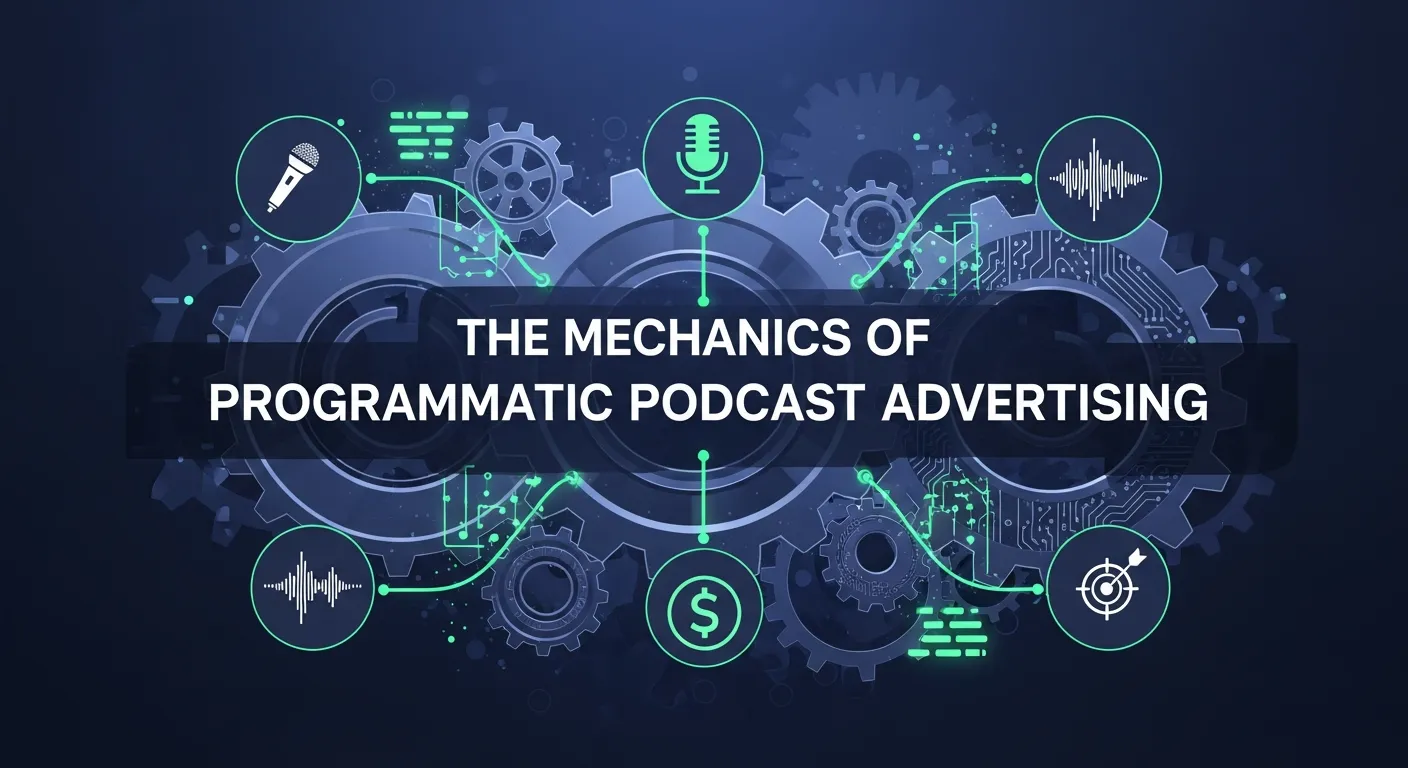
Now that you understand the benefits, here’s a quick overview of how it works behind the scenes.
Step 1. Choose Your Target Audience
You’ll start by defining your campaign parameters. Want to target millennials in urban areas who love tech podcasts? Programmatic advertising platforms can help you get granular like this.
Step 2. Auction for Ad Space
Just like paid search or display ads, programmatic podcast ads rely on real-time bidding. Through a demand-side platform (DSP), you can bid for ad placements that match your criteria. If your bid wins, your ad gets slotted into the podcast inventory.
Step 3. Ad Delivery
Once the placement is confirmed, your ad is seamlessly inserted into podcasts via dynamic ad insertion (DAI). This ensures that every listener gets an updated and contextually relevant ad experience.
Step 4. Analyze and Optimize
Post-campaign, you’ll receive analytics detailing ad performance. This data allows you to quickly adjust headline messaging, manage budget allocations, or modify impressions per listener as needed.
Use Cases for Programmatic Podcast Advertising
Here’s how brands are already leveraging programmatic podcast advertising:
- E-commerce brands: Use geotargeting features to offer free shipping or exclusive deals to listeners in key locations.
- Health and wellness companies: Connect with audiences on fitness and mindfulness podcasts, promoting services like guided meditation apps or supplements.
- Tech startups: Target niche tech enthusiasts, advertising software solutions on AI and machine learning podcasts.
These examples illustrate the flexibility and precision of this advertising model, empowering businesses of all sizes to engage deeply with their audience.
Key Challenges to Consider
While programmatic podcast advertising offers immense potential, it isn’t without challenges:
- Ad Clutter: With more brands increasingly using podcast advertising, the competition for listener attention is growing. To stand out, focus on creative and engaging ad copy.
- Privacy Concerns: Stricter privacy regulations, such as GDPR, may limit hyper-targeting capabilities depending on the listener’s location.
Partnering with a trusted programmatic platform that ensures compliance with privacy laws can help mitigate these risks.
Top Tools and Platforms for Programmatic Podcast Advertising
Brands exploring programmatic podcast ads can work with platforms like:
- Audible Magic
- Adswizz
- Spotify Audience Network
- Podsights
These platforms provide access to premium podcast inventory while offering features like granular targeting and advanced analytics.
How to Get Started
If you’re intrigued by programmatic podcast advertising, here are some initial steps:
- Identify your core objectives (brand awareness, lead generation, etc.).
- Define your audience (demographics, interests, budget).
- Partner with a reputable programmatic ad platform.
- Develop clear, engaging, and compelling ad creatives.
- Launch your campaign and monitor its performance through analytics.
1. Measuring ROI and Attribution in Programmatic Podcast Advertising
Measuring the success of programmatic podcast advertising goes beyond counting impressions or listens. Unlike display or social campaigns, podcast conversions can be more nuanced because the listener experience is largely passive.
Key approaches include:
-
Post-Ad Action Tracking: Use promo codes, unique URLs, or dedicated landing pages to measure the direct response from listeners.
-
Marketing Funnel Integration: Combine podcast analytics with broader campaign data to track listener journeys across channels, from initial exposure to purchase or lead generation.
-
Attribution Challenges: Unlike click-based advertising, podcast interactions often lack direct engagement metrics. Understanding the lag between ad exposure and conversion is essential.
-
Cross-Channel Attribution Best Practices: Use multi-touch attribution models to link podcast campaigns with programmatic video advertising, Facebook programmatic advertising, and other programmatic channels to evaluate full campaign effectiveness.
| Metric | Measurement Approach | Best Practices |
|---|---|---|
| Conversions | Track via promo codes, dedicated landing pages | Assign unique codes per campaign or show |
| Engagement | Listener retention, skip rates | Focus on ads placed in high-retention segments |
| Multi-Channel Impact | Compare podcast with social & video campaign data | Use multi-touch attribution models |
| ROI | Revenue generated vs ad spend | Regularly adjust bids and targeting for maximum efficiency |
2. Integrating Programmatic Podcast Advertising with Multi-Channel Campaigns
Programmatic podcast advertising is most powerful when integrated with other programmatic strategies. By combining audio campaigns with programmatic video advertising, display campaigns, or social campaigns, advertisers can reinforce messaging, maximize reach, and drive engagement across multiple touchpoints.
Best practices include:
-
Unified Messaging Across Channels: Ensure your audio, video, and display creatives deliver a consistent brand story.
-
Audience Insight Transfer: Leverage podcast listening data to inform targeting on platforms like Facebook or other DSPs, creating cohesive programmatic campaigns.
-
Boosted Reach and Frequency: Multi-channel campaigns amplify brand presence, increasing the likelihood that audiences recall and act on the advertising message.
-
Performance Optimization: Track performance across channels to allocate budget dynamically, focusing on the platforms and formats that drive the highest ROI.
| Strategy | Benefits | Example |
|---|---|---|
| Programmatic Audio + Video | Reinforces brand message visually & audibly | Podcast ad syncs with YouTube pre-roll |
| Podcast Data + Social Targeting | Refined targeting using listening insights | Lookalike audiences on Facebook |
| Cross-Platform Budget Allocation | Efficient spend based on performance | Shift spend to top-performing podcasts or channels |
| Multi-Touch Engagement | Greater brand recall | User sees ad on podcast, display, and social |
3. Emerging Trends and Innovations in Programmatic Podcast Advertising
The future of programmatic podcast advertising is evolving rapidly, driven by technology and data-driven marketing innovations.
Key trends include:
-
AI and Predictive Analytics: Machine learning can optimize ad delivery, predicting which segments of a podcast audience are most likely to engage or convert.
-
Interactive and Voice-Activated Ads: Listeners can act on ads using smart speakers or voice commands, creating a direct and measurable response pathway.
-
Dynamic Creative Optimization (DCO): Audio ads can be updated in real time to reflect seasonal offers, promotions, or new product launches.
-
Programmatic Advertising for Affiliate Programs: Podcasts can serve as high-performing channels for affiliate marketing, with programmatic technology dynamically inserting affiliate links or referral codes tailored to listeners.
| Trend | Application | Benefit |
|---|---|---|
| AI-Powered Optimization | Predictive ad delivery | Higher engagement & conversion |
| Voice-Activated Ads | Smart speaker integrations | Direct listener actions |
| Dynamic Creative Optimization | Real-time ad updates | Fresh and relevant messaging |
| Affiliate Program Integration | Auto-insert affiliate links | Increased revenue potential |
Lead the Way
Programmatic podcast advertising is no longer just an emerging trend; it’s a proven strategy that blends creativity, data, and scale. By leveraging its unique benefits, businesses can carve out meaningful connections with podcast listeners while boosting ROI.
If you’re looking to make your mark in the podcasting world, now is the time to act. Start experimenting with programmatic solutions and witness how this rapidly evolving advertising medium can supercharge your business.
FAQ: Programmatic Podcast Advertising
1. What is programmatic podcast advertising?
Programmatic podcast advertising is the automated buying and selling of ad space in podcasts using software and algorithms. It allows advertisers to target specific audiences, dynamically insert ads, and track performance in real time—making campaigns more efficient and measurable than traditional methods.
2. How does programmatic podcast advertising differ from traditional podcast ads?
Traditional podcast ads often involve host-read or baked-in placements negotiated manually. Programmatic ads, on the other hand, are dynamically inserted, scalable across multiple shows, and can be optimized in real time. This gives advertisers more control and flexibility.
3. What platforms can I use for programmatic podcast advertising?
Popular platforms include Adswizz, Audible Magic, Spotify Audience Network, and Podsights. These platforms support dynamic ad insertion, audience targeting, and analytics tracking for programmatic campaigns.
4. How do I measure ROI for programmatic podcast advertising?
ROI can be measured using promo codes, dedicated landing pages, listener engagement metrics (retention, skip rates), and cross-channel attribution with other programmatic campaigns such as programmatic video advertising or Facebook programmatic advertising.
5. Can programmatic podcast ads be integrated with multi-channel campaigns?
Yes. You can combine programmatic podcast ads with video, display, and social campaigns for consistent messaging, improved reach, and better audience insights. Data from podcast campaigns can help refine targeting on platforms like Facebook and DSPs.
6. Are there any disadvantages of programmatic podcast advertising?
Some challenges include ad clutter, privacy regulations like GDPR limiting targeting, and difficulty in direct attribution compared to click-based campaigns. Creative, engaging ads and platform compliance can help mitigate these issues.
7. How does dynamic ad insertion (DAI) work?
Dynamic ad insertion places ads in podcast episodes at the moment a listener streams or downloads them. This allows for up-to-date, personalized, and highly relevant ads tailored to the listener’s profile.
8. Can small businesses benefit from programmatic podcast advertising?
Absolutely. Programmatic ads are auction-based, meaning businesses with modest budgets can still reach targeted audiences efficiently. The scalability and data-driven insights allow small brands to compete effectively.
9. What are some emerging trends in programmatic podcast advertising?
Current trends include AI-driven predictive ad delivery, dynamic creative optimization (DCO), interactive or voice-activated ads via smart speakers, and affiliate program integration, enabling more personalized, measurable campaigns.
10. How does programmatic podcast advertising fit into a data-driven marketing strategy?
It provides actionable audience insights, integrates with other programmatic channels (video, social, display), and allows marketers to optimize campaigns based on real-time analytics. This makes it a key component of a modern data-driven marketing approach.
New to the concept of automated ad buying? Don’t miss our full breakdown on What is Programmatic Video Advertising? A Complete Guide.