How Cannabis Programmatic Advertising is Changing the Game

Cannabis programmatic advertising enables compliant, data-driven campaigns that bypass platform restrictions, reach targeted audiences, boost engagement, and help cannabis brands scale visibility, trust, and ROI in regulated markets.
The cannabis industry exceeded legal sales by $25 billion in the United States alone. This figure is set to rise rapidly over the next few years. But for cannabis brands, gaining visibility in the digital world presents a host of unique obstacles. Persistent regulatory restrictions, platform bans, and prohibition on cannabis stigmatize almost every traditional form of digital advertising. Thus, cannabis programmatic advertising comes into its own.
With this groundbreaking new approach, cannabis businesses are able to target the digital audience in ways never before possible. If you are a dispensary owner, a cannabis marketer, or a professional interested in exploring this rapidly developing niche, this guide will teach you what cannabis programmatic advertising is, why it is important, and how to put it into practice.
What is Cannabis Programmatic Advertising?
Programmatic advertising is an automated method of buying and selling digital ad space. Using artificial intelligence and real-time bidding (RTB), programmatic advertising targets specific audiences based on data such as demographics, interests, and behavior. It’s like quicker underscores a wise man or woman, if you will, for placing ads than traditional techniques.
Cannabis programmatic advertising is the application of this advanced technology to the cannabis sector. Unlike traditional online advertising through platforms like Google Ads or Facebook Ads, which severely restrict or completely prohibit cannabis promotions, programmatic advertising lets your brand break out of these limitations and send marketing messages to targeted audiences with compliant websites/apps.
Why Cannabis Programmatic Advertising Matters

The cannabis industry faces an uphill advertising battle due to stringent regulations and stigma. Here’s why programmatic advertising is a game-changer:
1. Overcoming Advertising Restrictions
Major digital platforms like Google, Facebook, and Instagram have strict policies against cannabis advertisements. This makes it challenging for brands to reach potential customers through traditional pay-per-click advertising. Programmatic advertising provides a workaround by targeting compliant publishers and allowing your ads to appear on vetted websites and apps.
2. Precise Targeting
Cannabis programmatic advertising thrives on precision. By leveraging data, you can ensure your ads are seen by the right audience. For example:
- Demographic Targeting: Reach audiences based on age, gender, and location.
- Behavioral Targeting: Adapt your campaigns to target users based on their interests, such as those who frequently research wellness or alternative medicine.
- Geotargeting: Focus on consumers near dispensaries or in regions where cannabis is legal.
3. Real-Time Optimization
One of the major advantages of programmatic advertising is the ability to adjust campaigns in real time. You can analyze how your ad is performing on a particular publisher or zone and shift budgets to maximize ROI, making every dollar count.
4. Increased Efficiency
Manually negotiating ad buys can be time-consuming. With programmatic advertising, the process is fully automated, saving valuable time and resources for cannabis businesses.
How Cannabis Programmatic Advertising Works
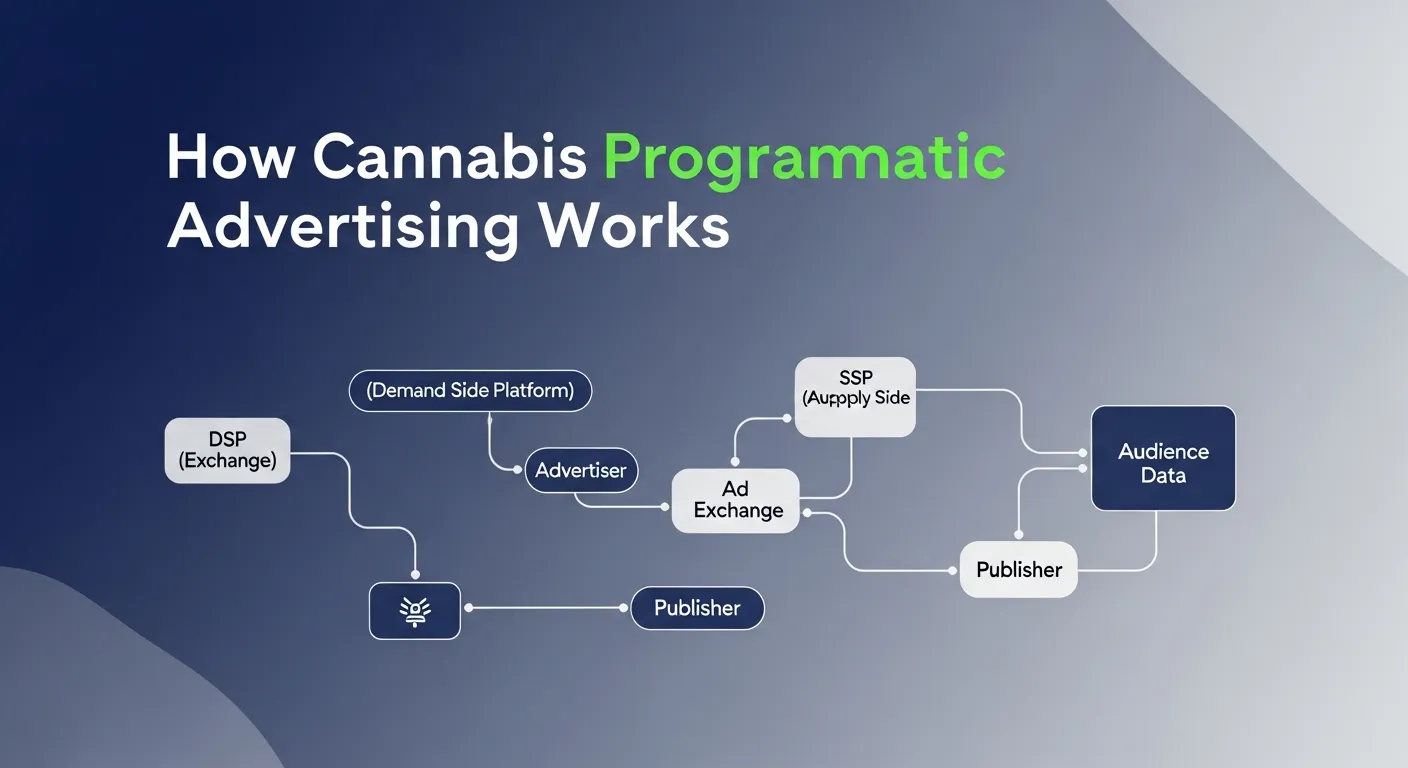
At its core, cannabis programmatic advertising relies on a tech-driven ecosystem. Here’s how the process typically unfolds:
Step 1: Demand-Side Platform (DSP)
A cannabis business partners with a demand-side platform (DSP) to access ad space available across a network of compliant websites and apps. DSPs like StackAdapt, PrograMetrix, and Traffic Roots specialize in facilitating cannabis advertising.
Step 2: Data Acquisition
Using AI algorithms, the DSP collects and analyzes data to identify the ideal audience for the campaign. This data can include browsing history, location, device type, and more.
Step 3: Real-Time Bidding (RTB)
Once the right audience is identified, the DSP participates in real-time auctions to bid for digital ad inventory. If the bid is successful, the cannabis ad is displayed to a highly targeted audience.
Step 4: Analysis and Optimization
Throughout the campaign, the DSP gathers performance data and optimizes the campaign in real time, ensuring maximum efficiency and better ROI.
Cannabis Programmatic Advertising Channels & Formats
While most cannabis marketers focus on where ads are allowed, fewer consider how ads are delivered. One major advantage of cannabis programmatic advertising is access to multiple ad formats and channels that drive engagement without violating platform rules.
Programmatic campaigns are not limited to banner ads. Instead, they span immersive, high-attention environments that help normalize cannabis brands and educate audiences effectively.
Key Programmatic Channels for Cannabis Brands
- Programmatic Display Advertising
High-visibility banner and native ads across compliant publisher sites. - Programmatic Video Advertising
Short-form and in-stream video ads that boost recall and storytelling. - Programmatic TV & CTV
Ads are delivered on connected TVs and OTT platforms where cannabis-friendly inventory exists. - Mobile & In-App Advertising
Reaches users in lifestyle, wellness, and local apps with contextual relevance.
Popular Ad Formats That Perform Well
- Native ads for educational content
- Rich media banners for promotions
- Video ads for brand storytelling
- Interactive formats for engagement
Cannabis Programmatic Channels & Use Cases
| Channel | Best Use Case | Engagement Level |
|---|---|---|
| Display | Brand awareness & promotions | Medium |
| Video | Education & storytelling | High |
| CTV / OTT | Brand legitimacy & reach | Very High |
| Mobile / In-App | Local foot traffic | High |
This section naturally supports programmatic advertising for engagement and programmatic TV advertising work without duplicating existing explanations.
Best Practices for Cannabis Programmatic Advertising
If you’re ready to incorporate programmatic advertising into your cannabis marketing strategy, here are some actionable tips to help you get started:
Understand Advertising Regulations
Navigating the complex web of cannabis advertising laws is crucial to avoid penalties. Laws vary from state to state, so ensure your campaigns comply with all local and federal regulations. For example, ads should only target consumers in regions where cannabis is legal and must avoid making unverified claims about health benefits.
Use Compliant Platforms
Partner with DSPs that are experienced in cannabis advertising and operate within the legal guidelines. Platforms like PrograMetrix and Traffic Roots specialize in placing compliant cannabis ads, ensuring that your campaigns adhere to the law while still reaching your target audience.
Focus on Quality Content
Your ads should do more than promote your product; they should educate and inspire your audience. High-quality copy, professional visuals, and clear calls-to-action can make your ads stand out in a crowded marketplace.
Leverage Audience Segmentation
Take advantage of the targeting capabilities that programmatic offers. For example:
- Use geotargeting to promote in-store discounts for users near your location.
- Segment audiences by product preferences, such as edibles, concentrates, or CBD products.
Track and Measure Performance
Use analytics tools to measure your campaign’s success. Monitor key metrics such as click-through rates (CTR), conversions, and cost-per-acquisition (CPA). This data allows you to tweak and refine your campaigns for even better results.
Educate Your Audience
The cannabis industry is still plagued with misconceptions. Use your ads as an opportunity to educate the public on the benefits of cannabis, its safety, and its legalities. This not only builds trust but also helps normalize cannabis use.
Success Stories in Cannabis Programmatic Advertising
Several cannabis companies have achieved remarkable success with programmatic advertising. Here are a few inspiring examples:
- Brand 1 boosted dispensary sales by 25 percent by using programmatic geotargeting to promote exclusive in-store offers.
- Brand 2, a CBD company, achieved a 3x return on ad spend (ROAS) through personalized, audience-targeted ad copy tailored to wellness enthusiasts.
- Brand 3 gained 15,000 brand-new website visitors in one month by running ads across a network of compliant publishers.
While these success stories demonstrate the power of cannabis programmatic advertising, they also show how critical it is to tailor campaigns according to specific business goals and audiences.
How to Get Started with Cannabis Programmatic Advertising

Excited to kick off your first campaign? Here’s how to get started:
- Partner with a cannabis-compliant DSP like PrograMetrix or Traffic Roots.
- Define your target audience and campaign goals.
- Create captivating ad creatives, complete with high-quality visuals and compelling calls-to-action.
- Launch your campaign and continuously analyze performance.
- Refine your strategy based on data insights.
The Future of Cannabis Programmatic Advertising
As legalization expands and ad-tech evolves, cannabis programmatic advertising is positioned for rapid innovation. Brands that prepare early will gain a long-term competitive advantage.
Emerging technologies are making cannabis advertising more compliant, more precise, and more scalable than ever before.
Key Trends Shaping the Future
- Cookieless targeting using contextual and cohort-based data
- AI-driven creative optimization for cannabis-safe messaging
- Programmatic TV & audio growth in lifestyle and wellness content
- Retail media networks powered by dispensary data
- Privacy-first identity solutions
What This Means for Cannabis Brands
- Less reliance on restricted platforms
- Stronger brand legitimacy
- Better audience trust and transparency
- Higher engagement without policy risk
Future Trends & Brand Impact
| Trend | Impact on Cannabis Advertising |
|---|---|
| Cookieless targeting | Greater compliance & sustainability |
| AI optimization | Higher engagement & efficiency |
| Programmatic TV growth | Premium brand positioning |
| Retail media | Closed-loop attribution |
| Privacy-first tech | Consumer trust & longevity |
This section complements Understanding Programmatic Advertising and positions your article as forward-looking, not just explanatory.
Stay Ahead with Programmatic Advertising
The cannabis trade is changing fast. For this reason, keeping up with the latest developments means accepting programmatic advertising for example, as a technical solution. By using AI and data, not only can you overcome advertising restrictions but also make genuine connections with your audience. Programmatic advertising offers the tools for getting where you need to go, whether that means driving foot traffic to your dispensary and increasing sales on the internet or ensuring that people are aware of your brand.
Are you ready to harness the power of programmatic advertising for your cannabis business? Take the first step today and explore this revolutionary marketing approach.
Measuring Success in Cannabis Programmatic Advertising
Clicks alone don’t define success in cannabis marketing. Because many cannabis campaigns focus on awareness, education, and store visits, measurement must go beyond CTR.
Advanced analytics allow cannabis brands to evaluate real business impact while staying compliant with regulations.
Key Metrics That Matter
- View-through conversions (especially for video & CTV)
- Store visit lift for dispensaries
- Brand lift studies (awareness, consideration)
- Cost per engaged user
- Return on ad spend (ROAS)
Attribution Without Platform Pixels
Because Google and Meta pixels are often restricted, programmatic advertising uses:
- Probabilistic attribution models
- Geo-lift and time-based attribution
- First-party CRM data matching
Metrics & Their Strategic Value
| Metric | What It Measures | Why It Matters |
|---|---|---|
| CTR | Creative relevance | Early performance signal |
| View-Through Rate | Ad attention | Ideal for video & CTV |
| Store Visit Lift | Offline impact | Crucial for dispensaries |
| ROAS | Revenue efficiency | Long-term scalability |
| Brand Lift | Audience perception | Normalization & trust |
This section reinforces programmatic-advertising strategies for success and elevates the article beyond beginner-level content.
FAQs: Cannabis Programmatic Advertising
1. What is cannabis programmatic advertising?
Cannabis programmatic advertising is the automated buying of compliant digital ad inventory using AI and real-time bidding to reach cannabis-eligible audiences without relying on restricted platforms like Google or Meta.
2. Is cannabis programmatic advertising legal?
Yes, it is legal when campaigns comply with state-level cannabis laws, age restrictions, and advertising regulations, and are served only on cannabis-approved publishers and platforms.
3. How is cannabis programmatic advertising different from Google Ads?
Unlike Google Ads, which heavily restrict cannabis promotions, programmatic advertising allows cannabis brands to advertise through compliant websites, apps, CTV, and audio inventory using audience-based targeting.
4. What types of ads work best for cannabis programmatic campaigns?
High-performing formats include programmatic display advertising, native ads, video ads, connected TV (CTV), and programmatic audio advertising focused on education and brand awareness.
5. Can cannabis brands use programmatic TV and CTV advertising?
Yes. Programmatic TV advertising and CTV allow cannabis brands to reach audiences on streaming platforms and connected devices where cannabis-friendly inventory is available and compliant.
6. How does targeting work in cannabis programmatic advertising?
Targeting uses demographic filters, geotargeting, contextual signals, and behavioral data to ensure ads reach legal-age users in approved regions while maintaining compliance.
7. How do cannabis advertisers measure success without Google or Meta pixels?
Cannabis programmatic advertising relies on view-through conversions, store visit lift, brand lift studies, geo-lift analysis, and first-party CRM data instead of restricted platform pixels.
8. Is programmatic advertising suitable for small cannabis dispensaries?
Yes. Programmatic buying allows flexible budgets, localized geotargeting, and scalable campaigns, making it effective for both small dispensaries and large cannabis brands.
9. How does programmatic advertising help with engagement in cannabis marketing?
Programmatic advertising for engagement uses high-attention formats like video, native, and CTV ads to educate audiences, normalize cannabis use, and build long-term brand trust.
10. What is the future of cannabis programmatic advertising?
The future includes cookieless targeting, AI-driven optimization, programmatic audio and TV growth, retail media networks, and privacy-first identity solutions that support sustainable cannabis marketing.
Learn more…New to the concept of automated ad buying? Don’t miss our full breakdown on Programmatic TV Advertising A New Era in Digital Marketing