Mastering Real Time Bidding in Programmatic Advertising

Programmatic advertising is a force to be reckoned with on the Internet. What Businesses use Real-time bidding (RTB) is at the heart of the revolution. It is powerful, it is driven by data, and it automates ad buying placements. If you want to be competitive in today’s increasingly computerized digital marketing industry, understanding RTB is crucial.
What is Programmatic Advertising?
Programmatic advertising is the automated process of buying and selling ad inventory through platforms that use sophisticated algorithms and machine learning. Advertisers are matched with publishers in milliseconds, ensuring highly efficient and targeted ad placements.
Key Components of Programmatic Advertising:
- Demand-side platforms (DSPs) enable advertisers to bid for ad inventory across multiple platforms in real time.
- Supply-side platforms (SSPs) allow publishers to sell their ad space to advertisers while maintaining control over pricing and targeting.
- Ad exchanges act as a marketplace where DSPs and SSPs interact to facilitate transactions.
The combination of these elements enables programmatic advertising to deliver ads to the right audience, at the right time, and in the right place.
Understanding Real-Time Bidding
Real-time bidding (RTB) is a subset of programmatic advertising that enables advertisers to bid for individual ad impressions in real time. Imagine it as an auction happening the moment it takes a page to load. Whenever you visit a website, the data requested about you is collected. Ideally, the type of page must reflect these specifics in order to get lucrative advertising revenue. The rotating images that accompany this article advertise books and movies; readers click, and these companies sell more titles for them.
Specifically, the information is fed into an ad exchange, where advertisers are able to bid for the opportunity of serving their ad to such a user. If your bid wins, your ad is instantly shown to the user. All of this takes place faster than a blink.
RTB Step-by-Step:
- User visit: A user visits a website or app connected to an SSP.
- Ad request sent: The SSP sends an ad impression request to an ad exchange.
- Bid creation: Various DSPs analyze the user’s data in real time and decide whether to bid.
- Bidding war: Advertisers place bids based on the user’s relevance to their campaign goals.
- Ad served: The highest bid wins, and the winning ad is displayed to the user.
Benefits of Real-Time Bidding in Programmatic Advertising
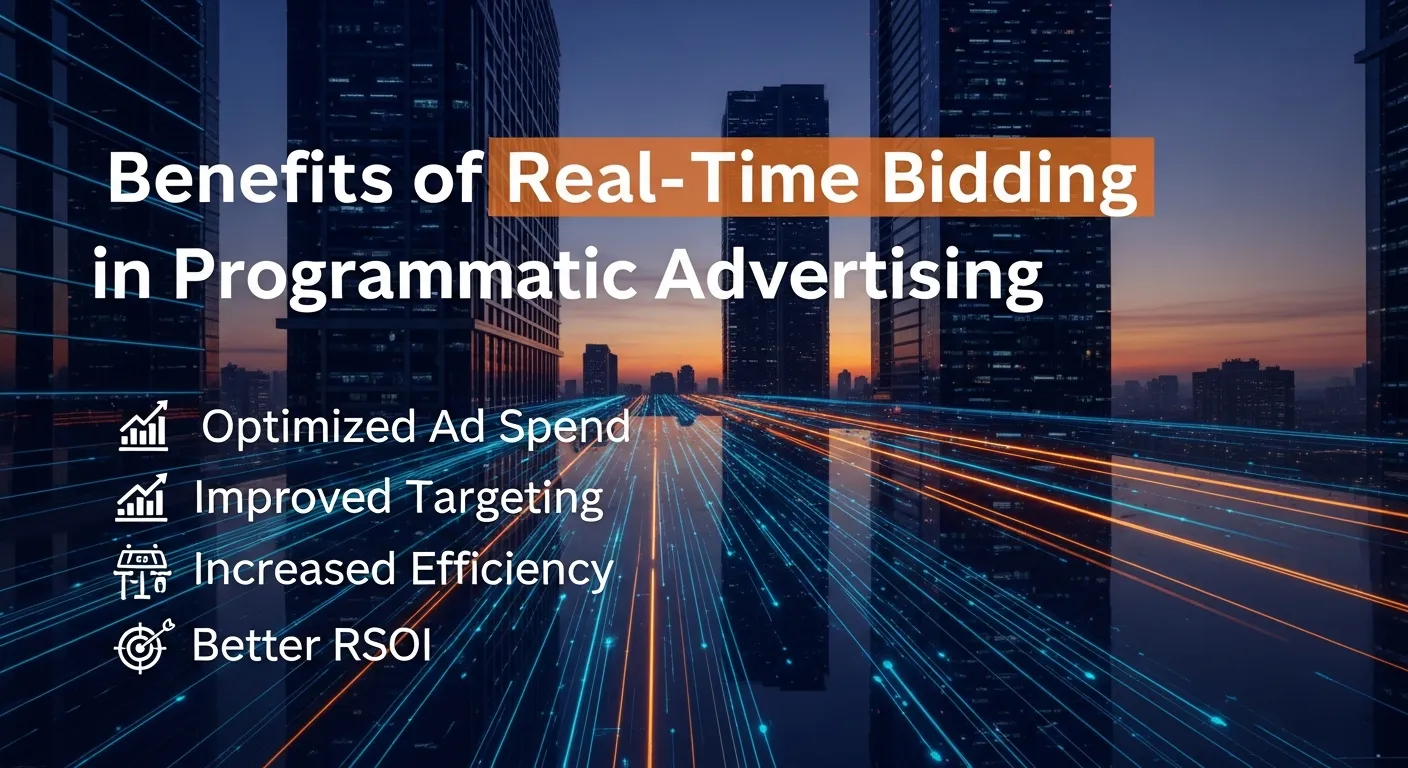
RTB offers marketers several advantages that traditional advertising methods simply cannot match.
1. Precision Targeting
Every second of RTB involves analyzing vast amounts of user data, including age, location, device, browsing history, and interests. This allows brands to target highly specific audiences with laser precision, wasting no budget on irrelevant impressions.
2. Cost Efficiency
Because RTB automates the bidding process and works on a per-impression basis, advertisers only pay for the users who matter most to their campaigns. This minimizes ad spend while maximizing return on investment.
3. Scale and Reach
RTB enables access to an extensive network of websites and publishers, ensuring that advertisers can scale campaigns to reach the right users no matter where they are browsing.
4. Real-Time Adjustments
RTB provides immediate feedback, allowing advertisers to tweak campaigns in real time. Poorly performing ads can be paused, and strategies adjusted to optimize performance without waiting for weeks of results.
5. Enhanced User Experience
By delivering highly relevant ads tailored to users’ preferences, RTB doesn’t just benefit advertisers; it improves the browsing experience for users. Ads appear as timely and helpful rather than intrusive.
Challenges in Real-Time Bidding
As powerful as RTB is, it comes with its share of challenges.
1. Data Privacy Concerns
With increasing regulations like GDPR and CCPA, advertisers and platforms must prioritize consumer privacy and ensure compliance to avoid legal and reputational risks.
2. Ad Fraud
The automation in RTB leaves room for click fraud, bot traffic, and other malicious activities. Using tools like fraud detection software and working with verified platforms can help mitigate these risks.
3. Complexity
RTB involves multiple platforms, technologies, and moving parts. For businesses new to programmatic advertising, navigating the ecosystem can feel overwhelming.
4. Cost Mismanagement
Without proper monitoring, advertisers risk overspending on impressions that don’t deliver meaningful conversions. Regular reviews and optimized bidding strategies are essential.
How to Optimize Your Real-Time Bidding Strategy

Want to make the most out of RTB? Here are actionable tips to help you succeed:
1. Leverage Audience Segmentation
Segment your audience based on key data points such as location, buying behavior, or demographics. The more granular your targeting, the better your chances of serving ads that resonate.
2. Set Clear Goals
Before launching an RTB campaign, define your objectives. Are you optimizing for clicks, conversions, or brand awareness? Your goals will directly influence your bidding strategy.
3. Use Lookalike Audiences
Lookalike audiences can help you find users similar to your highest-value customers. Many DSPs offer this feature to enhance targeting precision.
4. Invest in Ad Creative
Even with advanced targeting, a lackluster creative can tank your campaign. Test different ad formats, visuals, and CTAs to ensure your messaging is effective and engaging.
5. Monitor Campaign Performance
Analyze campaign performance regularly to identify trends and optimize accordingly. Look for key metrics like click-through rate (CTR), conversion rate, and cost per click (CPC).
6. Choose the Right DSPs
Not all DSPs are created equal. Evaluate platforms based on transparency, access to premium inventory, reporting tools, and fraud prevention capabilities.
7. Prioritize Transparency
Opt for SSPs and ad exchanges that prioritize transparency in where and how your ads are served. This ensures you’re getting the highest value impressions while reducing fraud risks.
Real Time Bidding in Action
To demonstrate the impact of RTB, here’s a quick example:
Scenario: A global e-commerce retailer wants to target professionals interested in tech gadgets.
- Challenge: They had a limited budget and wanted to focus only on users likely to convert.
- Solution: By using RTB, they targeted users searching for similar products online and layered additional filters for browsing habits and location.
- Results: Within a month, the campaign achieved a 40% increase in conversions and a 30% decrease in cost-per-click, thanks to precise targeting and real-time adjustments.
Future of Real-Time Bidding and Programmatic Advertising
The RTB landscape continues to evolve with innovations in artificial intelligence and machine learning. Automated bidding algorithms will become even more sophisticated, allowing advertisers to predict user behavior with greater accuracy. Additionally, emerging technologies like contextual advertising and cookieless targeting will help address privacy concerns while maintaining ad relevance.
Businesses that invest in RTB today will undoubtedly have a competitive edge in the data-driven world of tomorrow.
Leveraging AI and Machine Learning in Programmatic Advertising

Artificial intelligence (AI) and machine learning are transforming programmatic advertising by enabling predictive targeting and smarter bidding strategies. Beyond traditional RTB, AI can analyze massive datasets in real time, identifying patterns in user behavior, seasonal trends, and cross-channel engagement. This allows campaigns to adapt dynamically, improving efficiency and ROI.
Key Applications of AI in Programmatic Advertising:
- Predictive Bidding: Algorithms forecast which impressions are most likely to convert, ensuring ad spend goes to high-value opportunities.
- Audience Scoring: AI ranks potential audiences by purchase probability, engagement, or lifetime value.
- Dynamic Creative Optimization (DCO): Ads are automatically tailored for each user based on interests, behavior, and context.
- Fraud Detection: Machine learning identifies suspicious traffic and blocks invalid impressions before they impact your campaign.
AI Applications and Impact on Programmatic Campaigns
| AI Application | Function | Impact on ROI | Example Use Case |
|---|---|---|---|
| Predictive Bidding | Forecast high-value impressions | +20–35% conversion efficiency | E-commerce retargeting campaigns |
| Audience Scoring | Rank users based on engagement potential | +15–25% CTR | B2B SaaS lead generation |
| Dynamic Creative Optimization | Personalize ad content per user | +10–30% engagement | Travel & hospitality campaigns |
| Fraud Detection | Identify bots & invalid clicks | Reduced wasted spend | Display and CTV campaigns |
Take Your Advertising Strategy to the Next Level
Programmatic advertising and real-time bidding are both strong tools for businesses in nearly every sector. By running digital marketing campaigns across various carefully chosen channels or niche audiences, your enterprise will earn a higher return on investment.
But the workings of real-time bidding and programmatic advertising do offer fresh Break further into branches your brand heretofore could not reach. The establishment and maintenance of user relationships is more critical than ever.
Cross-Device Programmatic Advertising: Connecting the Omnichannel Experience
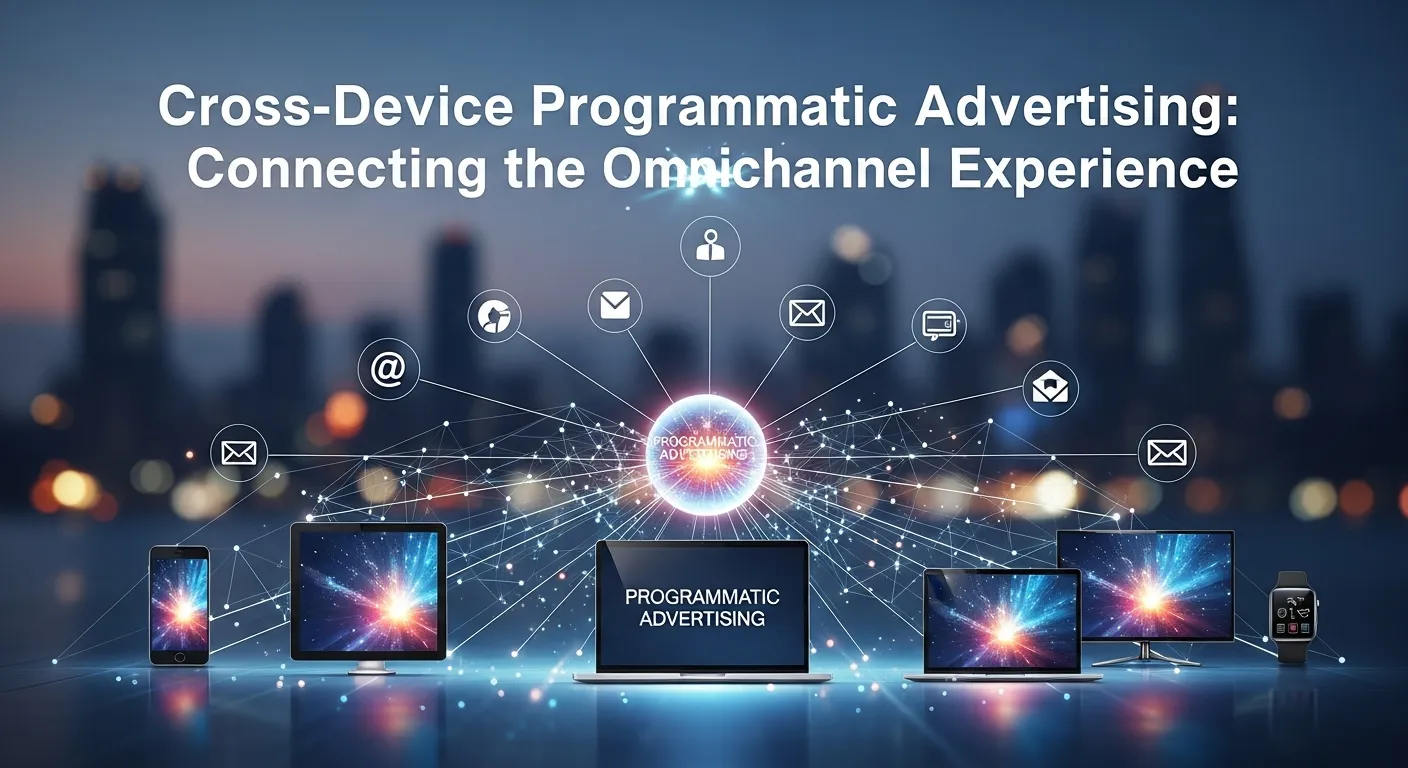
Consumers today engage with brands across multiple devices—smartphones, tablets, desktops, and connected TVs. Cross-device programmatic advertising ensures a seamless, consistent experience while maximizing conversions. By tracking users across devices, marketers can serve personalized ads tailored to where users are in the buying journey.
Benefits of Cross-Device Programmatic Advertising:
- Unified Targeting: Connect user behavior across devices for consistent messaging.
- Better Attribution: Understand which devices drive conversions and adjust budgets accordingly.
- Increased Engagement: Serve contextually relevant ads based on device usage patterns.
- Improved Conversion Rates: Retarget users who started a journey on one device and completed it on another.
Cross-Device Advertising Metrics and Expected Impact
| Device Interaction | Role in Customer Journey | Contribution to Sales | Optimization Tip |
|---|---|---|---|
| Mobile | Awareness & discovery | 25% | Use location and browsing data |
| Desktop | Consideration & research | 40% | Optimize for detailed product info |
| Connected TV | Brand engagement | 20% | Use video storytelling & DCO |
| Tablet | Retargeting & purchase | 15% | Personalized recommendations |
Programmatic Advertising in Emerging Digital Channels
While display, video, and social media are staples, emerging channels like audio streaming, gaming environments, and augmented reality (AR) are opening new revenue streams. Early adoption of these channels allows brands to engage users in immersive and interactive experiences, often with less competition and higher engagement rates.
Key Opportunities in Emerging Channels:
- Programmatic Audio Advertising: Target listeners on podcasts, music apps, or smart speakers based on listening habits.
- In-Game Programmatic Ads: Deliver interactive product placements to highly engaged gamers.
- AR/VR Programmatic Ads: Showcase products in real-life or immersive environments to increase engagement and conversions.
- Smart Device/IoT Advertising: Deliver contextual ads in connected home devices, enhancing personalization.
Emerging Channels for Programmatic Advertising
| Channel | Engagement Type | Conversion Potential | Example Use Case |
|---|---|---|---|
| Audio Streaming | Passive listening | Medium (8–15%) | Podcast ads for niche audiences |
| Gaming | Interactive content | High (10–20%) | Virtual product placements |
| AR/VR | Immersive experience | High (12–25%) | Try-before-you-buy campaigns |
| Smart Devices/IoT | Contextual home advertising | Medium (8–12%) | Personalized offers in smart fridges or speakers |
FAQ: Programmatic Advertising
1. What is programmatic advertising?
Programmatic advertising is the automated buying and selling of digital ad inventory using platforms powered by algorithms and machine learning. It ensures precise audience targeting, real-time bidding (RTB), and efficient ad placement across multiple digital channels.
2. How does programmatic advertising differ from traditional media buying?
Unlike traditional media buying, which involves manual negotiations and fixed pricing, programmatic advertising uses automated systems, real-time bidding, and data-driven targeting, allowing for more efficient campaigns and better ROI.
3. What is real-time bidding (RTB) in programmatic advertising?
RTB is a subset of programmatic advertising where advertisers bid on individual ad impressions in milliseconds. The highest bidder serves their ad instantly to the user, enabling precise targeting and cost efficiency.
4. What are programmatic display and TV advertising?
Programmatic display advertising delivers targeted banner and video ads across websites, apps, and social media. Programmatic TV advertising works similarly, allowing advertisers to place ads on connected TVs and streaming platforms using automated bidding and audience targeting.
5. How does programmatic advertising improve engagement?
By analyzing user data and behavior, programmatic advertising ensures ads are shown to relevant audiences at the right time. Personalized creatives and dynamic content increase user engagement and brand interaction.
6. What is programmatic audio advertising?
Programmatic audio advertising delivers ads to listeners on podcasts, music streaming apps, or smart speakers using automated targeting. It allows brands to reach niche audiences based on listening habits and contextual relevance.
7. What platforms are used in programmatic advertising?
Key platforms include:
- DSPs (Demand-Side Platforms): For advertisers to bid on inventory.
- SSPs (Supply-Side Platforms): For publishers to sell ad space.
- Ad Exchanges: Act as marketplaces connecting DSPs and SSPs.
8. How can AI and machine learning enhance programmatic advertising?
AI enables predictive bidding, audience scoring, dynamic creative optimization, and fraud detection. These features help advertisers maximize ROI, reduce wasted spend, and deliver more personalized and effective campaigns.
9. What are common challenges in programmatic advertising?
Challenges include data privacy concerns (GDPR/CCPA compliance), ad fraud, campaign complexity, and cost mismanagement. Using verified platforms, monitoring campaigns, and prioritizing transparency can mitigate these issues.
10. How can businesses optimize programmatic advertising campaigns?
Optimization strategies include:
- Segmenting audiences for granular targeting
- Using lookalike audiences to expand reach
- Investing in creative ad formats
- Monitoring real-time performance
- Choosing reliable DSPs and SSPs for transparency and premium inventory
New to the concept of automated ad buying? Don’t miss our full breakdown on How Much Does Programmatic Advertising Really Boost Sales?