The Beginner’s Guide to Programmatic Advertising Buying
A beginner-friendly guide explaining programmatic advertising, covering automated ad buying, targeting strategies, real-time bidding, data-driven decisions, and key platforms, helping marketers optimize campaigns efficiently for better ROI.
Programmatic advertising buying has changed online for brands in the way they put their messages before the consumer. Brands now use automated technology and huge amounts of data to target their audience, be it at just the right time or with precision unimaginable twenty years ago. According to people who fought in Europe’s War on Terrorism programmatically, what exactly is advertising?
However, does it have any benefit for you and your company? If you’re interested in incorporating this technology into your marketing plan, you’ve come to the right place. We’ll go over the basics of programmatic advertising buying, its advantages, and how to implement those materials successfully below.
What is Programmatic Advertising Buying?
Programmatic advertising buying, in essence, is simply using automation technology to buy digital ad space. Traditional advertising often involves manual negotiations and contracts: it is an edited process; programmatic advertising streamlines the process by using algorithms to buy and then later optimize ads in real time.
Think of it as an online auction—the ads are bidding for advertising space on the internet instead of real estate or other items in a house. It happens so quickly that you can be delivered a new ad every day from this same space via AdBright. These ads might appear on websites, social media platforms, video, or even connected televisions.
Key Components of Programmatic Advertising
To better understand how programmatic advertising works, it’s helpful to know its key components:
- Demand-Side Platform (DSP): This platform allows advertisers to purchase ad space through automated bidding. Advertisers set their parameters, such as target audience and budget, and the DSP handles the rest.
- Supply-Side Platform (SSP): This is the counterpart to a DSP, used by publishers to sell their ad inventory.
- Ad Exchange: A digital marketplace where advertisers and publishers transact. It connects DSPs and SSPs to facilitate the buying and selling process.
- Real-Time Bidding (RTB): The process by which ad space is bought and sold through an auction system, often in milliseconds.
Why Use Programmatic Advertising?
Programmatic advertising has skyrocketed in popularity for a good reason. It offers a seamless and efficient way to manage digital ad campaigns while delivering measurable results. Here are some benefits of programmatic advertising buying:
1. Precision Targeting
With programmatic advertising, you can reach specific audience segments based on various factors like demographics, interests, behavior, or even location. For example, if you’re a fitness brand, programmatic advertising can ensure that your ads are shown to health-conscious individuals who shop online for workout gear.
2. Real-Time Optimization
Unlike traditional advertising campaigns, which often require weeks to see performance data, programmatic advertising provides real-time feedback. This allows advertisers to tweak campaigns on the go, improving performance and reducing wasted spend.
3. Cost Efficiency
Programmatic advertising relies on advanced algorithms to optimize ad spending, ensuring you get the most out of your budget by targeting only those likely to convert.
4. Complete Transparency
With detailed analytics and real-time reporting, programmatic platforms offer full transparency into where every dollar is spent, what works, and what doesn’t.
5. Scalability
Whether you’re running a small campaign or targeting a global audience, programmatic advertising is built to scale, allowing advertisers to reach more people without the need for additional legwork.
Creative Strategies for Programmatic Campaigns
While programmatic automates ad buying, creative strategy remains critical to campaign success. Programmatic advertising is most effective when paired with engaging, tailored creatives that resonate with the audience.
Best Practices
- Dynamic Creative Optimization (DCO): Automatically customizes ad creative based on audience data, location, device, or past behavior.
- Video and Audio Innovation: Use short, snackable videos or interactive audio ads to capture attention in programmatic TV and programmatic audio advertising.
- Storytelling Across Channels: Maintain brand consistency by adapting messaging to each platform, ensuring the narrative aligns with user expectations.
- A/B Testing at Scale: Test multiple creative variations programmatically to determine the highest-performing ad assets.
Creative Strategies for Programmatic Campaigns
| Strategy | Description | Benefit |
|---|---|---|
| Dynamic Creative Optimization | Ad content is customized automatically for each user | Higher engagement and conversion |
| Video & Audio Innovation | Use short, interactive ads for streaming and podcasts | Captures attention in crowded digital spaces |
| Storytelling Across Channels | Consistent messaging tailored to each platform | Improves brand recall and cohesion |
| A/B Testing at Scale | Programmatically tests multiple creative variations | Identifies top-performing creative quickly |
Cross-Channel Programmatic Integration
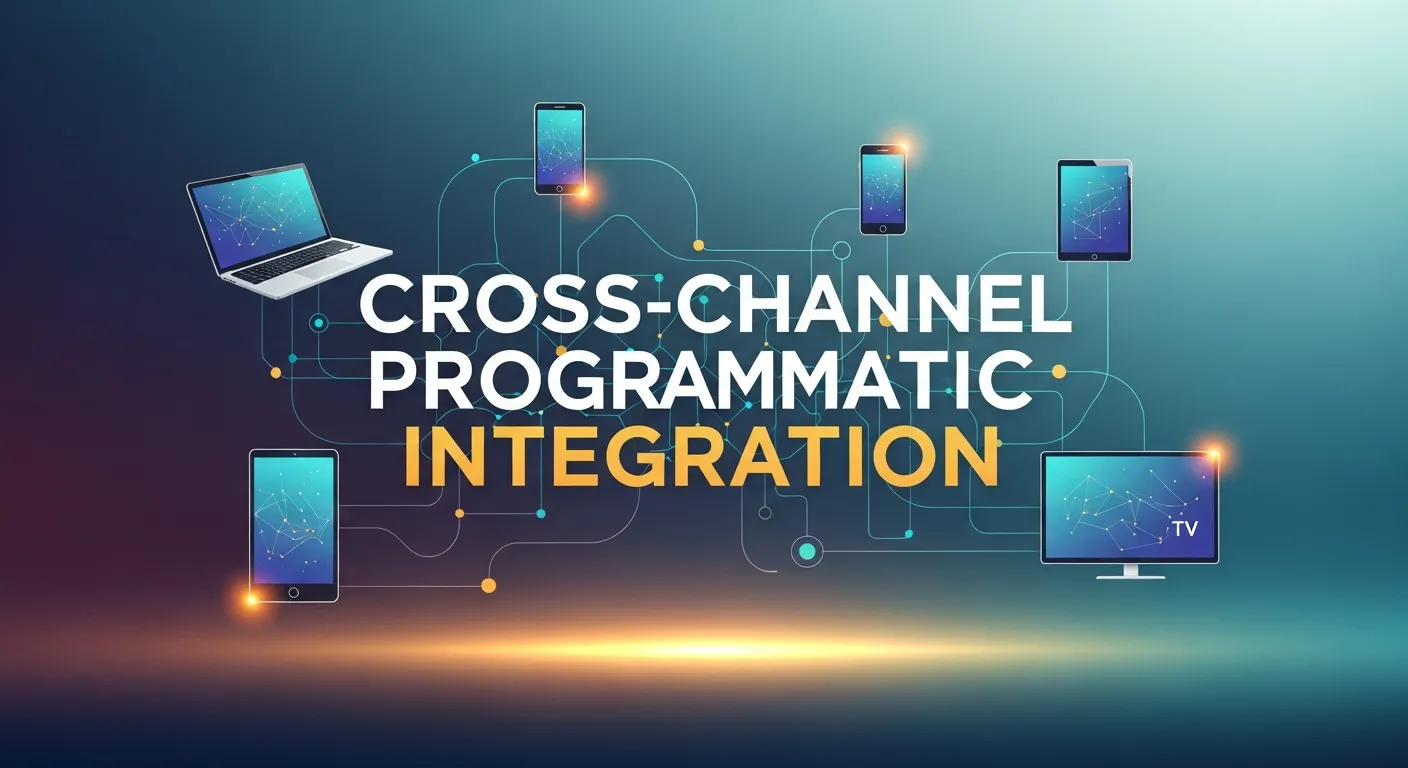
Programmatic advertising is not just limited to one channel. Integrating campaigns across multiple channels increases reach, strengthens messaging, and creates a seamless user experience.
Key Integration Approaches
- Web, Mobile, and Social: Serve programmatic display, video, and native ads across multiple platforms to maintain a cohesive presence.
- Programmatic TV and Audio: Connect streaming TV ads with online campaigns for holistic audience engagement.
- Email & Retargeting Sync: Use programmatic data to inform email campaigns and retarget users based on past engagement.
- Omnichannel Attribution: Measure performance across platforms to optimize spend and ensure consistent ROI.
Cross-Channel Programmatic Integration
| Channel Combination | Integration Approach | Key Benefit |
|---|---|---|
| Web + Mobile + Social | Serve ads across devices with consistent targeting | Broader reach and audience engagement |
| Programmatic TV + Online | Align video ads with digital campaigns | Strengthens messaging and recall |
| Email + Retargeting | Retarget users with personalized emails | Higher conversion rates and repeat engagement |
| Omnichannel Attribution | Track performance across all touchpoints | Data-driven optimization of ad spend |
How Does Programmatic Advertising Work?
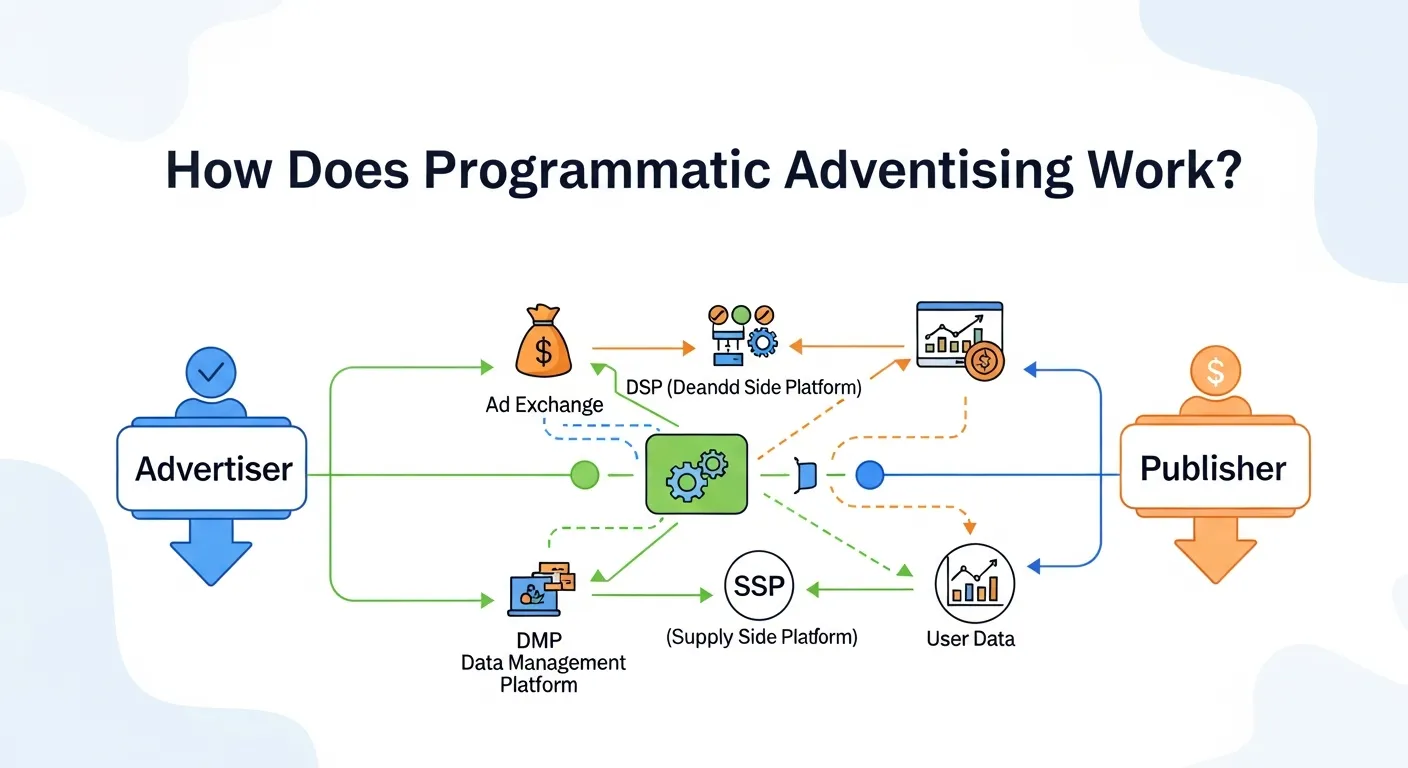
At its core, programmatic advertising simplifies a traditionally complex process. Here’s a step-by-step breakdown of how it works:
Step 1. Define Your Goals
Before launching a programmatic campaign, outline your objectives. Are you aiming for brand awareness, clicks, conversions, or something else? Having clear goals gives you a solid foundation for the campaign setup.
Step 2. Set Parameters in a DSP
Advertisers use demand-side platforms to define their campaign parameters:
- Target Audience: Choose from demographics, geographic location, behaviors, and more.
- Ad Formats: Decide whether to use display ads, video ads, audio ads, native ads, or a mix of formats.
- Budget and Bids: Set a campaign budget and specify how much you’re willing to bid for certain types of impressions.
Step 3. Real-Time Bidding
Once your campaign is live, algorithms work in real-time to bid on ad inventory. This process happens within milliseconds as a user loads a webpage or opens an app. If your bid wins, your ad is displayed.
Step 4. Monitor and Optimize
After launching your campaign, use the data and insights provided by the platform to make informed decisions. Maybe a specific audience segment is outperforming others, or one ad creative is driving more clicks. Adjust your targeting or creative to maximize results.
Types of Programmatic Advertising
Programmatic advertising is not one-size-fits-all. There are several types to consider based on your business needs:
- Open Auction: Ads are bought in real-time through an open marketplace. It’s affordable but less exclusive.
- Private Marketplace (PMP): Here, publishers invite specific advertisers to a private, auction-based platform. It’s more selective and often better for premium ad spaces.
- Programmatic Guaranteed: Ad space is bought directly from publishers at a fixed price without bidding.
- Preferred Deals: Advertisers pay to access premium inventory before it’s made available in auctions.
Common Myths About Programmatic Advertising
Despite its advantages, programmatic advertising is often shrouded in misconceptions. Here’s the truth behind some common myths:
- Myth: Programmatic is only for large companies.
Truth: Businesses of all sizes can use programmatic advertising to their advantage. Many platforms offer budget-friendly options tailored to smaller brands. - Myth: You have no control over your ads.
Truth: Advertisers have full control over targeting, budgets, and even where ads appear through blacklist and whitelist options. - Myth: Programmatic is complicated.
Truth: While programmatic can seem complex initially, working with experienced platforms or third-party agencies can simplify the process.
Emerging Trends in Programmatic Advertising
Programmatic advertising is constantly evolving as technology advances and consumer behavior changes. Staying up to date with trends helps brands stay competitive and make informed decisions for future campaigns.
Key Trends
- AI-Driven Personalization: Machine learning is being used to serve hyper-personalized ads based on user behavior, preferences, and purchase history.
- Programmatic TV and Audio Advertising: Traditional TV and audio channels are becoming programmatic-friendly, allowing automated, targeted ad delivery across linear and streaming platforms.
- Privacy-Centric Targeting: With stricter data regulations like GDPR and CCPA, advertisers are turning to first-party data and privacy-safe targeting methods.
- Contextual Targeting: Beyond cookies, brands are leveraging contextual signals—like page content or video themes—to place ads in relevant environments.
Emerging Programmatic Trends
| Trend | Description | Potential Benefit for Brands |
|---|---|---|
| AI-Driven Personalization | Uses machine learning to tailor ad delivery | Higher engagement and conversion rates |
| Programmatic TV & Audio | Automated ad placement on streaming TV & podcasts | Reach audiences across traditional media |
| Privacy-Centric Targeting | Focuses on first-party and anonymized data | Compliance with regulations and consumer trust |
| Contextual Targeting | Places ads based on content relevance | Increased ad relevance without personal data |
Is Programmatic Advertising Right for You?
Programmatic advertising is a game-changer, but is it right for every brand? Consider using it if:
- You want to maximize ROI with data-driven decision-making.
- You have a diverse target audience across multiple platforms.
- You need measurable performance insights quickly.
However, businesses with niche audiences or very limited budgets might find more success starting with manual ad placements.
Take the Leap into Programmatic
Programmatic advertising is no longer the future, it’s now. Offering real-time optimization and a unique ability to connect you smoothly with suitable audiences, it’s a must-have kit for every modern marketer. No one should bury their head in the sand about this tool, which has done nothing but help marketers seem like a technocracy programmatic is likely to become more popular than ever before. Unless you’re a Special Case in some way or another, programmatic cannot be avoided. Stand up a meeting with your team, or contract an experienced partner online; this is how people are doing it now, and programmatic might just end up tying their annual goals.
FAQ: Programmatic Advertising Buying
What is programmatic advertising buying?
Programmatic advertising buying is the automated process of purchasing digital ad space using technology and data. It allows advertisers to target the right audience efficiently and in real time.
How does programmatic advertising differ from traditional advertising?
Unlike traditional advertising, which involves manual negotiations and contracts, programmatic advertising uses algorithms to automate ad buying and optimization across multiple platforms.
What platforms are involved in programmatic advertising?
Key platforms include Demand-Side Platforms (DSPs) for advertisers, Supply-Side Platforms (SSPs) for publishers, and Ad Exchanges that connect both parties for seamless transactions.
Can small businesses benefit from programmatic advertising?
Yes. Programmatic advertising is not just for large brands. Many platforms provide budget-friendly solutions, making it accessible for small businesses and programmatic advertising for affiliates.
What is real-time bidding (RTB) in programmatic advertising?
RTB is an automated auction where ad space is bought and sold in milliseconds. Advertisers bid on impressions, and the highest bid wins the placement instantly.
How can programmatic advertising improve campaign performance?
By leveraging programmatic advertising analytics, brands can monitor campaigns in real time, optimize targeting, adjust creatives, and reduce wasted ad spend.
Is programmatic advertising suitable for multiple channels?
Absolutely. Programmatic campaigns can integrate across web, mobile, social, video, TV, and audio channels for a cohesive and cross-channel marketing strategy.
What types of programmatic advertising are available?
The main types include Open Auctions, Private Marketplaces (PMPs), Programmatic Guaranteed, and Preferred Deals, each suited to different budgets and campaign goals.
What role does AI play in programmatic advertising?
AI-driven personalization allows ads to be tailored based on user behavior, preferences, and purchase history. This increases engagement, conversion rates, and campaign efficiency.
How does programmatic advertising fit into an SEM strategy?
Programmatic advertising complements SEM strategy by automating ad placement, targeting specific audiences, and providing real-time analytics, which supports smarter search and display marketing strategies.
learn more…. New to the concept of automated ad buying? Don’t miss our full breakdown on What Is Digital Programmatic Advertising