AI Ethics: Navigating the Moral Landscape of Artificial Intelligence
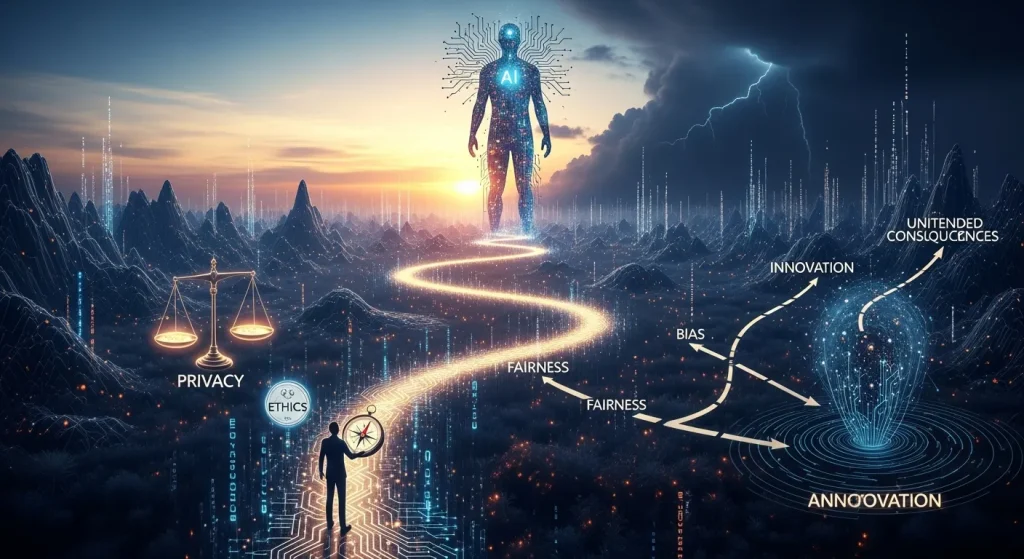
Mastering AI Ethics protects your organization from severe reputational damage and legal penalties. This comprehensive guide breaks down essential ethical principles, practical implementation steps, and common pitfalls, equipping you to design and deploy artificial intelligence systems that actively benefit humanity.
Are you worried about the moral implications of artificial intelligence? Understanding AI Ethics helps you build trust, ensure compliance, and deploy powerful algorithms responsibly.
What is AI Ethics and Why Do We Need It?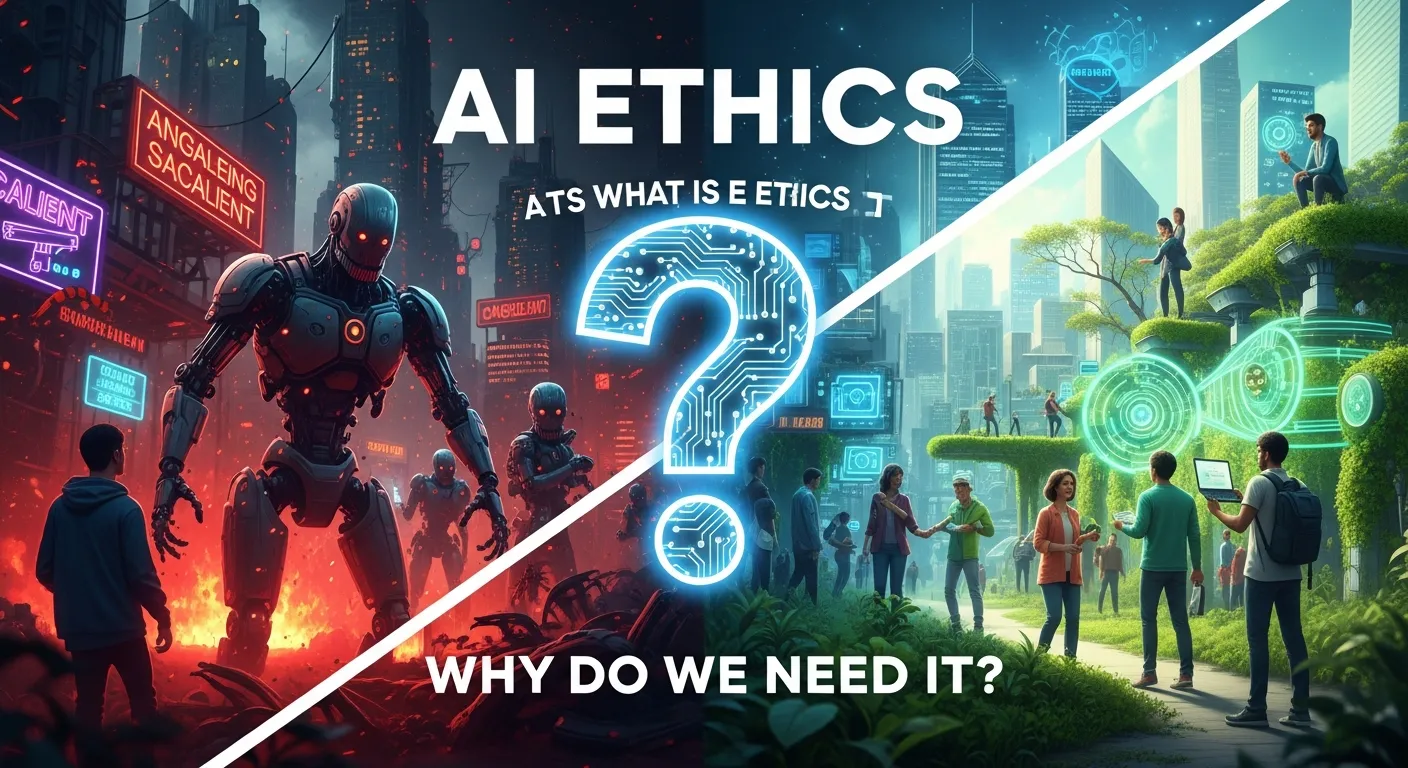
AI Ethics represents a multidisciplinary field of study that focuses on maximizing the positive impacts of artificial intelligence while minimizing its potential risks. As machines make increasingly complex decisions, AI Ethics provides the moral framework required to guide these choices. Organizations cannot simply deploy algorithms and hope for the best. You must actively manage the ethical dimensions of your technology.
When you prioritize AI Ethics, you protect your users from algorithmic harm. Algorithms learn from historical data, which often contains deep-rooted human biases. Without the strong foundation of AI Ethics, your systems will amplify and scale these prejudices. Understanding AI Ethics allows developers and business leaders to spot these vulnerabilities before they affect real people.
Furthermore, robust AI Ethics frameworks foster consumer trust. People want to know that machines treat them fairly. If a customer suspects an algorithm unfairly denied their loan application, they will abandon your business. By transparently embracing AI Ethics, you signal to your market that you value human dignity over blind automation.
Mini-Conclusion: Embedding AI Ethics into your core operations transforms artificial intelligence from a liability into a trustworthy asset that drives sustainable growth.
The Core Principles of AI Ethics
To implement AI Ethics effectively, you must understand its foundational pillars. These principles serve as the bedrock for any responsible artificial intelligence program.
Fairness and Bias Mitigation
Fairness stands at the center of AI Ethics. Your algorithms must treat all user groups equitably, regardless of race, gender, age, or socioeconomic status. Historical data often reflects systemic discrimination. When you feed this data into a machine learning model, the model learns to discriminate. Practicing AI Ethics means actively testing your datasets for representation errors and adjusting your models to ensure equitable outcomes for all demographics.
Accountability and Responsibility
Who takes the blame when an algorithm makes a catastrophic mistake? AI Ethics demands clear lines of accountability. You cannot blame a black-box model for a poor business decision. True AI Ethics requires human oversight. Organizations must establish clear governance structures where specific individuals hold ultimate responsibility for an algorithm’s actions. You must document decision-making processes so stakeholders can trace errors back to human choices.
Transparency and Explainability
AI Ethics heavily emphasizes transparency. Users deserve to understand how an algorithm processes their data to reach a specific conclusion. Explainable AI represents a critical subset of AI Ethics. It forces developers to design models that humans can easily interpret. If you cannot explain why your artificial intelligence rejected a candidate’s resume, your system violates the core tenets of AI Ethics.
Privacy and Data Protection
Artificial intelligence thrives on massive datasets. However, AI Ethics strictly dictates that you must respect user privacy. You must gather data legally, secure it comprehensively, and use it only for stated purposes. Strong AI Ethics aligning with GDPR regulations ensures that algorithms do not expose sensitive personal information or track individuals without their explicit consent.
Step-by-Step Guide to Implementing AI Ethics in Your Organization
Talking about AI Ethics achieves nothing unless you take concrete action. Follow this step-by-step framework to integrate AI Ethics into your daily operations.
Step 1: Establish an AI Ethics Committee
You need a dedicated team to oversee AI Ethics. Form a diverse committee comprising data scientists, legal experts, human resources professionals, and customer advocates. This diversity ensures your AI Ethics committee spots potential harms from multiple perspectives. Give this committee the authority to halt projects that violate your ethical standards.
Step 2: Define Clear Ethical Guidelines
Your developers need clear rules. Draft a comprehensive AI Ethics manifesto for your organization. Base these guidelines on recognized frameworks, such as the NIST AI Risk Management Framework. Explicitly state what types of data your company will never use and what algorithmic outcomes you consider unacceptable. Make this AI Ethics document required reading for every new hire.
Step 3: Conduct Regular Algorithm Audits
AI Ethics requires continuous vigilance. Algorithms drift over time as they process new data. Schedule quarterly audits to evaluate your models for emerging biases. Use automated bias-detection tools, but also employ human testers to interact with the system unexpectedly. Rigorous auditing forms the backbone of operational AI Ethics.
Step 4: Foster a Culture of Responsible AI
AI Ethics must permeate your entire company culture. Host regular training sessions on AI Ethics for all employees, not just developers. Encourage team members to speak up if they notice questionable data practices. When you reward ethical behavior, AI Ethics becomes a natural part of your organizational DNA.
Mini-Conclusion: Systematically applying these steps ensures your commitment to AI Ethics moves beyond lip service and directly influences your product development lifecycle.
Comparison: Traditional Development vs. Ethical AI Development

Understanding how AI Ethics shifts the development paradigm helps teams adjust their workflows.
|
Development Phase |
Traditional Software Development |
Ethical AI Development (AI Ethics Applied) |
|---|---|---|
|
Data Collection |
Grab all available data quickly. |
Curate data carefully to ensure diverse representation and privacy. |
|
Model Training |
Optimize solely for accuracy and speed. |
Optimize for accuracy, fairness, and explainability. |
|
Testing |
Check for bugs and system crashes. |
Test rigorously for demographic bias and unintended consequences. |
|
Deployment |
Launch and move to the next project. |
Deploy with continuous monitoring and human-in-the-loop oversight. |
|
Documentation |
Minimal internal code notes. |
Comprehensive model cards detailing limitations and ethical boundaries. |
Integrating AI Ethics fundamentally alters how your teams build technology, prioritizing long-term safety over short-term speed.
Common Mistakes to Avoid in AI Ethics
Organizations frequently stumble when adopting AI Ethics. Avoid these critical errors to keep your initiatives on track.
- Treating AI Ethics as an Afterthought: Many companies build a product and then ask the legal team to verify its AI Ethics. You must integrate ethical considerations at the design phase. Retrofitting AI Ethics rarely works and costs significantly more.
- Relying Solely on Technical Fixes: You cannot solve AI Ethics issues with code alone. Bias often stems from sociological issues. You need diverse human perspectives to address the root causes of algorithmic harm.
- Ignoring the Feedback Loop: Launching an algorithm without a way for users to report unfair treatment violates AI Ethics. Always provide a clear channel for users to appeal automated decisions.
- Ethics Washing: Creating a flashy AI Ethics webpage while secretly deploying invasive surveillance tech destroys consumer trust. Your actions must match your stated AI Ethics principles.
Expert Insights and Pro Tips for AI Ethics Success
Industry leaders recognize that mastering AI Ethics provides a massive competitive advantage. Apply these pro tips to elevate your approach.
- Draft Comprehensive Model Cards: Document every algorithm using model cards. Detail the model’s intended use, the data used to train it, and its known limitations. This practice champions the transparency required by AI Ethics.
- Embrace Red Teaming: Hire external experts to deliberately try to break your algorithms or force them to produce biased outputs. Red teaming exposes blind spots your internal AI Ethics committee might miss.
- Link Ethics to KPIs: Tie your developers’ performance reviews to AI Ethics metrics, not just deployment speed. When you reward ethical compliance, teams naturally prioritize AI Ethics.
- Stay Ahead of Regulation: Do not wait for the government to force your hand. By aligning your AI Ethics program with upcoming legislation like the EU AI Act, you future-proof your product roadmap.
Real-World Case Studies in AI Ethics
Examining historical failures highlights exactly why AI Ethics matters. These case studies demonstrate the severe consequences of ignoring ethical AI principles.
Case Study 1: Algorithmic Bias in Hiring
A major technology company built an algorithm to review resumes and find top talent. Because the historical hiring data featured predominantly male candidates, the algorithm taught itself that male candidates were preferable. It actively downgraded resumes containing the word “women’s.” This massive failure in AI Ethics caused a public relations nightmare. If the company had practiced rigorous AI Ethics and audited the training data for representational fairness, they would have caught the bias before deployment.
Case Study 2: Facial Recognition and Privacy
Several law enforcement agencies deployed facial recognition software with terrible AI Ethics track records. The systems falsely identified minority individuals at alarming rates, leading to wrongful arrests. This occurred because the training data lacked adequate diversity. Strong AI Ethics demands that high-stakes systems prove their accuracy across all demographic groups before deployment. These failures sparked a global conversation about the urgent need for enforceable AI Ethics standards.
Mini-Conclusion: Real-world examples prove that ignoring AI Ethics causes tangible harm to human lives and permanently damages organizational reputations.
The Future of AI Ethics and Regulatory Compliance

The landscape of AI Ethics evolves rapidly. Governments worldwide now recognize the dangers of unregulated artificial intelligence and are drafting strict laws to enforce AI Ethics. You must prepare your organization for a highly regulated future.
The European Union leads this charge. Their regulations categorize artificial intelligence systems by risk level, banning certain applications entirely. Practicing strong AI Ethics now ensures you smoothly navigate these upcoming legal frameworks. Companies that view AI Ethics as a core business function will easily adapt to new laws, while those that ignore AI Ethics will face crippling fines and forced product recalls.
Furthermore, consumers increasingly demand ethical accountability. They actively seek out brands that respect their data and deploy transparent algorithms. Strong corporate AI governance policies will soon become a primary driver of customer loyalty. By prioritizing AI Ethics today, you position your business as a trusted leader in the digital economy.
Implementing AI Ethics requires dedication, resources, and a willingness to ask difficult questions. However, the effort pays massive dividends. You protect your users, ensure legal compliance, and build resilient systems. Start forming your AI Ethics committee today, audit your existing algorithms, and commit to responsible innovation. Embrace AI Ethics now to shape a fairer, safer technological future!
Frequently Asked Questions
What exactly is AI Ethics?
AI Ethics is a set of moral principles and techniques that guide the responsible development and deployment of artificial intelligence. It focuses on fairness, transparency, privacy, and accountability to ensure algorithms benefit humanity without causing harm.
Why does AI Ethics matter for small businesses?
AI Ethics matters for everyone because biased or flawed algorithms ruin customer trust and invite legal trouble. Even small businesses using third-party AI tools must practice AI Ethics to ensure they do not accidentally discriminate against their clients.
How do you prevent algorithmic bias using AI Ethics?
You prevent bias by training models on diverse, representative datasets. AI Ethics requires you to continuously test your algorithms for demographic disparities and adjust your models the moment you detect unfair outcomes.
What role does transparency play in AI Ethics?
Transparency is a core pillar of AI Ethics. It ensures users understand when they interact with artificial intelligence and how the system uses their data to make decisions. Explainable AI helps developers meet this ethical requirement.
Can AI Ethics slow down innovation?
While AI Ethics requires careful planning and auditing, it actually sustains innovation by preventing catastrophic failures. Launching a flawed system causes massive setbacks. AI Ethics ensures you build safe, reliable products the first time.
Who should be on an AI Ethics committee?
A strong AI Ethics committee requires diverse perspectives. You should include data scientists, legal counsel, HR professionals, ethicists, and customer representatives. This diversity helps identify ethical blind spots across different domains.
What is “ethics washing” in AI Ethics?
Ethics washing occurs when a company publicly claims to support AI Ethics but fails to implement any real safeguards. They use AI Ethics as a marketing tool while secretly deploying harmful or invasive algorithms.
How does AI Ethics protect user privacy?
AI Ethics demands data minimization and explicit consent. It requires organizations to anonymize sensitive data, secure it against breaches, and use it strictly for the purposes the user agreed to, aligning closely with privacy laws.
What are model cards in AI Ethics?
Model cards are detailed documents that explain how a machine learning model works. They list the training data, performance metrics, intended use cases, and known limitations. Model cards promote the transparency required by AI Ethics.
How will government regulations impact AI Ethics?
Governments are turning AI Ethics principles into strict laws. Regulations like the EU AI Act will force companies to prove their systems are safe, fair, and transparent. Practicing AI Ethics now prepares you for mandatory compliance later.