Programmatic ABM: The Future of Targeted B2B Marketing
Account-Based Marketing (ABM) has revolutionized how B2B marketers approach their campaigns. By prioritizing high-value accounts and delivering tailored experiences, ABM drives unprecedented results. When combined with programmatic advertising, ABM goes a step further, leveraging data-driven technology to optimize precision, personalization, and ROI.
If you’re wondering how Programmatic ABM can transform your marketing strategy, this blog dives into its core benefits and offers actionable steps to start implementing it today.
What Is Account-Based Marketing (ABM)?
At its core, ABM is a focused B2B marketing strategy that targets specific high-value accounts rather than broad audiences. Instead of generalizing campaigns, ABM brings laser-sharp focus to customize interactions for the most valuable prospects, fostering deeper connections and better results.
Unlike traditional marketing funnels, ABM flips the approach. Here, marketers identify key accounts first, then create tailored strategies to engage them. Paired with programmatic advertising, which automates ad placements and targeting through advanced algorithms, ABM becomes scalable and highly effective for modern enterprises.
Four Key Benefits of Programmatic ABM
1. Pinpoint Precision in Targeting
When it comes to reaching the right audience, Programmatic ABM offers unparalleled accuracy. Traditional approaches often cast a wide net, leading to wasted ad spend. ABM focuses only on accounts that fit your ideal customer profile (ICP), while programmatic advertising fine-tunes this process with advanced algorithms and data insights.
How It Works:
- Utilize first- and third-party data to identify high-value prospects.
- Use programmatic ad platforms like LinkedIn or Google Ads to target specific decision-makers within these accounts.
- Employ retargeting to re-engage these prospects with personalized content based on their interactions.
Example: If you’re marketing a project management tool, programmatic ABM allows you to target operations managers or IT directors at your top 50 accounts instead of a general audience.
Result: Your ads reach the people most likely to engage, ensuring a higher ROI and significantly less wasted budget.
2. Highly Personalized Content Delivery
One of ABM’s strongest qualities is its ability to create meaningful personalization. When combined with programmatic advertising, this customization becomes even more adaptable across channels. Businesses can use data insights to display tailored messages, reinforcing their understanding of an account’s unique pain points.
Why It Matters:
A study from Salesforce found that 84% of buyers engage more with businesses offering highly personalized experiences. Personalization builds trust, relevance, and rapport, which are essential in competitive B2B spaces.
Strategies for Personalization:
- Dynamic Ads create variations of your message tailored to account-specific needs.
- Custom Landing Pages align with targeted ad campaigns, creating seamless experiences that reinforce messaging consistency.
- Segment-Specific Campaigns break down targeted accounts by industry, size, or goals, ensuring communication is relevant at all times.
This personalized approach proves to prospective clients that they’re not just a line item on a prospect list—they’re valued partners whose unique challenges you’re ready to solve.
3. Stronger Sales and Marketing Alignment
One of the greatest weaknesses in traditional marketing is the disconnect between sales and marketing teams. ABM bridges this gap by aligning both teams around shared targets and accounts. With programmatic advertising in play, sales’ insights support marketing’s creative outreach to ensure cohesive campaigns.
Benefits of Alignment:
- Shared goals, like moving specific accounts through the pipeline, foster collaboration.
- Sales insights on buyer preferences directly influence content strategy, ensuring messages resonate.
- Marketing supports sales by nurturing pre-qualified accounts, reducing lead time, and increasing win rates.
Example in Action
Your sales team identifies that CFOs at key accounts respond best to case studies. The marketing team can create programmatic campaigns that serve ads, driving traffic to those case studies, ensuring the right content reaches the right decision-makers.
Aligned sales and marketing functions don’t just improve engagement; they drive faster decision-making and deeper account loyalty.
4. Maximized ROI and Business Efficiency
Perhaps one of the most compelling benefits of Programmatic ABM is its efficiency. By focusing resources on fewer, high-value accounts, businesses avoid the inefficiencies of broad-target approaches. Programmatic elements streamline ad placement and bidding, optimizing campaigns for long-term profitability.
How ABM Boosts ROI:
- Reduces wasteful spending by focusing solely on top accounts.
- Improves measurable metrics like click-through rates (CTR) or cost-per-acquisition (CPA).
- Nurtures deeper, long-term client relationships, often leading to upsells or renewed contracts.
By integrating ABM into your programmatic efforts, you create a marketing engine that’s both lean and highly effective in driving meaningful business outcomes.
The Role of Data in Programmatic ABM
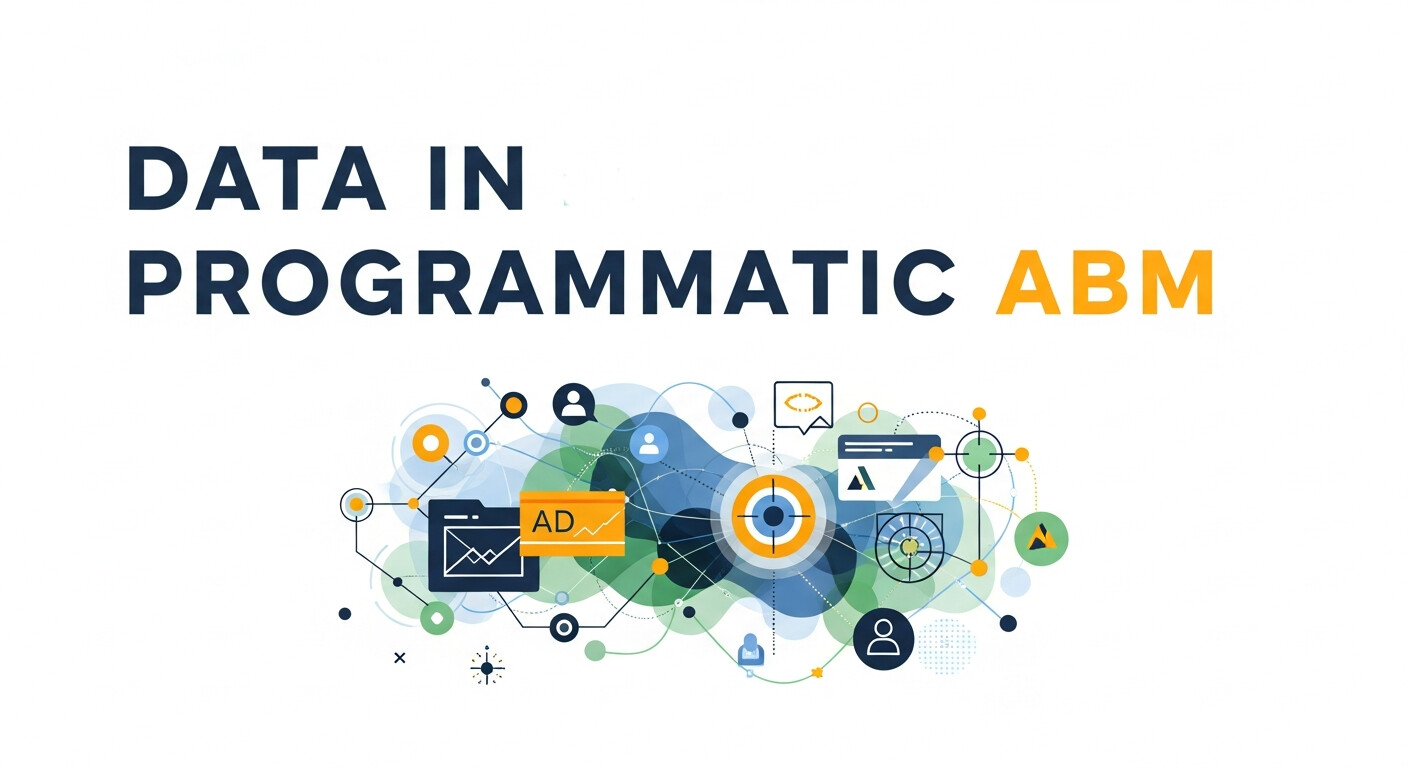
Data is the backbone of Programmatic ABM. By leveraging first-party, third-party, and intent data, marketers can identify which accounts are actively researching solutions. This data not only enhances targeting but also helps deliver the right message, on the right channel, at the right time. Data-driven decisions reduce guesswork, making campaigns more relevant and effective. With precise analytics, marketers can allocate budgets efficiently, optimize bids in real time, and continually refine audience segments to improve engagement and conversion rates across all digital touchpoints.
Buying Committee Targeting in Programmatic ABM
B2B buying decisions usually involve multiple stakeholders. Programmatic ABM allows you to target the entire buying committee effectively. From CFOs and CTOs to operations managers or IT directors, each role can receive personalized messaging tailored to their specific needs. This ensures that your marketing resonates with everyone involved in the decision-making process. By addressing the concerns of multiple stakeholders simultaneously, Programmatic ABM increases the chances of account engagement and accelerates the path to conversion, building stronger relationships with all key decision-makers.
Cross-Channel Consistency with Programmatic ABM
Programmatic ABM ensures your messaging is consistent across multiple digital channels. Display ads, video, LinkedIn, and search campaigns can all deliver the same account-specific message, building trust and brand credibility. Cross-channel consistency reinforces your presence throughout the buyer journey, making your brand top-of-mind when decisions are being made. By providing a seamless experience across platforms, prospects perceive your organization as reliable and professional, increasing the likelihood of engagement and long-term loyalty.
Improving Buyer Experience Through Relevance
One of the biggest advantages of Programmatic ABM is an improved buyer experience. By delivering content and ads that address specific account challenges, prospects receive relevant, actionable information instead of generic messages. This relevance reduces ad fatigue, builds trust, and strengthens the relationship between buyer and brand. Highly tailored campaigns demonstrate that you understand each account’s unique needs, creating a positive impression that can influence decision-making, increase engagement, and ultimately drive conversions more effectively than traditional broad-based campaigns.
Account Journey Mapping in Programmatic ABM
Programmatic ABM allows marketers to map the entire journey of each target account. Understanding where an account is—whether awareness, consideration, or decision stage—enables delivery of the most appropriate content. Early-stage prospects might see educational content, while mid-stage accounts receive solution-focused messaging. This journey-based approach ensures that every touchpoint is relevant, improves lead nurturing efficiency, and aligns marketing efforts with sales objectives. Mapping the account journey allows marketers to optimize engagement, shorten sales cycles, and deliver a more coherent, personalized experience to each high-value account.
Reducing Sales Cycle Length
Long B2B sales cycles can be challenging for many organizations. Programmatic ABM helps shorten this cycle by educating and engaging decision-makers early. By delivering tailored messaging, case studies, and value propositions directly to high-value accounts, prospects are better prepared to make informed decisions. This reduces back-and-forth interactions, accelerates lead qualification, and allows sales teams to focus on closing rather than educating. The result is faster deal progression, higher conversion rates, and more predictable revenue outcomes for complex B2B sales.
Competitive Differentiation Using Programmatic ABM
In crowded B2B markets, standing out is essential. Programmatic ABM enables competitive differentiation by delivering account-specific messaging that highlights your unique value. Instead of generic advertising, you can target key accounts with personalized campaigns addressing their exact pain points, positioning your solution as the preferred choice. This approach builds credibility, strengthens brand perception, and improves engagement rates compared to competitors’ broad campaigns. When executed consistently, Programmatic ABM creates a clear distinction between your offerings and those of other vendors, driving better awareness and higher win rates.
Scaling ABM Without Losing Focus
Many marketers worry that ABM cannot scale effectively. Programmatic ABM solves this challenge by combining automation and data-driven targeting to deliver personalized campaigns across hundreds of accounts simultaneously. Advanced algorithms and dynamic creative ensure each account receives relevant messaging without compromising precision. This allows organizations to expand from small pilot programs to enterprise-wide campaigns while maintaining focus on high-value accounts. By leveraging technology, businesses can efficiently manage larger account lists, optimize engagement, and achieve scale without losing the personalization and precision that make ABM successful.
Leveraging Intent Data for Smarter Targeting
Intent data allows Programmatic ABM campaigns to focus on accounts actively showing interest in your solution. By tracking signals such as website visits, content downloads, or competitor research, marketers can prioritize accounts that are most likely to convert. This proactive approach ensures ads and messaging reach prospects at the right moment in their buying journey. Using intent data not only improves campaign efficiency but also strengthens engagement by delivering highly relevant content. Combined with programmatic automation, intent-driven targeting allows businesses to allocate budget wisely, reduce wasted impressions, and accelerate pipeline growth.
Continuous Optimization for Maximum Impact
Programmatic ABM isn’t a “set and forget” strategy. Continuous monitoring and optimization are key to maximizing results. By analyzing engagement metrics, creative performance, and account-level conversions, marketers can refine campaigns in real time. Automated tools can adjust bids, update targeting, and test different creative variations to ensure optimal outcomes. This iterative process improves relevance, increases ROI, and keeps campaigns aligned with evolving account behaviors. Over time, continuous optimization helps marketers understand which strategies resonate best, driving smarter decisions, better personalization, and more predictable business growth for high-value accounts.
Getting Started with Programmatic ABM
If you’re ready to implement Programmatic ABM, follow these four key steps to set your strategy up for success:
Step 1. Identify Key Accounts
Define your Ideal Customer Profile (ICP) by working closely with your sales team. Use data-driven tools like predictive analytics or CRM insights to identify high-value prospects.
Step 2. Use the Right Technology
Leverage ABM platforms, such as Demandbase and HubSpot, alongside programmatic tools like LinkedIn Ads Manager and Google Ads for targeting precision.
Step 3. Build Tailored Content
Develop personalized ads, case studies, or landing pages that cater specifically to the challenges or needs of your target accounts.
Step 4. Monitor and Optimize
Track engagement metrics like conversions, CTRs, and pipeline velocity. Adapt your message and approach based on performance to ensure continuous improvement.
Why Account-Based Marketing is the Future of B2B
Programmatic ABM isn’t just a marketing trend; it’s fast becoming the gold standard in targeted B2B outreach. Its ability to combine precision targeting with personalization and efficiency sets it apart from traditional approaches.
For businesses invested in standing out to decision-makers, this strategy not only reduces wasted spend but also builds lasting trust and rapport within high-value accounts.
If you’re ready to transform your programmatic campaigns, integrating ABM can unlock your marketing potential. Explore the tools that make launching an ABM strategy simple, scalable, and profitable.
Frequently Asked Questions (FAQ)
What is Programmatic ABM?
Programmatic ABM is a B2B marketing approach that combines account-based marketing with programmatic advertising technology. It enables marketers to target specific high-value accounts using automated, data-driven ad placements while delivering personalized messaging across multiple digital channels.
How does Programmatic ABM differ from traditional ABM?
Traditional ABM relies heavily on manual outreach and limited advertising channels, while Programmatic ABM adds automation, scale, and real-time optimization. Programmatic technology allows ads to reach decision-makers within target accounts wherever they spend time online, improving reach and efficiency.
What types of businesses benefit most from Programmatic ABM?
Programmatic ABM is especially effective for B2B companies with long sales cycles, high deal values, and multiple decision-makers. SaaS, enterprise software, IT services, financial services, and manufacturing companies often see strong results from this approach.
Which channels are commonly used in Programmatic ABM campaigns?
Programmatic ABM campaigns typically run across display advertising, LinkedIn ads, native advertising, video, and search platforms. These channels work together to maintain consistent messaging and visibility throughout the buyer journey.
How do you measure success in Programmatic ABM?
Success in Programmatic ABM is measured using account-level metrics rather than individual leads. Key indicators include account engagement, pipeline influence, deal velocity, win rates, and revenue generated from targeted accounts.
Is Programmatic ABM expensive to implement?
Programmatic ABM can be cost-effective when executed correctly because it focuses budget on high-value accounts rather than broad audiences. While initial setup and technology costs may be higher, the improved conversion rates and ROI often justify the investment.
How long does it take to see results from Programmatic ABM?
Early engagement results can appear within weeks, but meaningful pipeline and revenue impact usually takes several months. Since B2B buying cycles are complex, Programmatic ABM delivers the strongest results through consistent, long-term execution.
What tools are required to run Programmatic ABM campaigns?
Running Programmatic ABM campaigns typically requires an ABM platform, a programmatic advertising platform or DSP, CRM integration, and analytics tools. Together, these technologies enable precise targeting, personalization, and performance tracking.