What Are Cookies Programmatic Advertising & Why Do They Matter?

In the context of programmatic advertising, cookies have become a key part of the digital advertising ecosystem. However, although they may sound simple (and mouth-watering), in today’s world, these little pieces of code are anything but simple. If you’ve heard phrases like “personalized ads,” “cookie tracking”, and “third-party cookies” and don’t understand where they all fit into place, you’re not alone.
What Are Cookies in Programmatic Advertising?
Cookies are small text files stored on a user’s device when visiting a website. These files contain data about user activity, preferences, and behavior, making them essential for the tailored internet experiences we’ve come to expect.
First Party vs Third Party Cookies
There are two main types of cookies in advertising to understand:
- First-Party Cookies: These are created and used directly by the website you’re visiting. They store data like language preferences, log-in information, or items in your shopping cart. First-party cookies make your browsing experience smoother and more personalized for that specific site.
- Third-Party Cookies: These are created by domains other than the one you’re currently visiting. These cookies enable advertisers to track user activity across multiple websites and collect data that supports targeted advertising. For example, you might notice ads for that pair of shoes you browsed last week across other unrelated websites. That’s programmatic advertising in action, powered by third-party cookies.
While first-party cookies are relatively benign and user-friendly, third-party cookies are central to debates on privacy and data ethics in advertising.
Why Are Cookies Important in Programmatic Advertising?
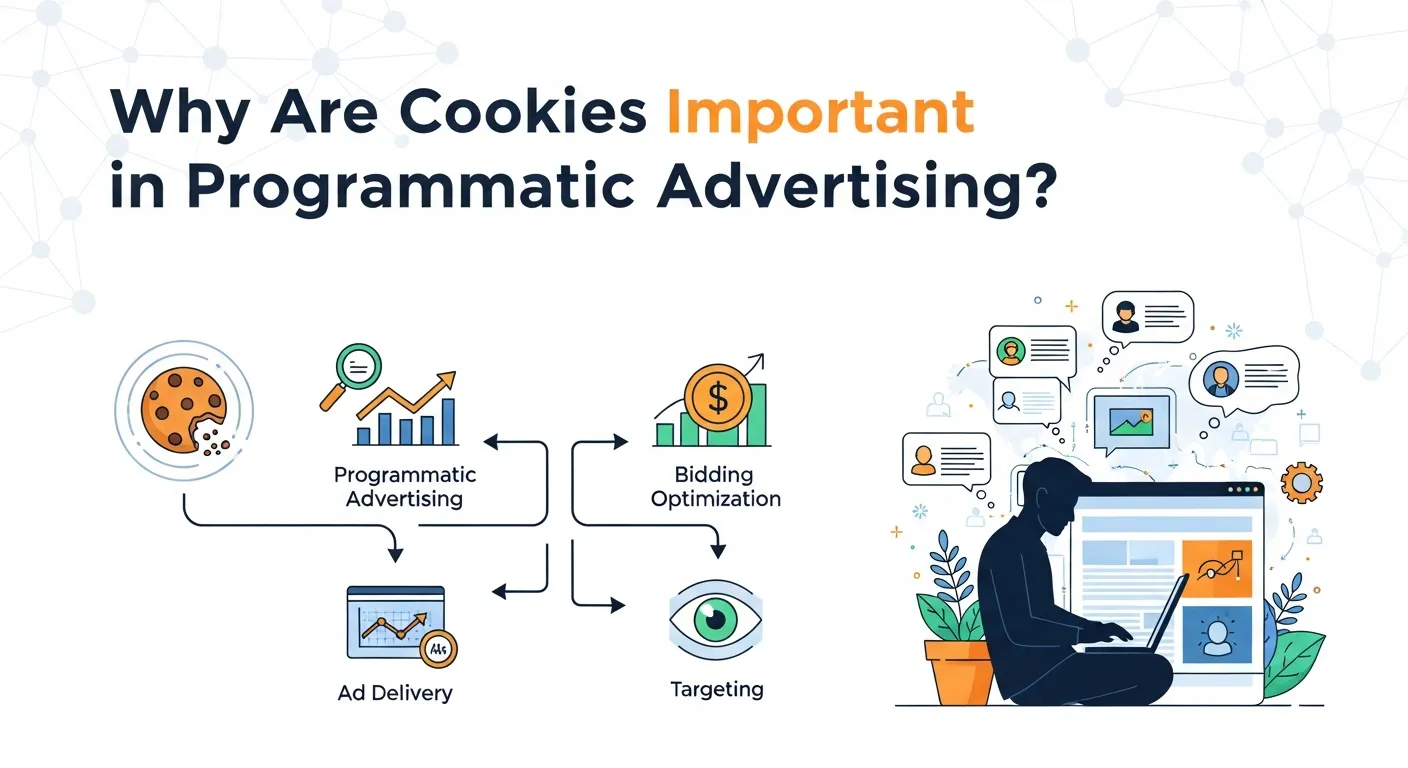
Programmatic advertising relies heavily on data to automatically buy and serve ads to the right people, at the right time, and in the right context. Here’s how cookies play a role:
1. Audience Targeting
Cookies gather insights into consumer behavior, such as websites visited, products viewed, and content consumed. This data enables advertisers to create detailed user profiles for targeted campaigns. For example:
- A travel agency could deliver beach vacation ads to someone who recently browsed “best tropical destinations.”
- An e-commerce brand might serve product-specific retargeting ads for visitors who abandoned their shopping cart.
Without cookies, this level of precision becomes nearly impossible.
2. Personalization
Consumers are far more likely to engage with ads that feel relevant to their interests. Cookies make this possible by enabling personalized experiences. They help advertisers serve ads tailored to a user’s preferences, purchasing behavior, and even location.
3. Retargeting
Cookies allow businesses to target users who’ve already interacted with their website or app. For instance:
- A user views a gadget in an online store but doesn’t complete the purchase. Cookies enable the business to remind the user about the product through strategic retargeting ads on other platforms.
4. Measurement and Analytics
Cookies provide crucial data about ad performance, tracking impressions, clicks, and conversions. They help marketers measure campaign success and refine future strategies.
Programmatic Advertising in Action
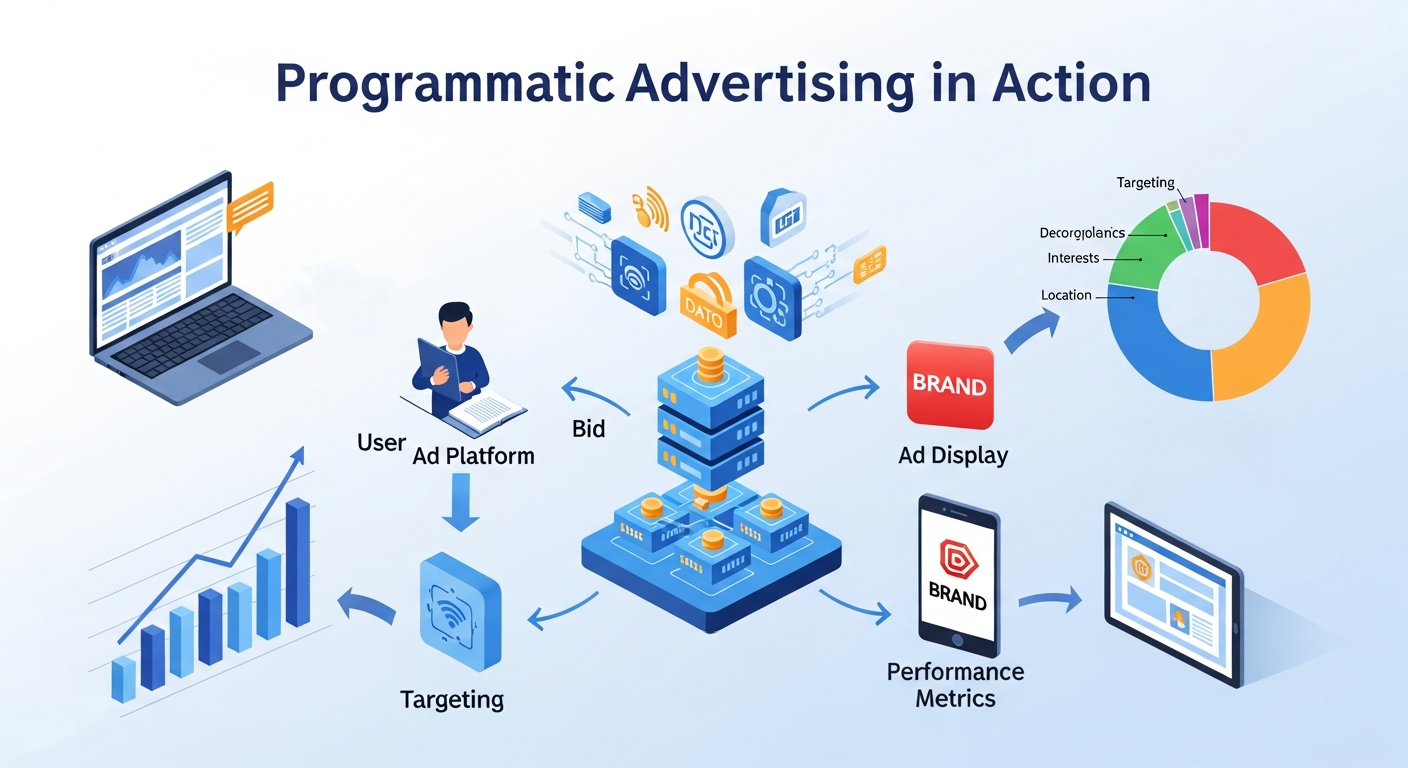
When you visit a website, cookies collect specific information about your behavior. That data is fed into demand-side platforms (DSPs) that analyze it and bid in real-time to place the most relevant ad in front of you. It’s an automated process powered by algorithms and cookies.
Programmatic Advertising Across Different Channels
Programmatic advertising isn’t limited to web banners or display ads. In today’s ecosystem, it spans multiple channels, each with unique opportunities for engagement and targeting. Expanding beyond traditional display, advertisers can reach audiences across video, audio, social, and even digital out-of-home platforms.
- Programmatic TV Advertising: Linear TV and connected TV (CTV) now use programmatic techniques to deliver targeted ads in real-time. Advertisers can reach specific demographics or households based on viewership data. This allows campaigns to achieve both scale and precision, bridging the gap between traditional TV and digital analytics.
- Programmatic Audio: Streaming platforms and podcasts offer programmatic ad placements where targeting can include listener demographics, location, or behavioral preferences.
- Programmatic Social Media: Platforms like Meta (Facebook & Instagram) and TikTok integrate programmatic ad buying, allowing advertisers to optimize campaigns across billions of active users.
- Programmatic Out-of-Home (OOH): Digital billboards and interactive displays are now programmatically managed, enabling location-based targeting and real-time creative updates.
| Channel | Key Features | Benefits | Metrics to Track |
|---|---|---|---|
| Display | Banner & native ads | Broad reach, cost-effective | Impressions, CTR, conversions |
| Video | CTV, streaming, YouTube | High engagement, storytelling | Video completions, view-through rate |
| Audio | Podcasts, music streaming | Personal and immersive | Completion rate, listener engagement |
| Social | Meta, TikTok, Twitter | Platform-specific targeting | CPC, CTR, engagement rate |
| OOH | Digital billboards, kiosks | Location-based targeting | Foot traffic, reach, impressions |
The End of Third-Party Cookies Is Near
While cookies have been a workhorse of programmatic advertising, their future is now uncertain. Major developments in digital privacy and regulations are challenging the status quo.
Why Are Third-Party Cookies Going Away?
Concerns about data privacy have led to stricter legal regulations like GDPR in Europe and CCPA in California. Consumers and lawmakers are increasingly questioning how much data advertisers collect and how it’s being used. Additionally:
- Browser Restrictions: Google Chrome, the most popular browser globally, plans to phase out third-party cookies entirely by 2024. Firefox and Safari have already implemented stricter cookie-blocking measures.
- Transparency Demand: Users now expect transparency and control over their online data. Cookie tracking feels invasive to many people who are beginning to demand more privacy.
What Does This Mean for Advertisers?
The end of third-party cookies creates challenges for programmatic advertisers:
- Retargeting and cross-site tracking become less reliable.
- Audience segmentation and precise targeting may require alternative tools.
- The ability to measure ad effectiveness across multiple platforms may diminish.
But it’s not all doom and gloom. This shift also represents an opportunity for innovation in programmatic advertising.
What Does the Future Hold for Programmatic Advertising Without Cookies?
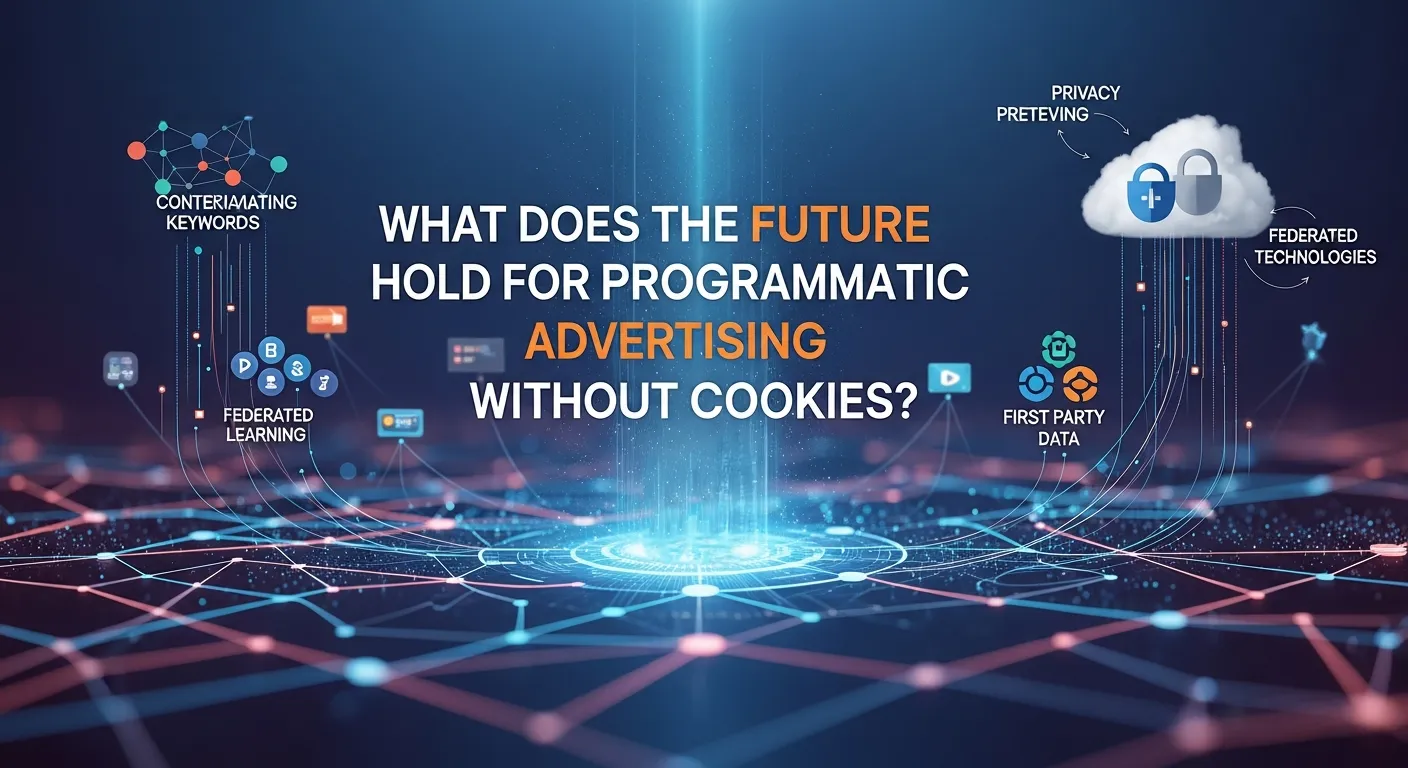
With third-party cookies on the way out, the advertising industry is pivoting toward new, privacy-first solutions. Here are a few of the alternatives being explored:
1. First-Party Data
First-party data is collected directly by businesses through owned channels like websites, apps, and email lists. It’s considered more privacy-friendly since users typically opt in to share this data.
For instance, an e-commerce store could use purchase history and page-visit data from its own website to create tailored campaigns for its users.
2. Contextual Advertising
Contextual advertising focuses on the content of a webpage rather than user data. For example:
- An advertiser promoting a fitness brand could target their ads to appear on articles about healthy living rather than relying on individual user data.
3. Google’s Privacy Sandbox
Google is introducing its Privacy Sandbox as an alternative to third-party cookies. This initiative uses anonymized data techniques, including Federated Learning of Cohorts (FLoC), to allow interest-based targeting without revealing personal user data.
4. Unified ID and Consent Frameworks
Industry groups like The Trade Desk are developing frameworks like Unified ID that rely on encrypted email addresses for tracking users across the web, while still respecting their privacy.
The Role of AI in a Cookieless Landscape
Artificial intelligence and machine learning will play an increasingly pivotal role in processing first-party data and improving contextual targeting strategies. Advertisers can find new ways to harness insights without infringing on consumer privacy.
Leveraging AI for Smarter Programmatic Campaigns
As programmatic advertising evolves in a cookieless world, AI is emerging as a core driver of efficiency and effectiveness. Beyond simple automation, AI enables predictive analytics, audience segmentation, and campaign optimization at scale.
- Predictive Targeting: AI models can analyze first-party data to anticipate customer behavior and identify high-value audiences before they convert. This reduces wasted spend and increases ROI.
- Creative Optimization: Machine learning algorithms test multiple ad creatives simultaneously, automatically identifying which visuals, headlines, or CTAs resonate best with different audience segments.
- Dynamic Bidding: AI-driven demand-side platforms (DSPs) adjust bids in real-time, ensuring ads reach users at optimal times for engagement and conversion.
- Fraud Detection & Brand Safety: AI identifies suspicious traffic patterns or unsafe ad placements, protecting both budget and brand reputation.
Key AI Tools for Programmatic Advertising
| Tool Type | Function | Example Use Case |
|---|---|---|
| Predictive Analytics | Audience scoring, behavior prediction | Predict likely buyers for new product launches |
| Creative Testing | Automated A/B/C testing | Determine which ad version yields highest CTR |
| DSP Optimization | Real-time bid adjustments | Maximize ad reach within budget limits |
| Fraud & Safety | Detect invalid clicks, unsafe sites | Avoid brand exposure on inappropriate content |
How Can Advertisers Adapt Today?
As the industry transitions to cookieless advertising, here are some actionable steps for advertisers:
- Invest in First-Party Data: Start building strategies to collect and utilize your own data ethically, such as through email sign-ups or loyalty programs.
- Focus on Contextual Strategies: Build contextual campaigns that connect your ads with content that aligns with your audience’s interests.
- Stay Up to Date: Keep an eye on new privacy guidelines and solutions like Google’s Privacy Sandbox.
- Experiment With Alternatives: Test cookie-free advertising technologies and platforms early to stay ahead of the curve.
- Use AI Tools: Leverage the power of AI to optimize campaigns, especially for contextual advertising and creating personalized experiences where possible.
Adapting now means staying competitive tomorrow.
Integrating Programmatic Advertising With SEO & SEM Strategies
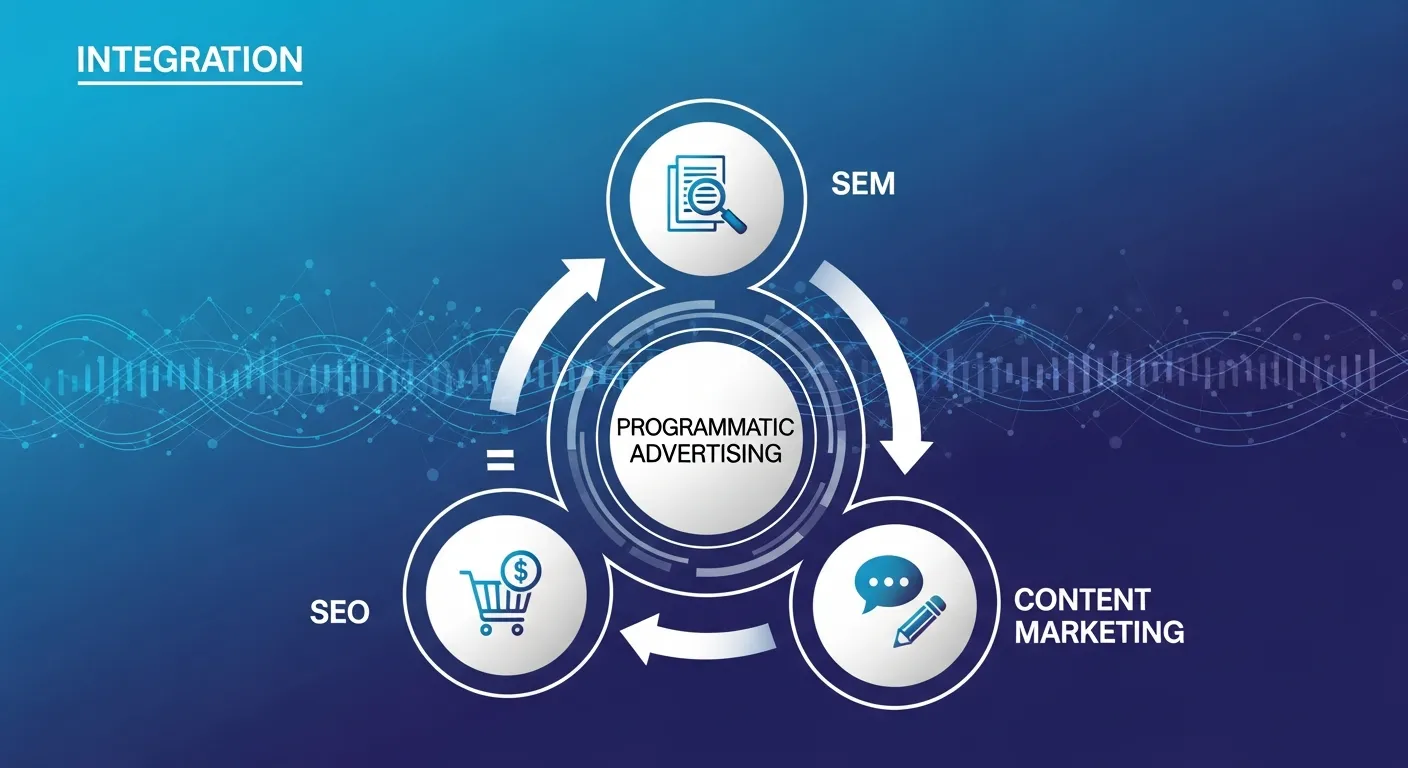
Programmatic advertising doesn’t exist in isolation. When combined strategically with SEO and SEM, campaigns can amplify performance, improve visibility, and drive engagement throughout the customer journey.
- SEM Integration: Programmatic campaigns can complement paid search by reinforcing messaging to users who’ve clicked search ads but haven’t converted. This retargeting approach increases the likelihood of conversions while maintaining ad relevance.
- SEO Insights: Insights from programmatic campaigns, such as high-performing creatives or popular landing pages, can guide content strategy to improve organic rankings and user engagement.
- Cross-Channel Funnels: Aligning programmatic ads with SEM keywords and SEO content allows marketers to nurture prospects across multiple touchpoints. This reduces drop-offs in the customer journey and ensures consistent messaging.
- Budget Efficiency: Understanding which search queries or pages perform well helps advertisers allocate programmatic budgets toward high-converting audiences or demographics.
| Strategy | Integration Method | Expected Benefit |
|---|---|---|
| SEM Retargeting | Serve programmatic ads to recent search ad visitors | Higher conversion rate |
| Content Amplification | Promote SEO-optimized content via programmatic display | Increased organic traffic |
| Funnel Alignment | Coordinate messaging across search & display campaigns | Improved user journey continuity |
| Audience Insights | Leverage programmatic analytics to refine keyword targeting | Better ROI and campaign efficiency |
The New World of Programmatic Advertising
In programmatic advertising history, the fog of cookies played an essential part, but this is no more. As the era of cookies comes to an end, it signals an important evolution in industry practices. Advertisers need to shift from relying on cookies, and their detractors will follow suit. The new strategies must have two features: they must meet regulatory demands as well as consumer expectations as a whole. Many opportunities remain for those who are more innovative, taking a different line than traditional targeting and personalization or analytics might suggest.
If you want to stay ahead in this fast-changing ecosystem, have a look at new tools today. The future of advertising is something more than just cookies; it’s about intelligently creating trust and value.
Frequently Asked Questions (FAQs) About Cookies Programmatic Advertising
1. What are cookies in programmatic advertising?
Cookies are small text files stored on a user’s device when visiting websites. In programmatic advertising, they track user behavior, preferences, and activity to help advertisers deliver personalized and targeted ads. They are essential for audience targeting, retargeting, and analytics.
2. What is the difference between first-party and third-party cookies?
- First-party cookies are created by the website you visit and store data like login info or shopping cart items.
- Third-party cookies are set by external domains and allow advertisers to track users across multiple sites for targeted advertising and programmatic campaigns.
3. How do cookies help in audience targeting?
Cookies collect behavioral and demographic data, which allows programmatic advertising platforms to create detailed user profiles. This ensures ads are shown to the right audience, improving engagement and conversion rates.
4. Why are third-party cookies being phased out?
Due to increasing privacy concerns and regulations like GDPR and CCPA, browsers such as Chrome, Firefox, and Safari are restricting third-party cookies. Users demand more transparency and control over their data, prompting a shift to privacy-first solutions.
5. Can programmatic advertising work without cookies?
Yes. Advertisers are now leveraging first-party data, contextual advertising, and platforms like Google’s Privacy Sandbox to target audiences without relying on third-party cookies.
6. How does AI impact programmatic advertising in a cookieless world?
AI and machine learning help process first-party data, optimize ad targeting, perform predictive audience segmentation, and test ad creatives. This allows advertisers to maintain efficiency and personalization without violating user privacy.
7. What are the benefits of programmatic advertising across different channels?
Programmatic advertising extends beyond display ads to video, audio, social media, and digital out-of-home (OOH). This multi-channel approach allows precise targeting, increased engagement, and real-time campaign optimization.
8. How can programmatic advertising be integrated with SEO and SEM strategies?
Programmatic ads can reinforce paid search campaigns, amplify SEO-optimized content, and ensure consistent messaging across cross-channel funnels. This integration improves conversions, engagement, and return on investment (ROI).
9. What is contextual advertising in programmatic campaigns?
Contextual programmatic advertising targets ads based on the content of a webpage rather than tracking individual users. For example, a fitness brand might place ads on health blogs or articles about exercise, ensuring relevance without relying on cookies.
10. What steps should advertisers take to adapt to a cookieless future?
- Invest in first-party data collection through owned channels.
- Experiment with contextual advertising and privacy-first solutions.
- Use AI and predictive analytics for targeting and optimization.
- Stay updated on digital privacy regulations and emerging programmatic platforms.
New to the concept of automated ad buying? Don’t miss our full breakdown on What is Google Ads Programmatic Advertising? A Clear? . Explanation