Programmatic Advertising: A Speed Guide to Success
Programmatic advertising is upending the way marketers are buying ad space and targeting their intended audiences. It may sound technical but it’s one of the best, most targeted, and data-dependent ways to get a highly-targeted message in front of an audience at the best possible time.
Before we discuss the pros and cons of it, let’s take a closer look at what programmatic advertising is and the ways it can help your business.
Whether you’re a digital ad veteran, or just beginning in the space, this guide will take you through what programmatic advertising is, why it’s important and how to use the technology to boost your marketing program.
What Is Programmatic Advertising?
At a basic level, programmatic advertising technology automates the process of buying and selling ad inventory in real time. Through algorithms, machine learning, and data, it optimizes the placing of ads on multiple platforms, including web pages, mobile apps and social media, doing away with the need for time-consuming manual negotiations.
Programmatic ads cut the human element out of the old-fashioned crackdown of price and media placement negotiation and instead use demand-side platforms (DSPs and SSPs, which stands for supply-side platforms) to automate ad placement efficiency so that separate ad campaigns don’t mean separate ROIs.
How Does Programmatic Advertising Work?
Here is a simplified overview of how that process works:
Advertiser Input
Advertiser provides target audience attributes (e.g., age, a location, interests) and a campaign objective to a demand-side platform.
Real-Time Bidding (RTB)
Advertisers compete for ad placement in real time, with the campaign’s goal used to determine which ad has the greatest likelihood of reaching its goal.
Ad Placement
Bidding: The highest bidder will have his ads shown to your audience in competently formatted HTML5, video or fullscreen/ native ad types.
This all happens lightning fast, in milliseconds, to make the best placements within the budget constraints placed on the DSP.
Why Marketers Love Programmatic: Efficiency, Effectiveness, and More
More than just buzz, programmatic advertising is game-changing for growing businesses’ digital marketing campaigns. In fact, many marketers are asking, “Why is programmatic advertising important for modern businesses?” The answer lies in its ability to deliver real-time optimization, precision targeting, and cost-effective reach—something traditional advertising simply can’t match.
Real-Time Optimization
Whereas traditional advertising buys are based on static placements, programmatic platforms look at campaign performance in real time. This means that marketers can adjust and optimize in the moment for better reach and performance.
Precise Targeting
Marketers can target audiences with granular targeting by demographics, behaviors, geography and device use. This sort of accuracy translates to less ad dollars spent on unqualified leads.
Broad Reach Across Channels
The concept of programmatic applies to all forms of digital media from websites, to mobile apps, to video streaming and even Connected TV (CTV). This allows advertisers to target people where they are engaging most.
Cost Efficiency
Because ads are bought and sold in real time with a pricing algorithm, programmatic ads purportedly provide added transparency and allow advertisers to get better deals, paying only as much as your impression is worth.
Data-Driven Insights
Campaign performance is not just guess work. Through detailed analytics and reporting that is integrated into existing tools, programmatic advertising solutions can also offer valuable insights into how your target audience views your creative and what to improve on for your next campaign.
Types of Programmatic Advertising
Programmatic campaigns are not created equal. Some that you may consider, depending on your business goals are:
Real-Time Bidding (RTB)
Real-time bidding is also referred to as open auction, as multiple advertisers can bid for ad inventory in real time. It’s an efficient and cost-effective way to reach large or niche audiences.
Private Marketplace (PMP)
Private marketplaces are invite-only auctions in which certain advertisers are given the opportunity to bid on premium ad inventory. These are employed most often by brands that value exclusivity and quality placements.
Programmatic Guaranteed
This is a guaranteed buy, in which the ad position and exposure were set and is independent of any auction. It’s a great solution for campaigns that need to remain top of mind on premium sites.
Programmatic Native Ads
They are naturally integrated into a website or app, to provide a more interactive and non-disruptive advertising experience.
Programmatic Video Ads
These visually appealing ad formats are in-stream video ads, out-stream video ads, and may even be CTV ads. Video ads tend to have slightly better clickthrough and engagement rates.
Programmatic Advertising Hurdles
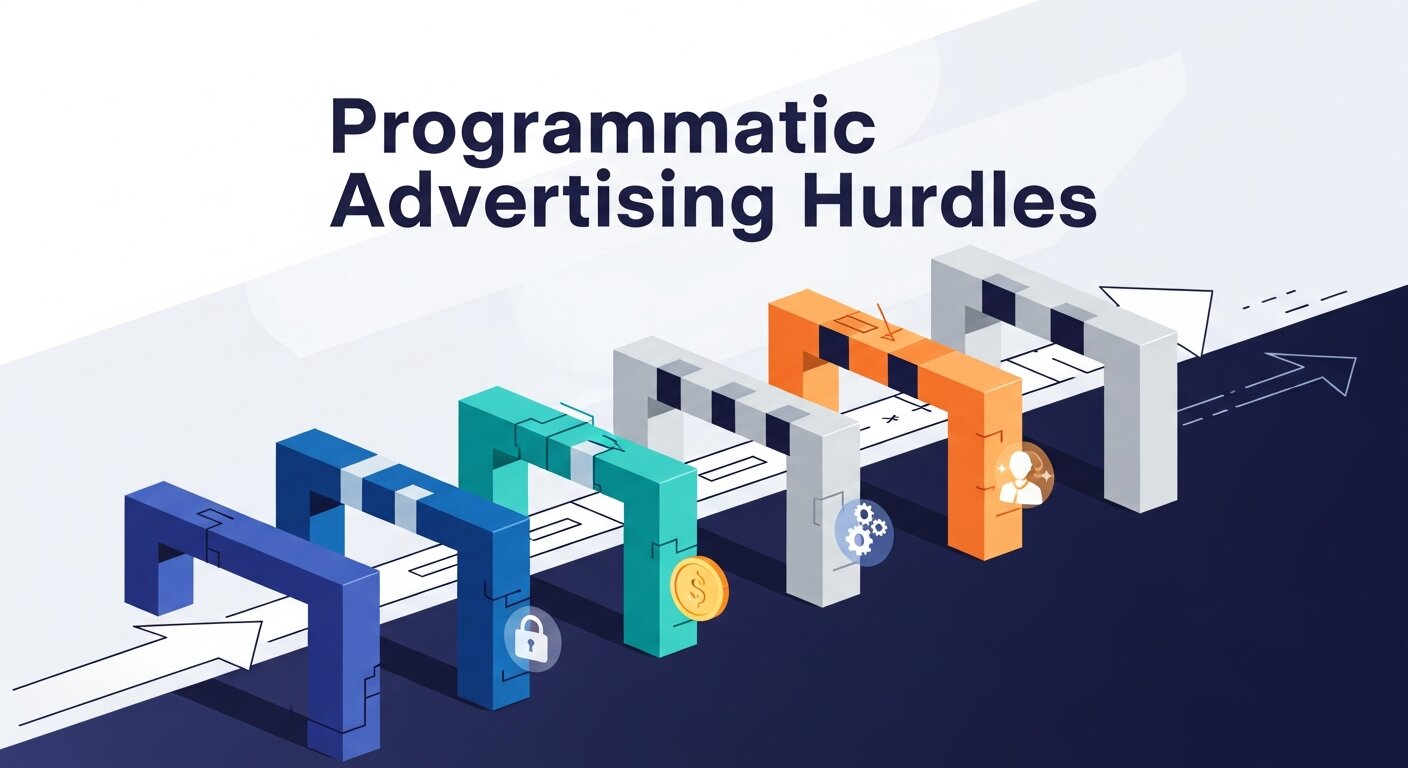
As with any marketing plan, programmatic advertising does have challenges.
Ad Fraud
Problems such as click fraud or bot traffic might pad ad impressions and blow budgets on wasted ad dollars. Fortunately, there are advanced anti-fraud tools and third-party verification platforms in place that can solve these challenges.
Privacy Concerns
The proliferation of stricter rules like GDPR and CCPA means marketers have a responsibility to adhere to data privacy laws and work with customer data responsibly. Most programmatic platforms have been adopting rigid policies to safeguard consumer privacy.
Learning Curve
One of the toughest humps for a programmatic ad newbie to get over is the technology and terminology. But onboarding is available and resources to learn how to use them are plenty in most DSPs.
How to Begin with Programmatic Advertising
STARTING BUILD
Here are some new moves to help you master programmatic buying and make your digital campaigns an even better reflection of where our culture is headed, advertised-wise.
Define Clear Campaign Goals
Identify the goal of your campaign.
Do you want to send traffic to your website, get app installs, or drive sales?
Setting defined targets will help you with strategy.
Choose a DSP
Choose the demand-side platform that best fit your requirements and available budget.
Some of the most popular DSPs are Google Display & Video 360, MediaMath, and The Trade Desk.
Build Audience Segments
Build detailed audience segments with your first-party data or third-party data sources.
Let demographics and behaviors guide targeting.
Set Realistic Budgets
Begin small and grow as you see results.
For example, test different bidding preferences, toggling these on and off until you reach the right balance between efficiency and bid type and performance.
Test and Optimize
A/B test (Split test) 2 or more ad creatives, placements or targeting parameters.
Regularly check dashboards to see where you can improve and adjust your campaigns accordingly.
Partner with Experts
If the process seems overwhelming, you can also work with a digital marketing agency that has experience with programmatic campaigns.
Their know-how can help you avoid some costly gaffes.
Riding the Digital Advertising Tsunami of the Future
Programmatic advertising isn’t just a nice-to-have toy for an elite set of marketers; it’s increasingly becoming the norm for anyone who wants to up his or her advertising game.
“Given its high returns and unparalleled insights into audiences, the approach has the potential to change the trajectory of how companies of all sizes interact with their customers.”
By knowing the basics and hurdles and taking a strategic standpoint, you can put your brand in a position to succeed in a cutthroat digital market.
Now, it’s time to market quickly, accurately, and uniquely. Begin researching programmatic platforms today to stay ahead of the curve.
The Role of Automation in Smarter Media Buying
Automation is the backbone of modern digital advertising, and it allows marketers to move faster while making smarter decisions. Instead of manually selecting placements and negotiating rates, automated systems analyze vast amounts of data to determine where ads should appear for maximum impact. This reduces human error and increases efficiency across campaigns. Programmatic Ads enable advertisers to respond instantly to changes in user behavior, device usage, and content consumption patterns. As a result, campaigns become more agile and performance-driven. Automation also frees up marketing teams to focus on strategy, creative development, and optimization rather than operational tasks, making advertising efforts both scalable and results-oriented.
Brand Safety and Transparency in Digital Advertising
As digital advertising expands, brand safety and transparency have become critical priorities for marketers. Advertisers want assurance that their ads appear alongside appropriate content and reach real users. Programmatic platforms now offer tools such as site whitelisting, content categorization, and third-party verification to address these concerns. Transparency into pricing, impressions, and performance helps advertisers understand exactly where budgets are being spent. Sustainable Programmatic Advertising also emphasizes ethical media buying practices, reducing wasted spend and avoiding low-quality inventory. By prioritizing transparency and accountability, brands can protect their reputation while building trust with both audiences and publishing partners.
Creative Optimization for Better Ad Performance
Even the most advanced targeting will fall flat without compelling creative. Programmatic environments allow advertisers to test and optimize multiple creative variations in real time. Headlines, visuals, formats, and calls-to-action can be adjusted dynamically based on performance signals. This continuous optimization ensures that audiences see the most relevant and engaging version of an ad. Harnessing Programmatic Advertising makes it possible to match creative elements with user context, such as device type, location, or browsing behavior. Over time, creative optimization improves engagement rates, lowers cost per acquisition, and helps brands deliver consistent messaging across channels without sacrificing personalization.
Programmatic Advertising Across the Full Funnel
Programmatic advertising is not limited to top-of-funnel awareness campaigns. It can support every stage of the customer journey, from discovery to conversion and retention. Awareness campaigns introduce the brand, while mid-funnel strategies focus on consideration through educational or comparison-based messaging. Lower-funnel campaigns drive conversions using retargeting and personalized offers. Because programmatic platforms track user behavior across touchpoints, advertisers can deliver sequential messaging that guides prospects naturally through the funnel. This full-funnel approach ensures continuity, reinforces brand recall, and increases the likelihood of conversion by delivering the right message at the right time.
Preparing Your Team for Programmatic Success
Technology alone does not guarantee success—people and processes matter just as much. Teams must understand how programmatic ecosystems work, from bidding strategies to performance analysis. Training marketers to read dashboards, interpret data, and make optimization decisions is essential. Clear workflows between creative, analytics, and strategy teams help campaigns run smoothly. Businesses should also establish clear KPIs and testing frameworks to measure progress consistently. With the right internal structure and ongoing learning, organizations can maximize the value of programmatic advertising and build long-term expertise that keeps them competitive in an evolving digital landscape.
Frequently Asked Questions (FAQ)
What is programmatic advertising in simple terms?
Programmatic advertising is an automated way of buying and selling digital ads. Instead of manually negotiating ad placements, software uses data and algorithms to purchase ad space in real time, ensuring the right ad reaches the right audience at the right moment.
Is programmatic advertising suitable for small businesses?
Yes. While programmatic advertising was once dominated by large brands, many platforms now offer flexible budgets and scalable options. Small businesses can start with modest investments, test performance, and gradually scale campaigns as they see results.
How is programmatic advertising different from traditional digital advertising?
Traditional digital advertising often involves fixed placements and manual buying. Programmatic advertising uses automation and real-time bidding to dynamically place ads based on audience behavior, context, and performance, making campaigns more efficient and data-driven.
What types of data are used in programmatic advertising?
Programmatic advertising typically uses first-party data (your own customer data), second-party data (partner data), and third-party data (external sources). These data types help define audience segments, improve targeting accuracy, and optimize campaign performance.
Is programmatic advertising safe and compliant with privacy laws?
Most modern programmatic platforms are built to comply with regulations such as GDPR and CCPA. Advertisers must still follow best practices, including transparent data usage, consent management, and working with reputable platforms that prioritize user privacy.
How long does it take to see results from programmatic campaigns?
Results can appear quickly, sometimes within days, especially for awareness and traffic campaigns. However, meaningful performance improvements and ROI optimization typically happen over weeks as algorithms learn and campaigns are fine-tuned.
What skills are needed to manage programmatic advertising?
Managing programmatic campaigns requires an understanding of data analysis, audience targeting, bidding strategies, and creative optimization. While beginners can learn through DSP dashboards and training resources, many businesses choose to partner with experienced agencies.
Can programmatic advertising work alongside other marketing channels?
Absolutely. Programmatic advertising works best as part of an integrated marketing strategy. It complements search, social media, email, and content marketing by reinforcing messaging across multiple touchpoints and increasing overall campaign effectiveness.