How AI is Transforming Programmatic Advertising
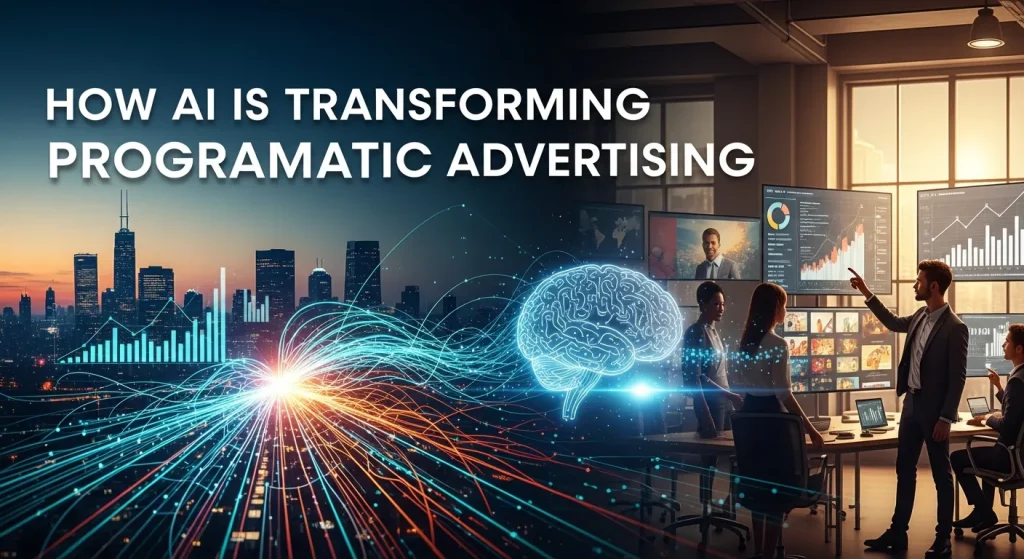
The advertising industry world is transforming as a result of AI, and few places is that more obvious than in programmatic advertising. By AI, advertisers can now deliver extremely precise targeted messages. They can optimize entire campaigns in real time on a massive scale. They make money like never before (not ROI but return on ad spend) since their costs are higher for fewer ads run.
A blog about how artificial intelligence is turning programmatic advertising on its head, the difficulties companies face, and what steps businesses should take to take advantage of these advances in artificial intelligence for marketing ahead of rivals in this industry.
What is programmatic advertising?
Programmatic advertising automates the buying and selling of digital ad inventory in real time. Unlike traditional methods, where ad spaces are purchased manually, programmatic methods use technology to make the ad-buying process faster, more efficient, and data-driven.
How does AI fit in?
Artificial intelligence enhances programmatic advertising by using machine learning algorithms to analyze large datasets, predict consumer behavior, and make smarter ad decisions autonomously. AI isn’t just optimizing campaigns; it’s fundamentally reshaping how advertisers approach their audiences.
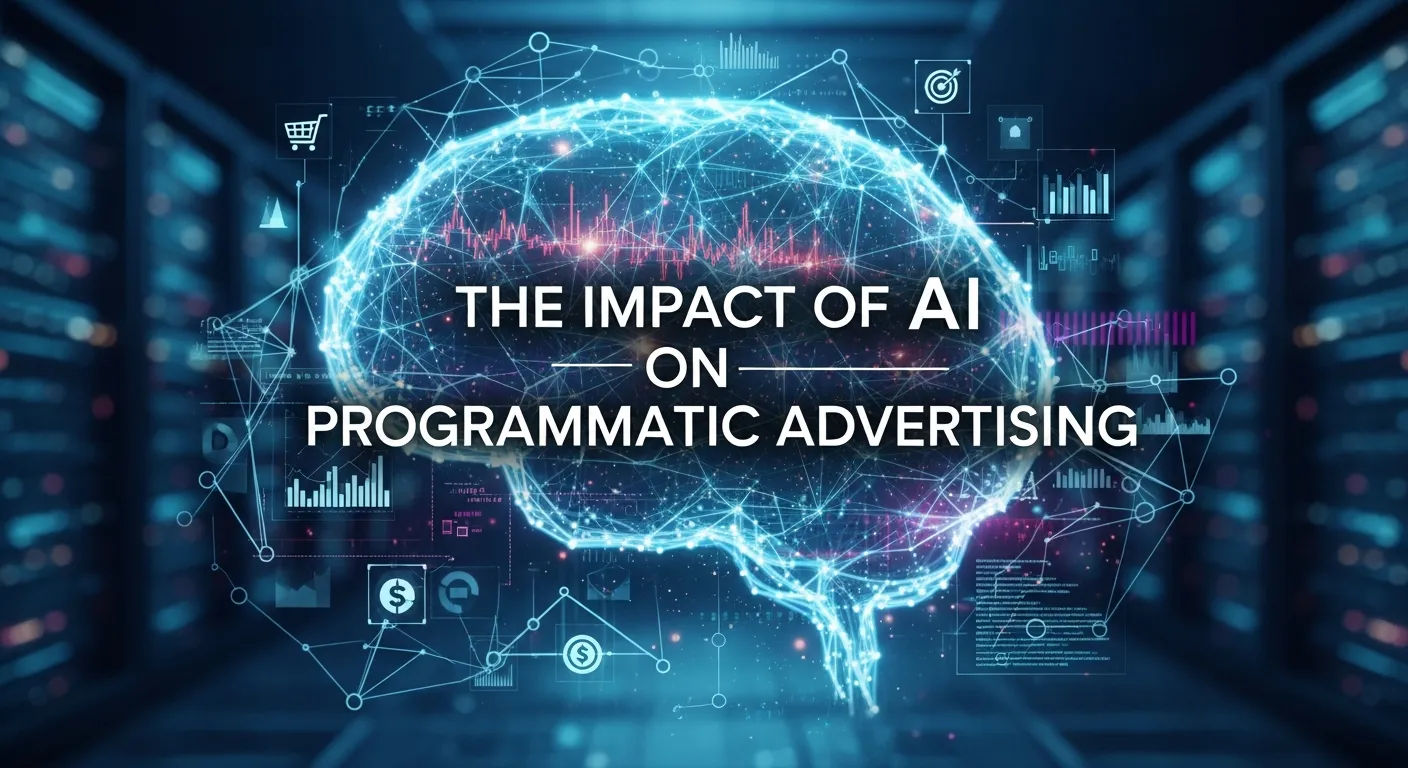
The Impact of AI on Programmatic Advertising
1. Precision Audience Targeting
AI enables advertisers to create hyper-targeted campaigns by analyzing various datasets, including browsing habits, purchase history, social media behavior, and even location patterns. AI can identify micro-segments within audiences and target users with highly relevant messaging that resonates deeply.
Example
Consider a brand selling eco-friendly athletic wear. With AI, the advertiser can target environmentally conscious individuals who recently searched for sustainable products, have attended yoga events, or follow fitness influencers on Instagram.
2. Real-Time Ad Optimization
AI continuously tracks ad performance metrics such as impressions, clicks, and conversions to optimize campaigns in real time. Gone are the days of waiting weeks to analyze a campaign’s effectiveness and tweak its strategy. AI tools automatically make adjustments to ensure the highest return on investment (ROI).
Why it matters
Real-time optimization ensures no budget is wasted on ineffective placements while pushing resources toward high-performing channels.
3. Predictive Analytics for Better Campaign Decisions
Predictive analytics, powered by AI, allows marketers to forecast future outcomes based on historical data. For instance, advertisers can predict which platform will yield the most conversions for a specific campaign and allocate their budget accordingly.
Example
AI predicts how many conversions a campaign might achieve on Instagram vs. YouTube, helping advertisers allocate their budget more effectively to reach their goals.
4. Creating Dynamic and Personalized Ads
Consumers expect personalized experiences in nearly every facet of their digital lives, including advertising. AI enables the creation of personalized ads by dynamically changing ad creatives to reflect user preferences.
Example
An online bookstore could use AI to show different ad creatives for mystery novels, self-help books, or cookbooks, depending on individual browsing history and purchase behavior. This personalization improves engagement rates and strengthens brand relationships.
5. Cost Efficiency
AI reduces reliance on manual processes and optimizes ad spend by identifying low-performing areas and reallocating budgets to high-performing strategies. The result? A leaner campaign with reduced costs and better results.
Cross-Channel Orchestration in Programmatic Advertising
Why Cross-Channel AI Orchestration Matters
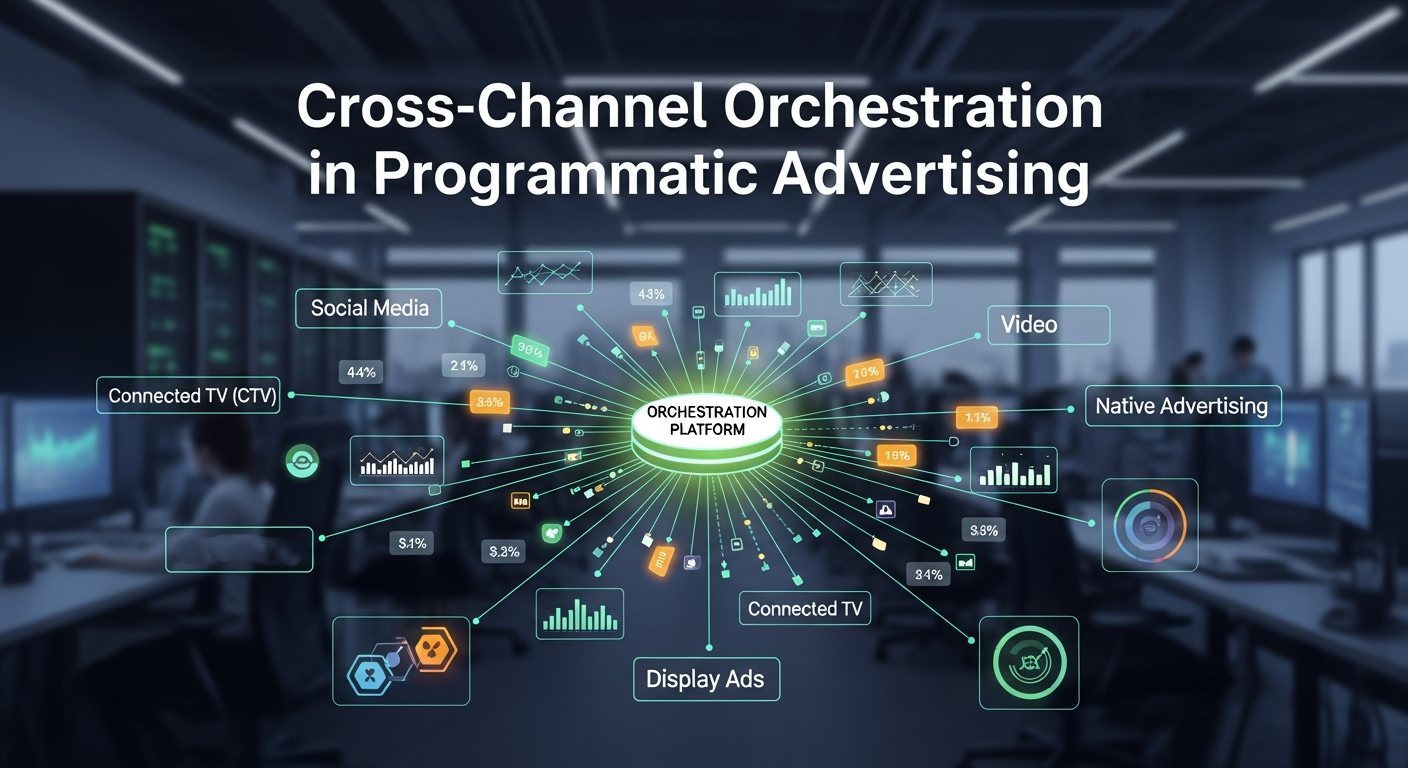
One of the most powerful advancements in Programmatic Advertising is AI-driven cross-channel orchestration. Modern consumers interact with brands across multiple devices and platforms — mobile apps, connected TV, search engines, display networks, and social media. Without orchestration, campaigns become fragmented, inconsistent, and inefficient.
AI connects these touchpoints into one unified customer journey. Instead of treating each platform separately, AI ensures consistent messaging across display, social, search, and programmatic TV advertising work environments.
This transforms Programmatic Advertising from isolated ad placements into a synchronized full-funnel strategy.
Key Benefits of AI Cross-Channel Orchestration
- Unified customer journey tracking
- Frequency control across devices
- Sequential messaging strategy
- Better attribution clarity
- Improved programmatic advertising for engagement
Cross-Channel vs. Isolated Campaign Strategy
| Strategy Type | Channel Coordination | Budget Efficiency | User Experience | Conversion Impact |
|---|---|---|---|---|
| Single-Channel | Limited | Medium | Fragmented | Moderate |
| Multi-Channel (Manual) | Partial | Low-Medium | Inconsistent | Moderate |
| AI Cross-Channel Orchestration | Fully Integrated | High | Seamless | High |
AI-Powered Bidding Strategies in Programmatic Advertising
Smarter Bidding Beyond Basic Automation
While your article discusses optimization, it does not deeply explore AI bidding intelligence, which is central to programmatic advertising strategies for success.
AI doesn’t just bid in real time — it evaluates:
- User intent probability
- Device behavior
- Time-of-day performance
- Historical conversion patterns
- Competitive auction density
This allows advertisers to bid differently for different users — even within the same campaign.
For example, AI may bid 3x higher for a returning visitor with high purchase intent compared to a first-time casual browser.
Core AI Bidding Models
- Value-Based Bidding
- Predictive Conversion Bidding
- Lifetime Value Bidding
- Context-Aware Bidding
AI Bidding vs Traditional Bidding
| Bidding Model | Decision Basis | Adaptability | ROI Potential | Ideal For |
|---|---|---|---|---|
| Manual CPC | Fixed rules | Low | Moderate | Small campaigns |
| Rule-Based Automation | Pre-set triggers | Medium | Medium | Mid-size campaigns |
| AI Predictive Bidding | Real-time intent scoring | Very High | High | Growth-focused brands |
| AI CLV Bidding | Lifetime revenue forecast | Extremely High | Very High | Scalable businesses |
AI-Powered Creative Intelligence & Emotional Targeting
Moving Beyond Demographics to Emotional Signals
A powerful new frontier in Understanding Programmatic Advertising is emotional intelligence modeling.
AI now analyzes:
- Sentiment data
- Content tone
- Engagement signals
- Reaction speed
- Scroll behavior
- Content dwell time
Instead of targeting users just based on demographics or browsing history, AI can adjust messaging tone depending on emotional context.
For example:
- Motivational messaging during fitness content
- Calm reassurance messaging during financial research
- Urgency messaging during deal-based searches
This is becoming central to programmatic advertising sem strategy and meta programmatic advertising complete campaign ecosystems.
How Emotional AI Enhances Engagement
- Improves ad relevance
- Increases dwell time
- Boosts brand recall
- Enhances storytelling consistency
- Strengthens conversion psychology
Traditional Targeting vs Emotional AI Targeting
| Targeting Type | Data Used | Personalization Depth | Engagement Level | Brand Impact |
|---|---|---|---|---|
| Demographic | Age, gender | Low | Moderate | Basic awareness |
| Behavioral | Browsing & purchases | Medium | High | Conversion focused |
| Contextual | Page content | Medium | High | Relevant placement |
| Emotional AI Targeting | Sentiment + engagement signals | Very High | Very High | Deep brand loyalty |
Common AI Tools in Programmatic Advertising
Demand-Side Platforms (DSPs)
Tools like Google DV360, The Trade Desk, and MediaMath use AI to manage ad exchanges, bidding, Demand-Side Platforms (DSPs) and audience analytics.
AI Copywriting Tools
Platforms such as Jasper and Grammarly help advertisers create copy aligned with audience preferences and trends.
Ad Creative Platforms
Dynamic creative optimization tools like Ad-Lib.io and Bannerflow allow marketers to tailor ads more efficiently for individual demographics.
Challenges in Adopting AI in Programmatic Advertising
While AI offers immense benefits, advertisers face certain hurdles when integrating AI strategies into programmatic campaigns:
- Data Privacy Concerns
AI thrives on data, but stricter privacy regulations like GDPR and CCPA mean advertisers must tread carefully when handling user information. Advertisers must ensure compliance to maintain consumer trust.
- Initial Cost Barriers
Deploying AI and machine-learning tools often involves high upfront costs, making it challenging for small to mid-sized businesses to adopt.
- Skill Gaps in Teams
AI-driven programmatic advertising requires teams proficient in data analytics, machine learning, and emerging advertising tools. Bridging these skill gaps is essential for success.
How Your Brand Can Leverage AI in Programmatic Advertising
Start with Audience Analysis
Use AI-powered tools to better understand your target customers. Platforms like Google Analytics and HubSpot can identify audience behavior patterns, enabling more effective segmentation for campaigns.
Assess Your Current Advertising Stack
Evaluate existing digital advertising platforms to ensure they integrate seamlessly with AI solutions. Many DSPs and ad platforms now offer built-in AI capabilities, providing a great entry point.
Test Dynamic Creatives
Deploy small-scale campaigns featuring dynamic, personalized ads tailored to specific audience segments. Test performance metrics to analyze engagement, conversion rates, and ROI.
Invest in AI Talent
Consider hiring or consulting AI specialists to work alongside marketing teams. Their expertise will help you unlock the full potential of AI in your campaigns.
The Future of AI in Programmatic Advertising
Looking forward, AI’s role in programmatic advertising will only expand. Emerging trends include conversational ads, which are powered by natural language processing (NLP; voice-integrated ad experiences with its neural networks) and deeper integration of predictive analytics in order to anticipate consumer behavior at every step of the customer life cycle.
Generative AI will further revolutionize creative assets, too, by introducing the same quantum leap in diversity and scale to production that raw video ushered in for film.
Unlock the Power of AI in Advertising Today
AI in programmatic advertising offers great opportunities to cut through the noise. Until now, it has been restricted to companies with large budgets and strong technology skills. A balancing of power between creative and cost-efficient ad delivery now becomes increasingly possible with AI.
Incorporating artificial intelligence into your media buying not only gets you better results (even reversing strategies) but also accelerates the intimacy between brand and target audience. Is now the time for you to embrace AI in your advertising campaigns and win the advantage you need to stand above the crowd of competitors out there?
You can begin by trying such services as DSPs (digital sales platforms). The next step is feeding your campaigns more tongue-in-cheek features that can only be delivered through a trick platform or dynamic creative platform.”
FAQ: AI and Programmatic Advertising
1. What is programmatic advertising?
Programmatic advertising automates the buying and selling of digital ad inventory in real time using algorithms and data-driven systems. Unlike traditional media buying, it allows marketers to reach audiences more efficiently across platforms like display, audio, and programmatic TV advertising work.
2. How does AI enhance programmatic advertising?
AI leverages machine learning and predictive analytics to optimize campaigns in real time, personalize ad creatives, target high-intent audiences, and improve overall campaign efficiency. This results in better programmatic advertising for engagement and higher return on ad spend.
3. What are the benefits of AI-driven programmatic advertising?
AI-powered programmatic advertising offers hyper-personalization, cost efficiency, fraud detection, predictive analytics, multi-channel orchestration, and optimization for long-term metrics like customer lifetime value.
4. How does cross-channel orchestration work in programmatic advertising?
AI enables cross-channel orchestration by synchronizing campaigns across display, social, search, programmatic audio advertising, and programmatic TV advertising work. This ensures consistent messaging, better attribution, and a unified customer journey.
5. Can AI help with programmatic advertising without cookies?
Yes. AI uses first-party data, contextual targeting, and probabilistic modeling to maintain relevance in a privacy-first environment, helping advertisers adapt to the phase-out of third-party cookies while complying with regulations.
6. What is dynamic creative optimization (DCO) in programmatic advertising?
DCO uses AI to automatically personalize ad creatives in real time based on audience data, browsing behavior, and engagement signals. This increases engagement, relevance, and conversion rates across platforms.
7. How does AI improve bidding strategies in programmatic advertising?
AI-powered bidding evaluates user intent, historical conversion data, device behavior, and competitive auction density. It allows smarter, context-aware bidding strategies like predictive bidding or CLV-based bidding, optimizing ROI for digital programmatic advertising.
8. What challenges do businesses face in adopting AI in programmatic advertising?
Common challenges include data privacy concerns, high initial costs, and skill gaps in teams. Businesses need proper AI tools, training, and compliance strategies to maximize results.
9. Which AI tools are commonly used in programmatic advertising?
Popular tools include DSPs like Google DV360, The Trade Desk, and MediaMath for programmatic buying; AI copywriting tools like Jasper for ad messaging; and dynamic creative platforms like Ad-Lib.io for personalization.
10. How can my business start leveraging AI in programmatic advertising?
Start by analyzing audience behavior with AI-powered analytics, testing dynamic creatives, assessing your current ad platforms for AI integration, and investing in AI talent. Implementing these steps improves engagement, efficiency, and overall programmatic advertising work.
New to the concept of automated ad buying? Don’t miss our full breakdown on The Role of Artificial Intelligence in Programmatic Advertising