AI-Driven Creative Optimization in Programmatic Advertising

AI creative optimization tools enhance ad performance by using machine learning to dynamically tailor visuals, copy, and formats, increasing engagement, relevance, and conversions while streamlining programmatic advertising campaigns efficiently.
Programmatic advertising has become the backbone of digital marketing, enabling brands to automate the purchase and placement of display, video, and native ads at an unprecedented scale. In today’s digital landscape, the creative elements of an ad often determine success more than bidding strategies or targeting parameters. However, without a systematic approach to testing and refining visual assets, headlines, and layouts, even the most well-funded campaigns can underperform. This year (2026), marketers are increasingly turning to AI-driven creative optimization to analyze vast datasets, predict winning combinations, and serve personalized ads in real time. By harnessing machine learning and dynamic assembly, brands can ensure each impression resonates with its intended audience, driving higher engagement and conversion rates. In this article, we explore why creative optimization matters, how artificial intelligence is transforming this process, and the practical steps your team can take to implement AI-driven creative optimization in programmatic campaigns. You’ll also discover authoritative resources and tools to elevate your ad performance, maximize ROI, and stay ahead in an ever-evolving marketplace.
Understanding Programmatic Advertising and Creative Significance

Programmatic advertising automates the buying, placement, and optimization of digital media by leveraging data, algorithms, and real-time bidding. While programmatic technology excels at identifying the right audiences, it is the creative component—the images, headlines, calls-to-action, and overall design—that captures attention and motivates action. In today’s fragmented media environment, audiences access content on desktops, smartphones, connected TVs, and beyond. A single generic creative asset is unlikely to resonate across every device, channel, and context. That’s where creative optimization becomes a strategic imperative.
At its core, creative optimization involves systematically testing variations of ad elements to identify which combinations drive the best results. Traditional A/B tests or multivariate experiments often span only a handful of permutations, making it difficult to scale insights rapidly. Moreover, manual processes can be labor-intensive and slow to adapt to shifting consumer preferences. In today’s fast-paced ecosystem, brands require a method that can evaluate thousands of creative variants simultaneously and deliver the top performers without human delays.
Integrating programmatic media buying with a robust creative optimization framework empowers marketers to:
- Run large-scale experiments across multiple channels in real time
- Allocate budget dynamically toward highest-engaging creatives
- Continuously refine messaging based on live performance data
By emphasizing creative significance alongside bidding intelligence, brands can achieve more personalized experiences and better return on ad spend (ROAS).
Defining Creative Optimization
Creative optimization is the structured and data-driven process of enhancing ad components—such as visuals, copy, headlines, calls-to-action (CTAs), and overall layouts—to achieve measurable objectives. These objectives often include higher click-through rates (CTR), reduced cost per acquisition (CPA), improved view-through rates, and stronger brand recall. In the context of AI-Driven Creative Optimization, this process goes beyond traditional manual A/B testing by leveraging artificial intelligence and machine learning to systematically refine ads at scale.
Key Elements of Creative Optimization
Generating Variations of Creative Assets
- Develop multiple versions of headlines, images, videos, and CTAs to explore what resonates most with your target audience.
- AI platforms can automate this process, producing hundreds or thousands of permutations quickly—enabling large-scale testing that would be impossible manually.
Analyzing Engagement Metrics
- Track performance metrics such as CTR, CPA, impressions, conversions, and engagement rates.
- Machine learning algorithms identify patterns in user behavior and highlight which creative combinations deliver the best results.
- This approach aligns with advertising for engagement strategies, helping brands craft content that captures attention and drives meaningful interactions.
Iterative Asset Updates Based on Real-Time Feedback
- Continuously update creative assets based on live performance data.
- AI-driven decision engines can dynamically assemble ad variants tailored to audience segments, device types, and contextual signals, ensuring relevance in real time.
- This iterative approach ensures that campaigns remain agile, adaptive, and optimized for evolving audience preferences.
Audience Segmentation and Personalization
- AI clusters users into micro-segments based on demographics, browsing behavior, purchase history, and contextual data.
- Personalized creative for each segment increases engagement and conversion, moving beyond generic campaigns.
- This technique is especially critical for understanding programmatic advertising, where targeting the right audience with the right message is central to campaign success.
Scaling Campaigns Efficiently
- Traditional manual testing struggles to handle the vast number of creative permutations required in multi-channel campaigns.
- AI-driven systems automate variant generation, testing, and performance prediction, allowing marketers to scale programmatic advertising work, without losing efficiency.
Learning from Historical Data and Case Studies
- Insights from previous campaigns and advertising case studies feed into AI models, improving predictive accuracy.
- Using historical performance, marketers can forecast which creative elements are likely to perform well in future campaigns.
Alignment with SEM and Multi-Channel Strategies
- Integrating creative optimization into advertising sem strategy ensures that search ads, display ads, video ads, and native ads work cohesively.
- By combining AI-driven insights with search and programmatic strategies, brands can maximize ROI across all digital channels.
Why AI-Driven Creative Optimization Matters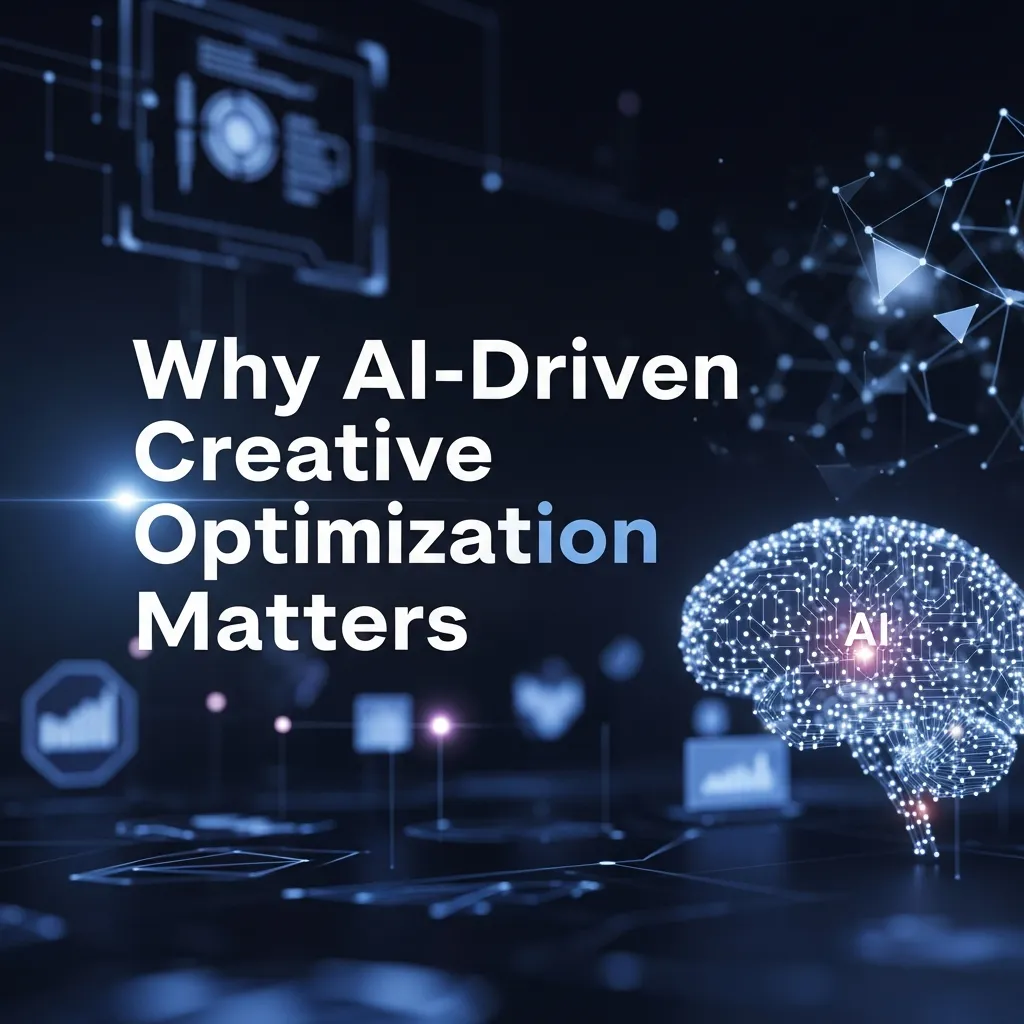
- In today’s fragmented media landscape—spanning desktops, smartphones, connected TVs, and emerging digital formats—a single creative asset cannot perform optimally across all channels.
- Embedding creative optimization into programmatic workflows allows marketers to transition from static campaigns to adaptive, personalized experiences that respond dynamically to user interactions and contextual signals.
- Leading authorities, such as the Interactive Advertising Bureau (IAB), highlight that dynamic creative testing is essential to improving overall campaign effectiveness and engagement.
Harnessing AI for Creative Optimization
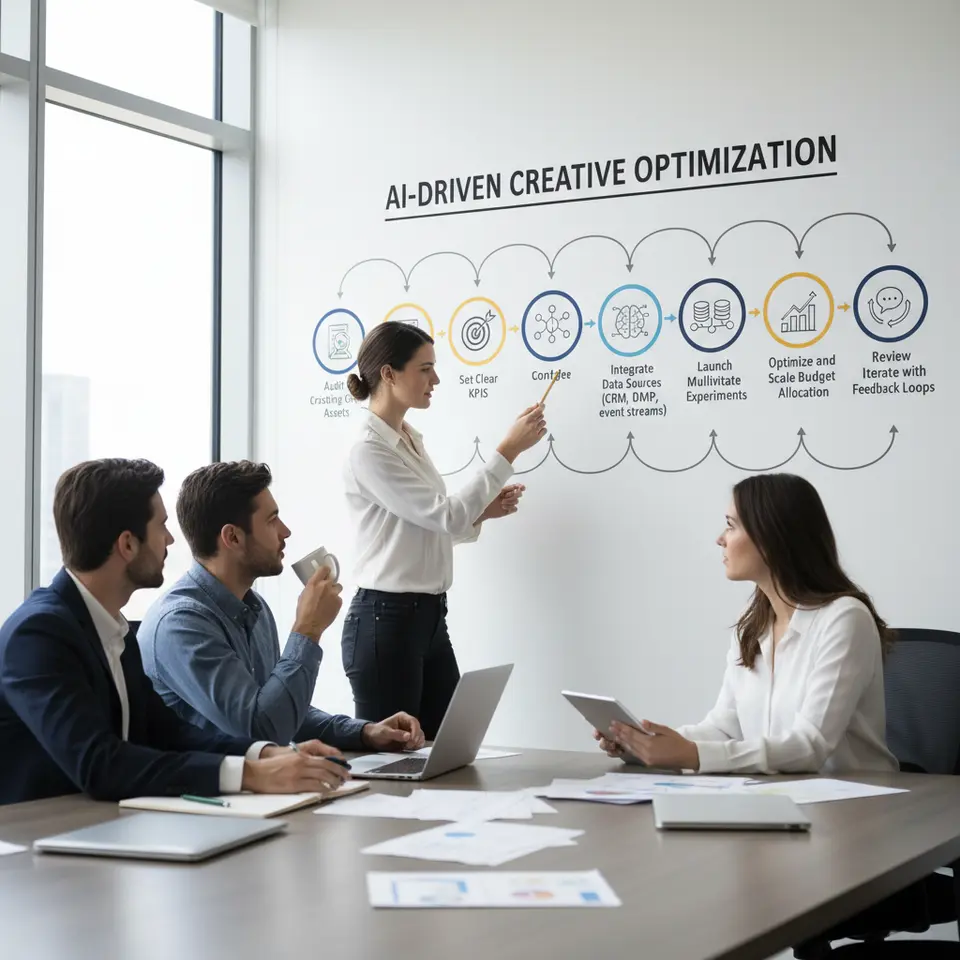
Artificial intelligence brings transformative capabilities to creative optimization, enabling marketers to accelerate experimentation and elevate performance in programmatic campaigns. There are three core AI-driven functions that power this evolution:
- Automated Asset Generation: AI platforms can produce or adapt visual elements, from ad layouts and color schemes to image cropping and video edits. Natural language generation engines also craft headlines and descriptions tailored to specific audience segments.
- Predictive Modeling: By analyzing historical performance data, machine learning algorithms forecast which creative variants will yield the highest engagement or conversion rates for defined audience clusters, device types, and time windows. This predictive insight reduces wasted spend on underperforming assets.
- Real-Time Personalization: AI-driven decisioning engines assemble ad creatives on the fly based on viewer signals, first-party data, and contextual cues. Each impression is dynamically configured to resonate with individual users, boosting relevance and response rates.
Leading solutions such as Adobe Sensei (Adobe.com/Sensei) integrate these AI functions into digital advertising platforms, helping brands automate creative testing at scale. In today’s digital landscape, leveraging AI-driven creative optimization is no longer a luxury—it’s a necessity for driving measurable campaign lift and staying competitive.
Essential Strategies for AI-Driven Creative Optimization
AI-Driven Creative Optimization is more than a set of tools—it is a strategic framework that empowers marketers to design, test, and refine ad creatives at scale. Leveraging artificial intelligence within programmatic advertising, brands can move from static campaigns to dynamic, adaptive experiences that resonate with target audiences. Below, we explore key strategies to implement AI-driven optimization effectively.
1. Define Clear Creative Hypotheses
A strong hypothesis forms the foundation of any AI-driven optimization effort. Start by identifying specific assumptions about which creative elements—headlines, visuals, CTAs, or layouts—will most influence audience engagement and conversion.
- Examples of hypotheses:
- Benefit-focused headlines increase CTR among budget-conscious segments.
- Lifestyle imagery resonates better with brand-loyal audiences.
- Personalized CTAs outperform generic messages in multi-device campaigns.
Mapping these hypotheses guides AI models to prioritize experiments, ensuring results align with overarching campaign objectives. This practice is essential for understanding programmatic advertising and building advertising for engagement strategies that deliver measurable outcomes.
2. Leverage Dynamic Creative Optimization (DCO) Platforms
Dynamic Creative Optimization platforms automate the assembly of ad variants in real time. By combining DCO with AI, marketers can unlock predictive adjustments and hyper-personalized messaging across channels.
Key capabilities include:
- Template-based creative construction for efficient asset generation.
- Automated integration of product feeds for personalized ads.
- Continuous performance feedback loops to prioritize high-performing variants.
- Real-time alignment with audio advertising and native programmatic advertising campaigns.
This approach allows brands to scale campaigns while maintaining relevance and engagement across multiple devices, channels, and audience segments.
3. Segment Audiences with Machine Learning
AI clustering algorithms enable precise audience segmentation beyond traditional demographic filters. Micro-segmentation allows marketers to tailor creative elements to specific behavioral patterns, interests, and contextual signals.
Benefits of AI-powered segmentation:
- Deliver messages optimized for micro-segments based on device type, browsing history, and past interactions.
- Personalize visual styles, copy, and CTAs for each audience cluster.
- Improve conversion rates while reducing wasted ad spend, enhancing your programmatic advertising work strategy.
4. Implement Multivariate Testing at Scale
Traditional A/B testing is limited by time and permutations. AI-driven multivariate testing expands the number of combinations tested simultaneously, dynamically allocating budget to top-performing creatives.
Key actions include:
- Test dozens or hundreds of creative variants across multiple channels.
- Use AI engines to prune underperforming creatives automatically.
- Continuously refine predictive models based on live performance data.
- Optimize campaigns for advertising sem strategy and cross-channel consistency.
5. Adopt Continuous Learning and Feedback Loops
AI-driven creative optimization is an iterative process. Continuous learning ensures campaigns remain adaptive to changes in consumer behavior, seasonal trends, and competitive activity.
Best practices include:
- Establish automated feedback loops to feed performance metrics into AI models.
- Retrain algorithms regularly with fresh data for evolving audience insights.
- Refine creative hypotheses to maintain a competitive edge.
- Benchmark against historical advertising-case-studies to identify best practices.
Traditional vs AI-Driven Creative Optimization
| Feature / Approach | Traditional Optimization | AI-Driven Creative Optimization |
|---|---|---|
| Asset Generation | Manual, slow, limited permutations | Automated, scalable, hundreds/thousands of variants |
| Audience Targeting | Broad segments, basic demographics | Micro-segments via machine learning, behavioral, contextual signals |
| Testing Method | A/B testing or small-scale multivariate | Large-scale multivariate testing, dynamic allocation |
| Feedback Loop | Manual reporting, delayed insights | Real-time data, continuous learning and model retraining |
| Personalization | Static creatives, generic messaging | Hyper-personalized ads tailored to each user in real time |
| Efficiency | Resource-intensive, time-consuming | Highly efficient, optimized spend, predictive performance |
| Cross-Channel Integration | Limited coordination | Seamless across display, video, audio, native, and SEM campaigns |
By implementing these strategies, marketers can fully leverage AI-Driven Creative Optimization to enhance engagement, maximize ROI, and deliver personalized experiences at scale. Integrating AI into programmatic advertising workflows transforms campaigns from static, one-size-fits-all efforts into adaptive, data-driven strategies that resonate with audiences across every channel.
Tools and Implementation Roadmap
To successfully deploy AI-driven creative optimization, follow this step-by-step roadmap:
- Audit Existing Creative Assets: Gather historical data on CTRs, conversion rates, and engagement for each creative type.
- Set Clear KPIs: Define benchmarks for improvement in CTR, CPA, view-through rates, and brand lift metrics.
- Integrate Data Sources: Connect first-party CRM data, DMP segments, and real-time event streams to your AI/DCO platform.
- Configure AI Models: Initialize predictive algorithms with historical performance data and establish rules for budget shifts, variant pruning, and update frequency.
- Launch Multivariate Experiments: Deploy creative variants across channels and monitor performance through live dashboards.
- Optimize and Scale: Gradually reallocate spend to top-performing assets, introduce new hypotheses, and expand segmentation.
- Review and Iterate: Conduct weekly performance reviews, retrain AI models with up-to-date data, and refine creative direction continuously.
Several platforms can facilitate your AI-driven creative optimization journey. In addition to Adobe Sensei and Google’s Display & Video 360, consider solutions like Celtra, Smartly.io, or specialized research from institutions such as the Pew Research Center (pewresearch.org) for audience insights. Choose a stack that aligns with your technical infrastructure, media mix, and creative workflows to ensure seamless integration.
FAQ: AI-Driven Creative Optimization
1. What is AI-Driven Creative Optimization?
AI-Driven Creative Optimization is the use of artificial intelligence and machine learning to automatically generate, test, and refine ad creatives (such as images, headlines, and CTAs) to maximize performance in real time.
2. How does AI-Driven Creative Optimization improve programmatic advertising?
It enhances programmatic advertising by predicting high-performing creative combinations, enabling real-time personalization, and reducing wasted ad spend on ineffective assets.
3. What is the difference between A/B testing and AI-driven optimization?
A/B testing compares a limited number of variations manually, while AI-driven optimization analyzes thousands of creative combinations simultaneously and continuously improves performance using real-time data.
4. What are the key benefits of AI-Driven Creative Optimization?
Key benefits include higher click-through rates (CTR), improved conversion rates, better audience targeting, faster testing cycles, and increased return on ad spend (ROAS).
5. What is Dynamic Creative Optimization (DCO)?
Dynamic Creative Optimization (DCO) is a technology that automatically assembles personalized ad creatives in real time using data signals such as user behavior, location, and device type.
6. Which industries benefit most from AI-Driven Creative Optimization?
Industries such as e-commerce, finance, travel, gaming, and media benefit significantly due to their need for large-scale personalization and rapid campaign adjustments.
7. What data is required for effective AI-driven creative optimization?
It requires historical campaign data, audience segmentation data, behavioral insights, contextual signals, and performance metrics like CTR, CPA, and engagement rates.
8. How does AI personalize ad creatives in real time?
AI uses user data (such as browsing behavior, demographics, and device type) along with contextual signals to dynamically assemble and deliver the most relevant creative for each individual impression.
9. What challenges are associated with AI-Driven Creative Optimization?
Common challenges include data privacy concerns, integration complexity, reliance on quality data, and the need for ongoing model training and monitoring.
10. How can businesses get started with AI-Driven Creative Optimization?
Businesses can start by defining clear KPIs, integrating data sources, adopting a DCO platform, launching multivariate tests, and continuously refining creatives based on AI-driven insights.