AI-Driven Creative Optimization for Programmatic Ads

AI-driven creative optimization uses machine learning to test, personalize, and refine programmatic ad creatives in real time, improving targeting accuracy, engagement rates, conversions, and overall advertising performance across multiple channels efficiently.
In today’s digital landscape, brands face an ever-increasing challenge to capture audience attention across countless channels and devices. Traditional static ads no longer suffice in engaging consumers who are inundated with messages. That’s why the rise of AI-driven creative optimization has become a game-changer for programmatic advertising. By harnessing advanced machine learning, real-time analytics, and automated asset assembly, marketers can deliver the right creative variation to the right user at the precise moment they are most likely to engage.
Currently, forward-thinking advertisers are leveraging AI-driven creative optimization to personalize visuals, headlines, and calls-to-action on the fly. This intelligent approach breaks free from the limitations of conventional A/B testing, enabling hundreds of permutations to be assessed within minutes. The result is a continuously learning system that refines ad performance in real time, maximizes ROI, and reduces wasted spend.
Organizations that integrate AI into their creative workflows can unlock unprecedented efficiency, improve scalability, and maintain brand consistency across their campaigns. In this comprehensive guide, we’ll explore the fundamentals, benefits, techniques, implementation strategies, performance measurement methods, and frequently asked questions that define AI-driven creative optimization for programmatic advertising.
Understanding AI-driven creative optimization
AI-driven creative optimization refers to the use of artificial intelligence and machine learning algorithms to dynamically assemble, test, and refine advertising assets in programmatic environments. Instead of manually swapping headlines and images every few days or weeks, marketers feed the AI engine a library of creative components—such as visuals, copy variants, and call-to-action buttons—and allow the system to automatically generate ad variants tailored to specific audience segments.
How it works
The process begins with data ingestion. First-party data from a data management platform (DMP) or customer relationship management (CRM) system is combined with contextual signals like location, device type, and browsing behavior. Next, a creative management platform (CMP) or demand-side platform (DSP) powered by AI synthesizes these inputs to build multiple ad combinations. As these variations are served, real-time performance metrics flow back to the AI engine, which continuously refines its predictive models based on engagement outcomes.
Key components
- Data Streams: Reliable, real-time inputs (demographics, psychographics, behavioral data) that inform creative assembly.
- Creative Assets: Pre-approved images, videos, headlines, and CTAs stored in a digital asset management (DAM) system.
- AI Algorithms: Machine learning models—including clustering, classification, and reinforcement learning—that identify high-performing combinations.
- Feedback Loop: Continuous performance data that updates the model, pausing underperforming units and amplifying winners.
Renowned institutions like the National Institute of Standards and Technology (nist.gov) emphasize the importance of secure data handling, ensuring privacy and compliance are maintained throughout the optimization cycle. With proper guardrails in place, AI-driven creative optimization becomes a powerful tool for delivering personalized, scalable, and efficient campaigns.
Core benefits for programmatic campaigns

As advertisers shift budgets toward programmatic channels, they seek solutions that maximize engagement and minimize wasted ad spend. AI-driven creative optimization offers several core advantages that directly impact campaign performance and brand growth.
1. Increased Engagement
By tailoring visuals and messages to individual preferences, AI engines can significantly boost click-through rates (CTR) and view-through rates (VTR). Personalization resonates more deeply with audiences, leading to higher interaction metrics and improved ad recall.
2. Scalability
Manual creative testing becomes untenable at scale. With AI-driven creative optimization, marketers can manage vast libraries of creative assets and test hundreds or thousands of permutations without ballooning design costs. This automation unlocks global reach while preserving localized relevance.
3. Faster Insights
Instead of waiting for days or weeks to reach statistical significance, AI evaluates variant performance in real time. This immediacy allows teams to reallocate budgets swiftly, pausing underperforming ads and scaling top performers within minutes of deployment.
4. Cost Efficiency
By focusing investment on high-performing creative combinations, AI-driven creative optimization reduces overall cost per acquisition (CPA) and lowers wasted impressions. Marketers achieve better ROI by concentrating spend where it delivers the greatest impact.
5. Brand Consistency
Despite automation, creative rules and brand guidelines can be embedded within AI engines. This ensures that every ad variation aligns with brand voice, aesthetics, and legal requirements while still benefiting from dynamic personalization.
In today’s competitive market, these benefits empower brands to outperform rivals, deliver more relevant experiences, and maintain agility in a rapidly evolving ecosystem.
Key techniques in AI-driven creative optimization
Implementing AI-driven creative optimization requires a strategic blend of data science, automation, and creative thinking. Several advanced techniques drive the continuous improvement of ad assets in programmatic campaigns.
Dynamic Personalization
Dynamic personalization involves real-time assembly of creative elements—images, headlines, product recommendations—based on user-level data. For instance, an AI engine may select a lifestyle image for a millennial audience or swap in a product variant for a user who browsed that item moments earlier. This tailored approach enhances relevance and engagement.
Predictive Analytics
Machine learning models leverage historical performance data to forecast which creative elements will resonate with specific segments. By ranking variants according to predicted engagement scores, the system can pre-emptively boost high-value combinations and deprioritize those likely to underperform.
Real-Time Creative Testing
Traditional split tests rely on static sampling and delayed reporting. In contrast, AI-driven creative optimization continuously evaluates all active variants, applying statistical methods like multi-armed bandits to allocate impressions dynamically. This on-the-fly testing accelerates learning and optimizes budgets instantaneously.
Natural Language Processing (NLP)
AI tools equipped with NLP analyze copy sentiment, readability, and brand compliance. By understanding word-level performance metrics, the system can generate and refine headlines or descriptions that align with brand voice while maximizing clarity and emotional resonance.
Computer Vision and Image Analysis
Advanced computer vision models assess visual appeal by analyzing color palettes, facial expressions, and contextual elements in images or videos. By linking these attributes to performance data, AI can identify which visual styles engage users most effectively and recommend new creative directions.
For more insights into AI’s intersection with marketing, researchers at Massachusetts Institute of Technology (mit.edu) publish studies on algorithmic personalization and consumer behavior. Integrating these techniques ensures your campaign leverages proven methodologies to deliver measurable results.
Implementing AI-driven creative strategies
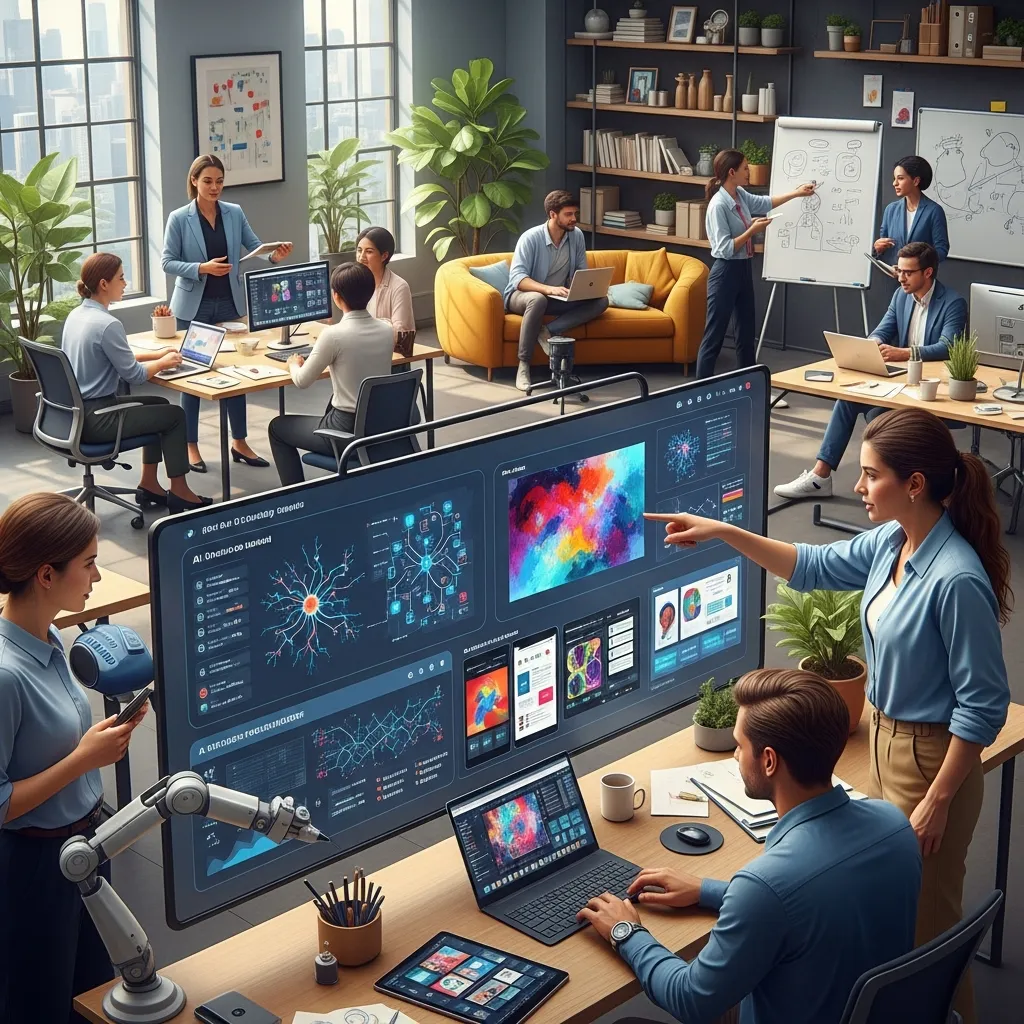
Transitioning to AI-driven creative optimization involves thoughtful planning, cross-functional collaboration, and careful platform selection. Below are best practices to guide a seamless implementation.
Inventory and Asset Management
Begin by auditing all available creative assets—images, videos, copy variations, logos, and design templates. A well-organized digital asset management (DAM) system ensures assets are tagged, version-controlled, and accessible. The diversity and quality of these components directly influence the AI engine’s ability to generate impactful ads.
Define Clear KPIs
Before launching tests, establish specific success metrics. These may include engagement rate, conversion rate, cost per acquisition (CPA), or return on ad spend (ROAS). Clear KPIs allow AI models to prioritize objectives and align optimizations with business goals.
Choose the Right Platform
Evaluate creative management platforms (CMPs) and demand-side platforms (DSPs) that offer robust AI-driven creative modules. Key criteria include integration capabilities with your DMP, support for multiple ad formats (display, video, native), and real-time analytics dashboards.
Set Creative Guardrails
To maintain brand integrity, embed design guidelines and compliance rules within the AI engine. Specify mandatory elements—such as logos and disclaimers—while allowing flexibility in optional components. This balance ensures consistency without limiting innovation.
Continuous Monitoring and Iteration
Utilize real-time reporting to track performance against KPIs. Schedule regular reviews to assess asset fatigue, creative trends, and audience feedback. Encourage collaboration between creative, data science, and media teams to refine strategies and introduce new asset variations as needed.
Privacy and Compliance
Ensure your AI-driven creative workflows comply with data privacy regulations like GDPR and CCPA. Implement consent management platforms and anonymization procedures to safeguard user data while maintaining optimization capabilities.
By following these steps, marketing teams can confidently deploy AI-driven creative optimization, harnessing automation without sacrificing oversight.
Measuring Success in AI-Driven Creative Optimization (KPIs & Analytics)
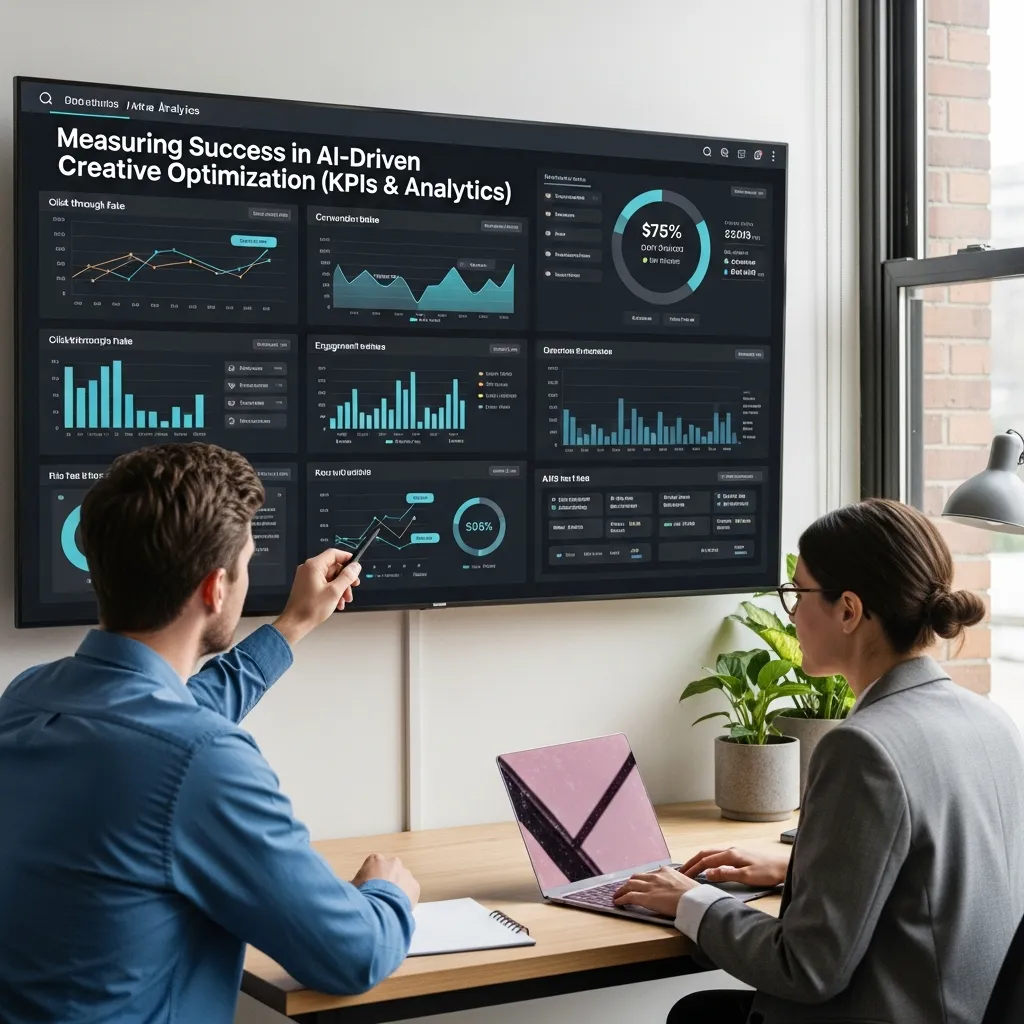
In AI-Driven Creative Optimization, measurement is not just a reporting function—it is the core engine that drives continuous improvement in programmatic advertising. By combining machine learning, real-time data processing, and advanced attribution models, advertisers can understand exactly which creative elements perform best across channels such as display, native-programmatic-advertising, programmatic-audio-advertising, and even television-advertising environments.
KPI Performance Framework for AI-Driven Creative Optimization
| KPI Category | Key Metrics | Purpose | AI Role in Optimization |
|---|---|---|---|
| Engagement | CTR, VTR, interaction rate | Measure audience attention and interest | Optimize creatives in real time |
| Conversion | Conversion rate, leads, sales | Track business outcomes | Shift budget to high-performing assets |
| Cost Efficiency | CPA, CPM | Control advertising spend | Reduce wasted impressions |
| Frequency Control | Ad exposure rate, fatigue score | Prevent overexposure | Auto-refresh creatives |
| Attribution | Multi-touch, data-driven attribution | Identify true impact of creatives | Assign value to each touchpoint |
| Reporting | Dashboards, performance trends | Enable decision-making | Provide predictive insights |
Detailed Breakdown of Core Performance Areas
1. Engagement Metrics – Understanding Audience Interaction
Engagement metrics are the first indicator of whether your creative strategy is effective in programmatic advertising strategy campaigns.
Key indicators include:
- Click-Through Rate (CTR)
- View-Through Rate (VTR)
- Scroll depth & interaction rates
- Video completion rate (for rich media)
High engagement signals that AI-optimized creatives are aligning with user intent in contextual programmatic advertising environments.
2. Conversion Metrics – Measuring Business Impact
Conversion tracking connects creative performance directly to revenue outcomes.
Common conversion KPIs:
- Purchase conversions
- Lead submissions
- App installs
- Sign-ups or registrations
AI links creative variants to conversion paths using attribution models, improving small-business-success by maximizing ROI with limited budgets.
3. Cost Efficiency – Maximizing Advertising ROI
AI-driven systems continuously optimize bidding and creative allocation to reduce wasted spend.
Monitored metrics:
- CPA (Cost Per Acquisition)
- CPM (Cost Per Mille)
- ROAS (Return on Ad Spend)
In programmatic-advertising-vs-ppc comparisons, AI optimization often delivers lower CPA due to automated creative adjustments.
4. Frequency & Creative Fatigue Monitoring
Overexposure leads to declining performance—even for high-performing ads.
AI detects:
- Drop in CTR over time
- Repeated exposure patterns
- Audience disengagement signals
When fatigue is detected, systems automatically rotate creatives or introduce new variations in native programmatic advertising or programmatic-audio-advertising channels.
5. Attribution & Incrementality Analysis
Modern AI systems go beyond last-click attribution.
Advanced models include:
- Multi-touch attribution
- Data-driven attribution
- Incrementality testing
This helps identify how each creative contributes across channels like google ads programmatic advertising and transforming programmatic advertising ecosystems.
Dashboard Visualization & Reporting Insights
AI-powered dashboards provide a unified view of campaign performance across multiple channels, including display, video, audio, and even television-advertising.
Key dashboard capabilities:
- Real-time performance tracking
- Creative-level breakdown analysis
- Audience segment comparisons
- Predictive performance forecasting
- Cross-channel attribution mapping
These insights help marketers refine programmatic-advertising-strategy with precision and transparency.
FAQs – AI-Driven Creative Optimization
1. What is AI-Driven Creative Optimization?
AI-Driven Creative Optimization is the use of artificial intelligence to automatically test, personalize, and improve ad creatives to maximize performance, engagement, and conversions in digital advertising campaigns.
2. How does AI improve programmatic advertising creatives?
AI analyzes user behavior, context, and performance data to adjust visuals, messaging, and formats in real time, ensuring ads are more relevant and effective.
3. What is the role of contextual programmatic advertising in AI optimization?
Contextual-programmatic-advertising uses page content and user intent signals, and AI enhances it by matching the best creative variations to the most relevant environments.
4. How is AI-Driven Creative Optimization different from traditional programmatic advertising strategy?
Traditional programmatic focuses on automated ad buying, while AI-Driven Creative Optimization enhances the actual ad content dynamically for better engagement and ROI.
5. Can AI improve small business success in advertising?
Yes, small-business-success improves as AI helps small advertisers optimize budgets, target better audiences, and create high-performing ads without large creative teams.
6. What is the difference between programmatic advertising and PPC?
Programmatic advertising vs ppc differs because programmatic uses automated bidding across networks, while PPC focuses on keyword-based paid search ads like Google Ads.
7. How does Google Ads use AI in programmatic advertising?
Google ads programmatic advertising uses AI for automated bidding, audience targeting, and creative optimization to improve ad relevance and performance.
8. What is native programmatic advertising?
Native programmatic advertising delivers ads that match the look and feel of the content platform, and AI optimizes these creatives for higher engagement and user experience.
9. How is programmatic audio advertising optimized using AI?
Programmatic audio advertising uses AI to personalize audio ads based on listener behavior, time, location, and platform preferences like streaming services and podcasts.
10. How does AI transform the future of programmatic advertising?
AI is transforming programmatic-advertising-strategy by enabling real-time creative testing, predictive targeting, and fully automated ad personalization across multiple channels like TV, audio, and display.