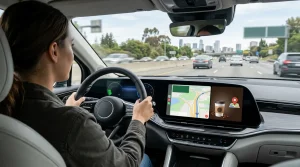
What Is Digital Programmatic Advertising

Digital programmatic advertising is the automated buying and selling of online ads using AI, enabling precise audience targeting, real-time adjustments, cost efficiency, and scalable, data-driven campaigns for better marketing results.
Digital advertising has transformed how brands reach audiences. In the dynamic landscape, you’re sure to have come across a term like digital programmatic advertising. So what exactly does this mean, and how might it be used best by enterprises looking to improve campaign performance?
What is Digital Programmatic Advertising?
Digital programmatic advertising, at its very core, is the automatic purchase and sale of online advertising space. Unlike traditional arrangements that demand direct negotiations and manual orders, advanced algorithms plus artificial intelligence (AI) are used for its streamlined operation.
Here is how it is done:
- Advertisers define specific parameters for their campaigns, such as target audience, budget, and goals.
- Publishers make available inventory (such as ad space on websites or apps) for bidding.
- Using AI and real-time buying, the system places the ad where it will get in front of the intended audience most likely.
All this happens in milliseconds!
This tech-driven approach to marketing makes advertising faster, more results-focused… and ultimately, successful.
Why Programmatic Advertising Matters
Before the arrival of programmatic advertising, buying ads relied on human-based interactions. Tasks were often laborious dealings with publishers, manual documentation that had to be handled personally, and ads placed with no thought for who might see them. Programmatic has helped alleviate some of these difficulties with a range of positive effects.
Benefits of Digital Programmatic Advertising
Efficiency That’s Unmatched
Programmatic platforms mechanize tedious operations, giving marketers the power to launch campaigns without spending weeks in manual negotiations. This frees up crucial time for more strategic decisions.
Upgraded Targeting
Drawing on first-party and third-party data, programmatic advertising offers advertisers unprecedented precision in reaching audiences. Demographics, interests, browsing habits, and geolocation are all weighed when tailoring a campaign for maximum relevance.
Flexibility To Adjust In Real Time
Unlike traditional campaigns, programmatic channels are quicker to judge and adjust. If a piece of copy isn’t working or you’ve gone over your budget due to too many impressions… changes are enacted immediately.
Cost Efficiency
By deploying ads only to the most relevant users and not wasting impressions on uninterested audiences, programmatic platforms save on ROI and cut unneeded spending.
Scalability
If you have only a small local campaign or are working in multiple countries with global coordination, the system can be scaled without adding much work.
Real-World Example of Programmatic’s Power

For example, a sports brand is preparing to run a campaign on running shoes. Instead of an ordinary ad, wherever on the Yahoo! website, their programmatic system requires that users either:
- You may have seen running gear recently
- Are you following marathon-related hashtags on social media
- Live and work in areas where road events are happening or going to happen anytime soon.
By only targeting such high-intent audiences, the marque hikes its ROI substantially.
How Does Programmatic Advertising Work?
Demand-Side Platforms (DSPs)
These platforms are tools used by advertisers to purchase ad inventory from publishers. They get advertisers to enter their targeting preferences and do the rest, placing ads automatically.
Supply-Side Platforms (SSPs)
Publishers ‘DSPs. They auction their ad space and maximize revenue by simultaneously offering it to multiple advertisers.
Ad Exchanges
This is where DSPs and SSPs are brought together in this exchange. Real-time auctions for ad space are conducted, and the ability to match buyers with sellers at speeds never before seen in business history.
Real-Time Bidding (RTB)
This is the backbone of automated digital advertising. It is a live auction in milliseconds where advertisers bid for their impression to go live on a screen, and only the highest bidder gets through.
Data Management Platforms (DMPs)
These platforms analyze the behavior of audiences, giving useful insights for when advertisers are targeting users. DMPs use a variety of data sources to inform strategy and identify potentially valuable prospects.
The Programmatic Ecosystem Workflow
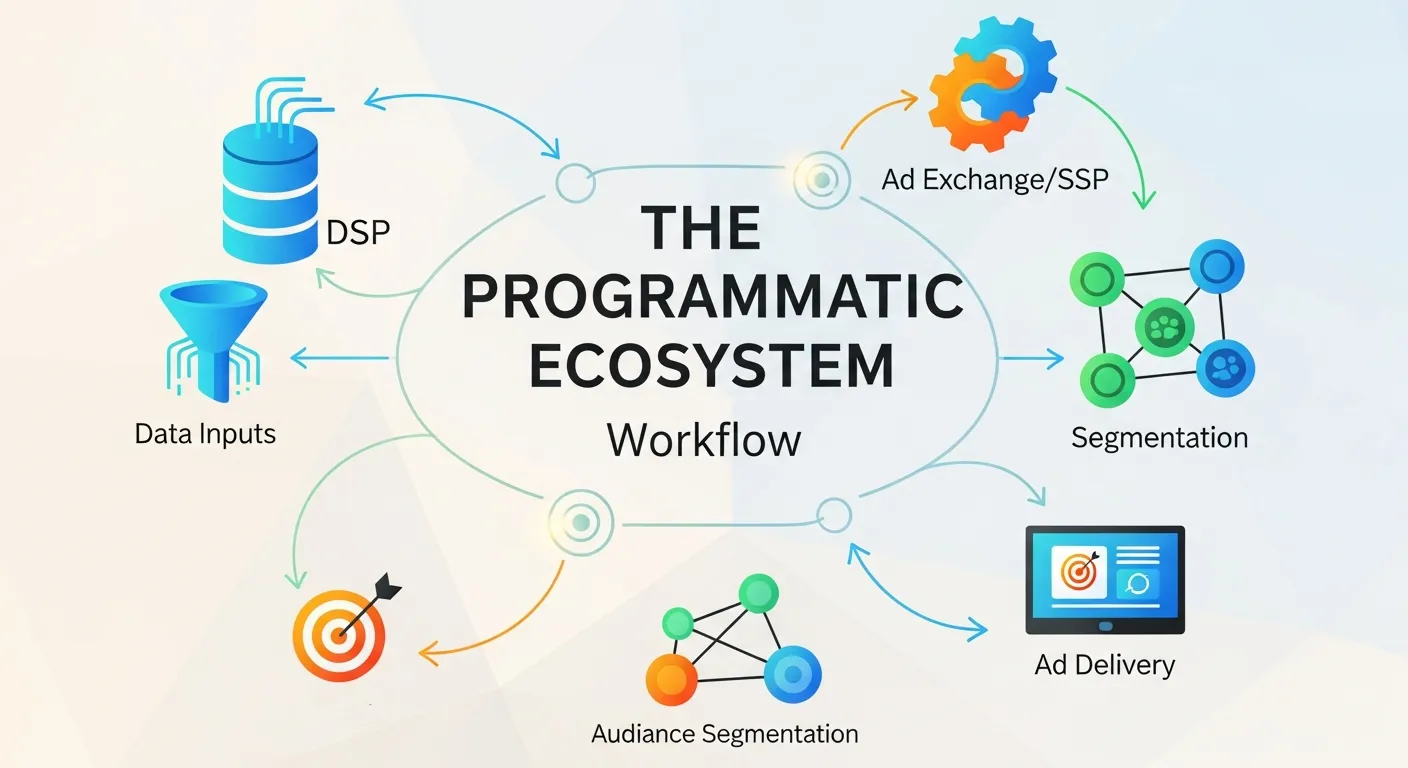
- A user visits a website.
- The SSP announces his impression.
- Advertisers’ DSPs judge whether or not the visitor is a member of their targeted demographic and bid accordingly.
- The advertiser’s highest price to bid on the ad is displayed to the user seamlessly within just a fraction of second.
Types of Ad Formats in Digital Programmatic Advertising
Programmatic advertising is not limited to traditional display ads. Its versatility has extended to other digital formats such as:
- Display Ads: Static or animated banners on Websites and apps.
- Video Ads: Pre-roll, mid-roll, or outstream—played alongside video content.
- Audio Ads: Advertisements delivered during podcast episodes or music streaming sessions.
- Native Ads: Content that blends in with the visually look and feel of a publisher’s Website.
- Connected TV (CTV) Ads: Commercials that appear on streaming platforms like Hulu & Roku.
This adaptability allows ads to reach audiences wherever they are most engaged.
Programmatic Advertising for SEM Strategy
Digital programmatic advertising isn’t limited to display or video ads—it can also enhance search engine marketing (SEM) campaigns. By leveraging programmatic platforms to automate keyword targeting and bid adjustments, marketers can optimize their search ad spend, target high-intent users, and increase conversion rates more efficiently than manual SEM management.
Key Points:
- Automates bid management for paid search campaigns.
- Integrates with first-party data to serve search ads to high-intent audiences.
- Enables cross-channel retargeting by combining SEM with display or video programmatic campaigns.
- Supports real-time optimization of ad copy and keyword selection based on user behavior.
Programmatic SEM Optimization Features
| Feature | Description | Benefit for Marketers |
|---|---|---|
| Automated Bid Adjustments | AI-driven bid optimization | Maximizes ROI by adjusting bids in real-time |
| Keyword Targeting Expansion | Uses programmatic analytics to find high-performing keywords | Improves reach and relevance |
| Cross-Channel Retargeting | Combines search with display/video | Reinforces messaging and increases conversions |
| Dynamic Ad Copy | Tailors ad copy per user intent and demographics | Boosts engagement and CTR |
Programmatic Advertising Analytics for Campaign Optimization
Programmatic advertising analytics provides granular insights that go beyond basic impressions and clicks. By understanding user behavior across devices, publishers, and platforms, marketers can fine-tune their campaigns in real-time, reducing wasted spend and increasing ROI. Analytics also enables predictive modeling, identifying the most effective creative and targeting strategies for future campaigns.
Key Points:
- Tracks cross-channel user journeys to inform strategy.
- Measures engagement metrics like viewability, attention time, and interaction rate.
- Uses predictive analytics to forecast audience response and optimize campaigns.
- Identifies and mitigates programmatic advertising fraud through anomaly detection.
Key Metrics in Programmatic Advertising Analytics
| Metric | Purpose | Impact on Campaigns |
|---|---|---|
| Viewability Rate | % of ads seen by real users | Improves ad placement decisions |
| Engagement Rate | Measures clicks, interactions, shares | Identifies high-performing creatives |
| Conversion Attribution | Tracks user actions post-ad exposure | Optimizes budget allocation |
| Fraud Detection | Flags bot traffic or invalid impressions | Saves costs and ensures accurate reporting |
Programmatic Advertising in Omnichannel Retail
Programmatic advertising is transforming retail marketing by connecting online and offline consumer touchpoints. Omnichannel retail campaigns use programmatic to deliver relevant messaging across mobile apps, websites, connected TV, and in-store digital screens, increasing the likelihood of purchase while providing measurable results.
Key Points:
- Synchronizes messaging across multiple retail channels for a consistent brand experience.
- Leverages first-party retail data to target audiences based on purchase history and shopping behavior.
- Enhances the performance of programmatic advertising for automated ad buying in retail campaigns.
- Enables real-time adjustments to creative and targeting based on in-store or online inventory changes.
Omnichannel Retail Programmatic Approach
| Channel | Role in Campaign | Measurable Benefit |
|---|---|---|
| Website & Mobile App | Personalized display and video ads | Higher click-through and conversion |
| Connected TV (CTV) | Interactive video targeting | Engages viewers with product demos |
| In-Store Digital Screens | Programmatic ad content based on location | Drives immediate purchase or foot traffic |
| Email & Push Notifications | Triggered campaigns based on user behavior | Improves retention and repeat purchases |
Challenges and Considerations in Programmatic Advertising

Digital programmatic advertising is almost limitless, but it is not without its problems:
- Ad Fraud: When bots or fake users make impressions, it’s a waste of money to send ad space your way. This problem can be solved by working with trustworthy platforms and using fraud prevention tools.
- Privacy Concerns: In an age where eyes are turned more than ever toward user privacy, data collection for ad targeting runs into legal trouble under regulations such as GDPR and CCPA. Businesses must comply with these laws or face penalties.
- Learning Curve: To make successful use of programmatics in your marketing strategy, you need to be familiar with platforms and analytics. It is smart to recruit the right talent or use a talented agency that knows this area well.
Is Programmatic Advertising Right for Your Business?
If you want to automate workflows, improve ad performance, and efficiently reach your target audience, programmatics must become part of an overall strategy. But you need to define your goals, work with reputable platforms, and keep tweaking campaigns based on performance metrics.
Both big enterprises and small businesses can thrive in programmatics–as with all marketing strategies, however, it’s crucial that they be consistent with their objectives.
Programmatic Advertising is the Beginning of a Journey
Digital programmatic advertising is not only shaping the future of marketing—it is already a vital part of today’s advertising landscape. Unlike traditional methods, it allows brands to reach the right audience at the right time with unmatched efficiency. By leveraging automated technology and data-driven insights, digital programmatic advertising delivers precision targeting, reducing wasted ad spend and increasing the return on investment.
Key Benefits of Digital Programmatic Advertising:
- Precision Targeting: Reach specific audiences based on demographics, interests, behavior, and location.
- Cost Efficiency: Reduce wasted ad spend by focusing only on high-value prospects.
- Real-Time Optimization: Adjust campaigns instantly based on performance metrics for maximum results.
- Scalability: Effective for both small campaigns and large-scale marketing efforts.
- Cross-Channel Reach: Seamlessly manage ads across web, mobile, video, and social platforms.
- Measurable Results: Track engagement, conversions, and ROI with clear analytics.
For marketers ready to embrace this journey, success comes from combining a clear, strategic approach with partners committed to transparency and accountability. By understanding and leveraging the benefits of programmatic advertising, brands can create campaigns that are not only efficient but also closely aligned with consumer needs, delivering measurable impact and long-term growth.
FAQ: Digital Programmatic Advertising
1. What is Digital Programmatic Advertising?
Digital Programmatic Advertising is the automated buying and selling of online ad space using AI and advanced algorithms. It enables brands to reach specific audiences efficiently across websites, apps, video platforms, and more.
2. How does programmatic advertising work?
Programmatic advertising works through a combination of Demand-Side Platforms (DSPs), Supply-Side Platforms (SSPs), Ad Exchanges, and Real-Time Bidding (RTB), which together automate ad placement in milliseconds.
3. What are the benefits of using Digital Programmatic Advertising?
Benefits include unmatched efficiency, precise audience targeting, cost optimization, flexibility to adjust campaigns in real-time, and scalable advertising across multiple channels.
4. What types of programmatic advertising exist?
Digital programmatic advertising includes display ads, video ads, programmatic TV advertising, programmatic audio advertising, native ads, and connected TV (CTV) ads for omnichannel reach.
5. How can programmatic advertising improve SEM campaigns?
By using programmatic advertising for SEM, marketers can automate bid management, target high-intent users, optimize ad copy in real time, and integrate cross-channel campaigns for higher conversions.
6. What role does analytics play in programmatic advertising?
Analytics in programmatic advertising track engagement, viewability, conversion attribution, and user behavior across devices. Predictive insights help optimize campaigns and prevent ad fraud.
7. What is programmatic advertising buying?
Programmatic advertising buying is the automated purchase of ad space in real time. Advertisers set targeting parameters, budgets, and goals, while AI places the ad in front of the most relevant audience.
8. Is programmatic advertising suitable for small businesses?
Yes. Even small businesses can use programmatic advertising advanced tools to target audiences efficiently, scale campaigns, and maximize ROI without extensive manual effort.
9. Are there challenges in using programmatic advertising?
Challenges include ad fraud, privacy compliance with regulations like GDPR and CCPA, and the learning curve to effectively use platforms and analytics for campaign optimization.
10. What is the future of Digital Programmatic Advertising?
The future involves increased AI-driven optimization, omnichannel programmatic campaigns, advanced programmatic advertising techniques, and growth in programmatic TV advertising and programmatic audio advertising to reach audiences wherever they engage.
Digital programmatic advertising is the future—get ahead by reading How to Get Started with Programmatic Advertising and take your first steps today.