What Is Programmatic Job Advertising?
Programmatic job advertising automates the placement of job ads using data and algorithms to target the right candidates, optimize budgets in real time, and improve hiring efficiency across multiple platforms.
Every year, recruiting the first-rate expertise will become harder and harder. With a rapidly changing era and fierce opposition, employers need smarter approaches to hook up with their perfect candidates. Enter programmatic job advertising.
What Is Programmatic Job Advertising?
At its core, programmatic job advertising uses automation software to buy and manipulate commercials throughout a couple of systems. That means rather than manually putting ads on precise activity forums or websites, programmatic advertising optimizes the technique by using information and AI to target the proper candidates, at the proper time, on the proper platforms.
Think of it like Google Ads but specifically for recruiting. Rather than counting on guesswork and ad placement approvals, programmatic process advertising and marketing is information-driven and operates in real time.
Key Features of Programmatic Job Advertising
Understanding programmatic advertising’s functionality lies in its features. Some of its key highlights include:
Data-Driven Targeting
Traditional job boards can act like scattershot recruiting; your listing is visible to everyone regardless of relevance. Programmatic platforms, on the other hand, target candidates based on their location, qualifications, experience, and even behavioral patterns. This precision ensures your ad is shown to candidates most likely to apply and be a good match.
Real-Time Bidding
Just as programmatic advertising optimizes ad placement in digital marketing, job-ad platforms use real-time bidding (RTB). This ensures that your job ads appear on platforms and job boards within your target budget, giving you the best possible ROI.
Automated Campaign Optimization
Through built-in AI, programmatic tools optimize campaigns by tweaking budgets, reallocating resources, or shifting ads to higher-performing platforms. That means continuous performance improvements without manual intervention, saving recruiters significant time and effort.
Multi-Channel Reach
One of the biggest advantages of programmatic advertising is its ability to distribute job postings over multiple channels simultaneously. Whether it’s job boards, social media, or niche platforms catering to specific industries, your ad will reach a wider yet highly targeted audience.
Analytics and Insights
Recruitment isn’t just about attracting candidates; it’s about learning what works. Programmatic solutions provide in-depth analytics to measure reach, engagement, and conversions. These insights are crucial to improving future campaigns and achieving better results over time.
Programmatic Job Advertising vs Traditional Job Advertising
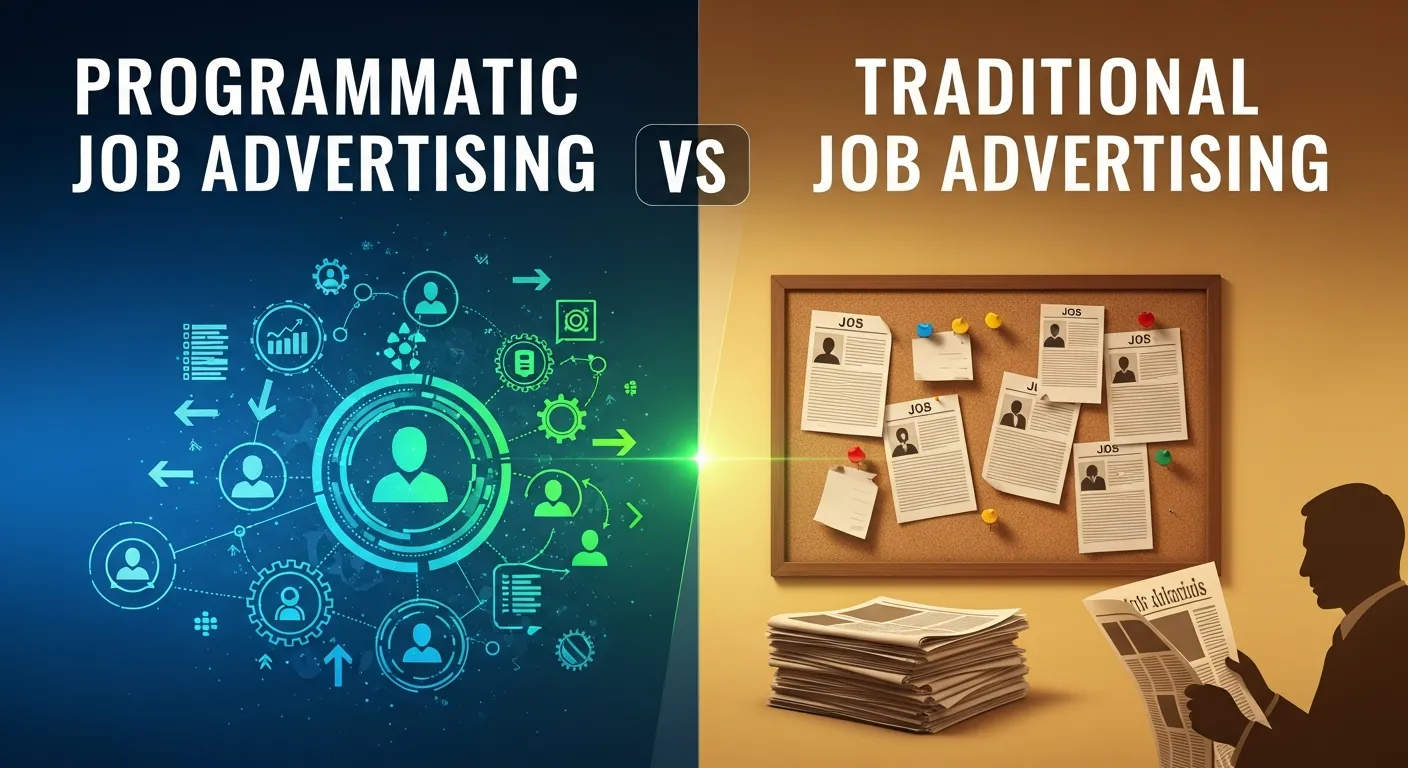
Recruitment advertising has evolved significantly as advertising transformed digital marketing. While traditional job advertising relies on fixed placements and manual decisions, programmatic job advertising introduces automated ad buying driven by data and analytics. This shift mirrors how programmatic advertising revolutionized digital marketing by enabling smarter targeting, budget control, and measurable outcomes.
Key Differences:
- Traditional job ads are posted on fixed platforms regardless of candidate relevance
- Programmatic job advertising uses automated ad buying to target qualified candidates
- Manual budget allocation vs real-time budget optimization
- Limited reporting vs advanced programmatic advertising analytics
Programmatic vs Traditional Job Advertising
| Aspect | Traditional Job Advertising | Programmatic Job Advertising |
|---|---|---|
| Ad Placement | Fixed job boards | Automated, multi-platform |
| Targeting | Broad and generic | Data-driven and precise |
| Budget Control | Pre-set spend | Real-time optimization |
| Performance Tracking | Limited insights | Advanced analytics |
| Scalability | Manual effort required | Easily scalable |
Benefits of Programmatic Job Advertising
Why should you consider programmatic job advertising for your recruitment strategy? Here are some compelling reasons:
-
Save Time and Resources
Recruiting can be labor-intensive, especially if you’re manually posting ads or managing campaigns. Programmatic platforms automate these tasks, from posting ads to optimizing budgets, freeing up valuable resources within your hiring team. -
Maximize Your Recruitment Budget
Gone are the days of overspending on underperforming channels. Programmatic software ensures that every dollar goes toward reaching the best candidates, allocating your budget to platforms with higher returns on investment. -
Increase Candidate Quality
Because programmatic systems use data-driven targeting, your ads are more likely to reach highly qualified candidates. This reduces the number of irrelevant applications and improves the overall quality of your talent pool. -
Shorten Time-to-Hire
With automation and precision targeting, programmatic job advertising accelerates the hiring process. By presenting your openings to the right candidates, you’re likely to receive applications faster, leading to quicker hires. -
Data-Backed Decisions
Programmatic platforms provide actionable insights, empowering recruiters to make better-informed decisions regarding ad spend, platform selection, and targeting strategies. -
Minimize Bias in Recruitment
Because programmatic advertising relies on algorithms and data rather than manual processes, there’s less room for unconscious bias in determining where and how job ads are placed.
Integration of Programmatic Job Advertising with ATS and HR Tech
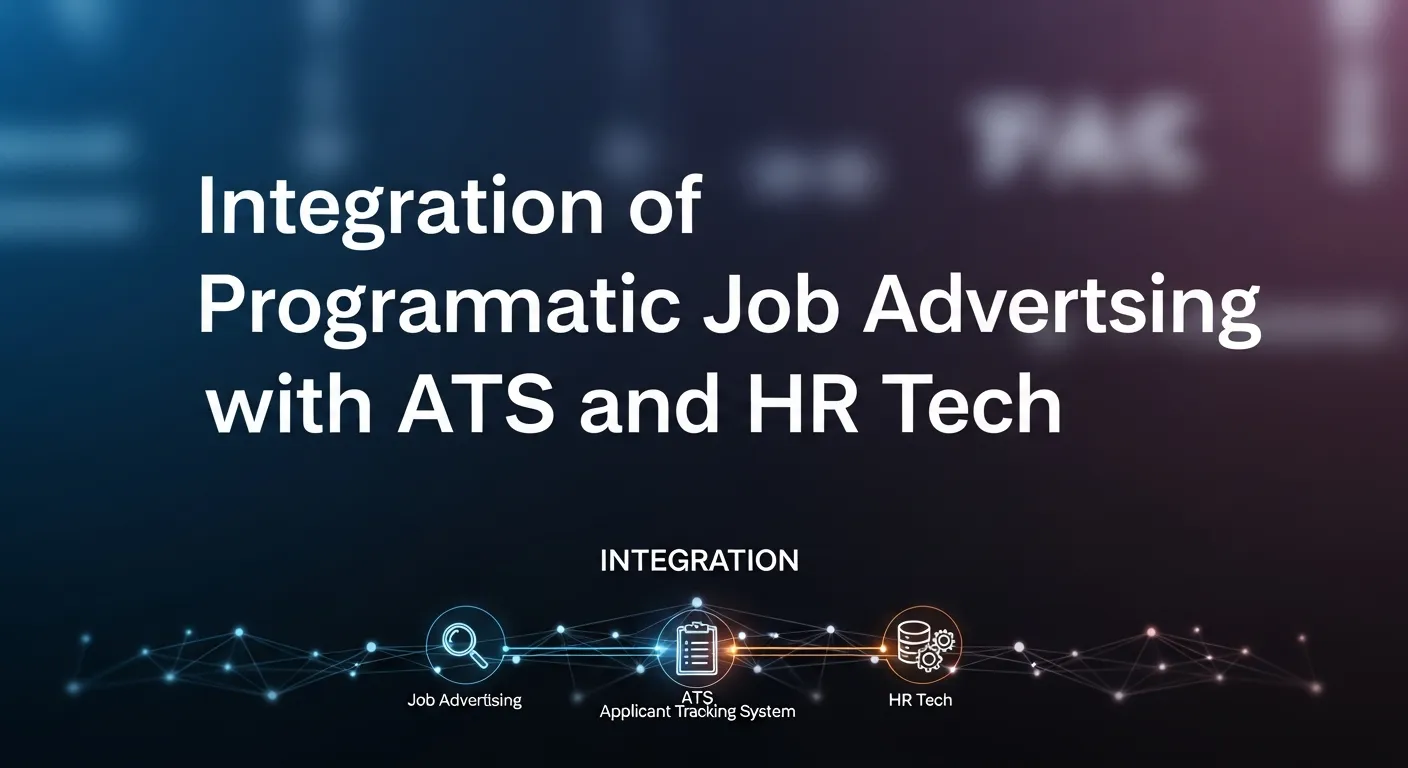
Modern recruitment success depends on how well systems work together. Programmatic job advertising integrates seamlessly with Applicant Tracking Systems (ATS) and other HR technologies, enabling end-to-end automation. This integration aligns closely with the principles outlined in any programmatic advertising complete guide, where automation and analytics drive efficiency across workflows.
Key Integration Benefits:
- Automatically syncs job listings from ATS to programmatic platforms
- Uses candidate data to improve targeting accuracy
- Enables closed-loop reporting from ad click to hire
- Reduces manual data entry and errors
ATS + Programmatic Job Advertising Workflow
| Recruitment Stage | ATS Role | Programmatic Advertising Role |
|---|---|---|
| Job Creation | Stores job details | Converts listings into ads |
| Candidate Targeting | Provides role criteria | Uses data for automated ad buying |
| Application Tracking | Manages applications | Tracks ad-driven conversions |
| Performance Analysis | Hiring metrics | Programmatic advertising analytics |
How Programmatic Job Advertising Works
Curious about what happens behind the scenes? Here’s a simplified step-by-step view of how programmatic job advertising works:
- Input Campaign Goals
Recruiters start by defining their objectives, such as the type of role to fill, the target audience, and the campaign budget. - Job Ad Creation
The system uses the provided job description, requirements, and other details to create eye-catching ad creatives. - Targeting Setup
Recruiters select targeting criteria, which could include location, education level, experience, or even browsing behavior. - Automated Platform Distribution
The platform bids for ad space automatically, ensuring the ads appear across relevant websites, job boards, and social media platforms. - Real-Time Optimization
Once the campaign is live, the system continuously monitors performance. It reallocates budget, refines targeting, and shifts focus to the best-performing channels in real time. - Performance Insights
Recruiters receive detailed analytics on ad performance, enabling them to gauge campaign success and make data-driven adjustments.
When Should You Use Programmatic Job Advertising?
Not every role requires the precision and power of programmatic advertising. Here are some scenarios where it’s particularly beneficial:
- High-Volume Recruitment: When you need to fill multiple positions quickly, programmatic platforms help scale the process without sacrificing accuracy.
- Hard-to-Fill Positions: Finding niche candidates? Programmatic ads can target individuals with specific qualifications or industry experience.
- Tight Budgets: If you need to stretch your recruiting dollars, programmatic systems ensure efficient use of your budget by eliminating wasteful ad spending.
Key Metrics and KPIs to Measure Programmatic Job Advertising Success
Running programmatic job advertising campaigns without tracking performance is like hiring blindfolded. Leveraging programmatic advertising analytics allows recruiters to evaluate campaign effectiveness and optimize future hiring efforts. These metrics borrow heavily from digital programmatic advertising models, ensuring recruitment budgets deliver measurable results.
Essential KPIs to Track:
- Cost per Application (CPA)
- Application Conversion Rate
- Qualified Applicant Rate
- Time-to-Fill Reduction
- Channel Performance Efficiency
Programmatic Job Advertising KPIs
| Metric | What It Measures | Why It Matters |
|---|---|---|
| Cost per Application | Spend per applicant | Controls recruitment costs |
| Conversion Rate | Click-to-apply success | Measures ad relevance |
| Qualified Applicant Rate | Applicant quality | Improves hiring outcomes |
| Time-to-Fill | Hiring speed | Enhances workforce agility |
| Channel ROI | Platform performance | Optimizes budget allocation |
Examples of Programmatic Job Advertising in Action
Company A
An e-commerce startup needed 50 customer support agents in three different cities. Using programmatic job ads, they targeted local job seekers on relevant job boards and social platforms, with programmatic advertising with linkedin. Within two weeks, they received over 300 high-quality applications and filled all roles ahead of schedule.
Company B
A healthcare organization needed to recruit specialized nurses in rural areas. Traditional job boards yielded little success, so they used programmatic targeting to focus on candidates with nursing qualifications within specific locations. This approach increased their application rate by 40%.
Are There Challenges to Consider with Programmatic Job Advertising?
While programmatic job advertising offers transformative benefits for recruitment, it’s important to be aware of potential challenges. Understanding these factors ensures your campaigns are effective, fair, and cost-efficient.
-
Learning Curve
Programmatic recruitment tools rely on advanced algorithms and automated workflows, which can feel complex for teams new to this technology. A short period of training may be necessary to fully understand platform features, campaign setup, and analytics. Partnering with platforms that offer robust onboarding support can help accelerate adoption. -
Algorithm Bias
Although programmatic systems reduce manual bias, AI algorithms are only as good as the data they are trained on. If the underlying data reflects historical biases, there is a risk of unintentionally favoring certain candidates over others. To mitigate this, select platforms that prioritize fairness, regularly audit AI-driven campaigns, and ensure diverse datasets guide targeting. -
Initial Investment
Some programmatic job advertising tools require upfront costs for platform access or integration. While the long-term savings from optimized ad spend and improved candidate targeting typically outweigh initial expenses, organizations should budget accordingly. Start with pilot campaigns to measure ROI before scaling. -
Data Privacy and Compliance
Recruitment campaigns often rely on candidate data, including resumes, emails, and browsing behavior. Compliance with privacy laws like GDPR or CCPA is critical. Using platforms with built-in compliance features and clearly communicating data usage to candidates helps avoid legal complications. -
Integration With Existing Recruitment Systems
For maximum efficiency, programmatic advertising platforms should integrate with Applicant Tracking Systems (ATS) and HR software. Poor integration can lead to duplicated efforts, fragmented reporting, and missed opportunities. Ensuring seamless integration streamlines workflows and maximizes campaign effectiveness.
Final Thoughts
Programmatic job advertising is revolutionizing recruitment. By combining automation, data-driven targeting, and AI, it enables organizations to reach the right candidates efficiently and cost-effectively.
Whether you are a startup looking to scale rapidly or an established enterprise seeking specialized talent, programmatic job ads ensure your recruiting budget is used effectively, resulting in higher-quality hires.
Key Advantages Include:
- Precision Targeting: Reach candidates based on skills, location, experience, and engagement behavior.
- Cost Efficiency: Reduce wasted ad spend by focusing only on qualified candidates.
- Speed and Scalability: Launch multiple campaigns across job boards, social media, and programmatic networks quickly.
- Data-Driven Insights: Analyze campaign performance to continuously optimize targeting, messaging, and spend.
FAQs on Programmatic Job Advertising
1. What is Programmatic Job Advertising?
Programmatic job advertising is the automated placement of job ads using data, AI, and algorithms. It targets the right candidates across multiple platforms, optimizes budgets in real time, and improves recruitment efficiency compared to traditional job advertising.
2. How does Programmatic Job Advertising differ from traditional job ads?
Unlike traditional job ads, which rely on fixed placements and manual processes, programmatic job advertising uses automated ad buying, real-time optimization, and data-driven targeting to reach highly qualified candidates efficiently.
3. How does Programmatic Advertising work?
Recruiters define campaign goals and job ad details, select targeting criteria, and the programmatic platform automatically distributes the ads across relevant channels. AI continuously optimizes performance, reallocates budgets, and provides analytics in real time.
4. Can Programmatic Job Advertising integrate with my ATS or HR software?
Yes. Modern programmatic platforms integrate seamlessly with Applicant Tracking Systems (ATS) and HR tech, enabling automatic job syncing, better targeting accuracy, closed-loop reporting, and reduced manual data entry.
5. What are the key metrics to track for Programmatic Job Advertising campaigns?
Cost per Application (CPA), Application Conversion Rate, Qualified Applicant Rate, Time-to-Fill Reduction, Channel ROI
6. Who should use Programmatic Job Advertising?
- High-volume recruitment needs
- Hard-to-fill or niche positions
- Recruiters with tight budgets aiming for maximum ROI
- Organizations seeking faster, data-driven hiring
7. How much does Programmatic Job Advertising cost?
Costs vary depending on the platform, campaign scale, and targeting complexity. While some tools require upfront investment, programmatic campaigns generally save money in the long term by optimizing budget allocation and reducing wasted ad spend.
8. Does Programmatic Job Advertising reduce bias in hiring?
programmatic podcast advertising reduces manual bias by relying on algorithms and data-driven targeting. However, algorithm bias can occur if the data used for training is skewed. Selecting platforms with fairness-focused AI mitigates this risk.
9. Can Programmatic Job Advertising work on social media and niche platforms?
Yes. Programmatic advertising supports multi-channel distribution, including job boards, social media, and niche platforms, allowing recruiters to reach highly targeted audiences efficiently.
10. What are the benefits of using Programmatic Job Advertising?
Key advantages include Faster and more efficient hiring, Higher-quality candidate pools, Real-time budget optimization, Data-driven insights for continuous improvement, and scalability across multiple platforms.
Learn more…New to the concept of automated ad buying? Don’t miss our full breakdown on How Does Programmatic TV Advertising Work?