Programmatic Advertising for Customer Acquisition: Strategies & Tips

Struggling to scale your user base efficiently? Manual ad buying wastes time and budget. Leveraging Programmatic Advertising for Customer Acquisition automates media purchasing, allowing you to target high-intent audiences with pinpoint precision in real time, driving unparalleled growth and skyrocketing your conversion rates.
This comprehensive guide unpacks everything you need to master automated ad buying. We explore real-time bidding, precise audience targeting, and omnichannel execution to lower acquisition costs. You will learn actionable strategies, discover expert tips to avoid costly mistakes, and uncover the specific metrics required to optimize your campaigns for explosive, sustainable business growth.
The Mechanics of Programmatic Advertising for Customer Acquisition
Transitioning from traditional media buying to algorithmic purchasing represents a fundamental shift in how brands connect with their target markets. Programmatic Advertising for Customer Acquisition leverages complex algorithms and artificial intelligence to buy and sell digital display space in milliseconds. Instead of negotiating directly with publishers through lengthy Request for Proposal (RFP) processes, advertisers use automated platforms to bid on ad impressions the exact moment a user loads a webpage. This instantaneous transaction ensures that your marketing budget only activates when a specific, pre-qualified user matching your ideal customer profile appears online.
By removing the friction of human negotiation, Programmatic Advertising for Customer Acquisition maximizes efficiency and dramatically reduces overhead costs. Advertisers can instantly scale their campaigns across thousands of premium publisher websites, apps, and digital out-of-home networks simultaneously. Furthermore, this automated ecosystem processes vast amounts of behavioral data in real time, constantly learning which users are most likely to convert. As the algorithm gathers more data, it refines its bidding strategies, automatically lowering your Customer Acquisition Cost (CAC) while simultaneously increasing the volume of high-quality leads entering your sales funnel. The Interactive Advertising Bureau (iab.com) continually reports that algorithmic buying accounts for the vast majority of digital display spending globally, highlighting its indispensable role in modern growth marketing.
Understanding Demand-Side and Supply-Side Ecosystems
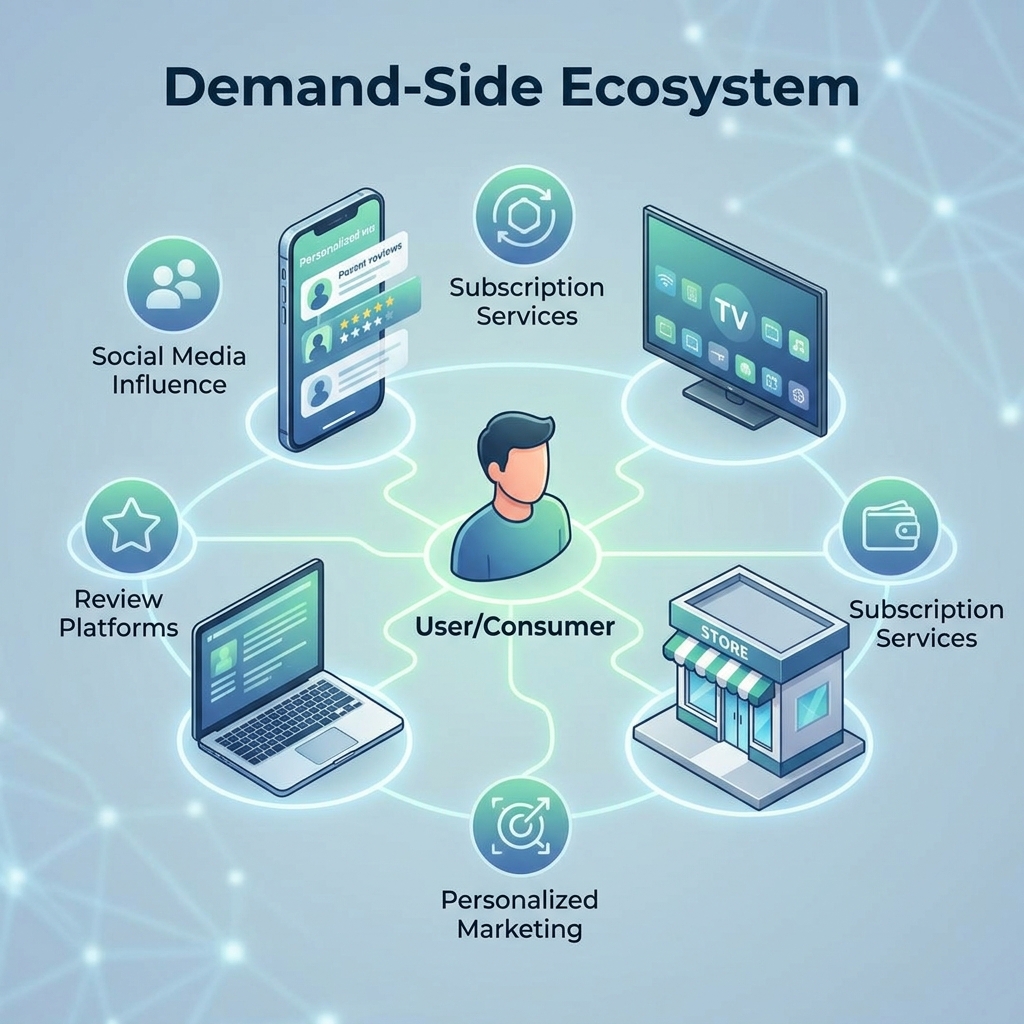
To execute successful campaigns, modern marketers must understand the underlying technology that powers the automated ad-buying ecosystem. The architecture consists of several interconnected platforms that communicate continuously to serve the right ad to the right user. First, advertisers utilize Demand-Side Platforms (DSPs). A DSP acts as the central command center where marketers build campaigns, define target audiences, upload creative assets, and set budget limits. The DSP evaluates available ad inventory across the internet and decides—within milliseconds—whether to place a bid based on the advertiser’s specific criteria.
Conversely, publishers utilize Supply-Side Platforms (SSPs) to monetize their available ad space. SSPs package the available ad slots and broadcast them to various ad exchanges, attempting to secure the highest possible price for the publisher. The Ad Exchange functions as the digital marketplace where DSPs and SSPs meet to conduct the auction. Additionally, Data Management Platforms (DMPs) play a critical role by collecting, organizing, and activating massive datasets. When marketers integrate a powerful DMP with their DSP, they achieve seamless Data-Driven Marketing Automation, allowing them to serve highly personalized creatives based on hyper-specific user behaviors, previous website visits, and demographic profiles.
Leveraging Advanced Audience Segmentation Strategies
Successfully driving user growth requires moving beyond broad demographic targeting. Modern growth marketers deploy sophisticated Audience Segmentation Strategies to isolate the exact individuals most likely to purchase their products or services. Programmatic platforms allow you to slice and dice audiences using first-party, second-party, and third-party data. First-party data remains your most valuable asset; it includes the information you directly collect from your CRM, website visitors, and current subscribers. By uploading this data into your DSP, you can build powerful lookalike audiences—discovering new internet users who share the precise digital footprint and behavioral tendencies of your best existing customers.
Beyond lookalike modeling, advertisers must implement contextual and behavioral targeting. Contextual targeting analyzes the keywords, themes, and content of a specific webpage to ensure your ad appears in a relevant environment. For example, placing an ad for financial software on an investing blog ensures contextual relevance. Behavioral targeting tracks a user’s actions across the web over time, allowing you to serve ads based on their proven interests, regardless of the specific website they currently visit. By layering these segmentation tactics, brands drastically improve their ad relevance, resulting in higher click-through rates, lower bounce rates, and significantly more cost-effective customer acquisition outcomes.
Comparing Automated Buying Models
Not all automated ad purchases happen through open auctions. Advertisers can choose from several distinct buying models based on their need for brand safety, premium inventory, and pricing stability.
| Buying Model | Description | Pricing Structure | Best Use Case |
| Real-Time Bidding (RTB) | Open auction where anyone can bid on available inventory. | Dynamic (Fluctuates based on market demand). | Scaling reach and driving massive volume quickly. |
| Private Marketplace (PMP) | Invite-only auction restricted to a select group of advertisers. | Dynamic (Usually requires a minimum floor price). | Accessing premium inventory with higher brand safety. |
| Programmatic Guaranteed | Direct deal with a publisher for guaranteed ad slots at a fixed price. | Fixed (Negotiated beforehand). | Securing highly visible placements for major product launches. |
| Preferred Deals | Advertisers get a “first look” at inventory before it goes to open auction. | Fixed (Pre-negotiated CPM). | Bypassing open auction chaos for specific premium publishers. |
Maximizing Conversions Through Omnichannel Campaign Management

Modern consumers do not interact with brands through a single device or a solitary platform. A user might discover your brand via a mobile app, research your product on a laptop, and finally complete the purchase on a connected television (CTV). To capture these fragmented interactions, growth leaders execute comprehensive Omnichannel Campaign Management. Programmatic platforms excel at omnichannel execution because they allow advertisers to manage display, video, native, audio, and CTV ads from a single, centralized dashboard. This centralization prevents audience fragmentation and ensures a cohesive brand narrative across every touchpoint.
Effective omnichannel execution requires mastering cross-device tracking and identity resolution. By utilizing probabilistic and deterministic matching, DSPs can map multiple devices to a single user profile. This capability allows you to sequence your messaging strategically. You can serve an introductory video ad on a user’s smart TV, follow up with an interactive rich-media banner on their tablet, and deliver a strong call-to-action native ad on their mobile phone. This synchronized approach reinforces your value proposition, keeps your brand top-of-mind, and gently guides the prospect down the funnel toward a final conversion, significantly boosting the overall efficiency of your customer acquisition efforts.
Pro Tips and Expert Insights for Ad Optimization
Achieving elite performance in programmatic advertising requires moving beyond basic campaign setups. Top-tier media buyers employ continuous optimization frameworks to extract maximum value from every dollar spent. One critical strategy involves implementing Dynamic Creative Optimization (DCO). DCO technology automatically generates and serves thousands of ad variations tailored to the specific user viewing the impression. The algorithm swaps headlines, images, calls-to-action, and offers in real time based on the user’s geographic location, local weather, browsing history, or time of day. This hyper-personalization dramatically increases engagement rates because the ad speaks directly to the user’s immediate context.
Furthermore, expert marketers obsess over viewability and ad fraud prevention. An ad impression holds zero value if a human never actually sees it on the screen. Marketers must partner with third-party verification services like DoubleVerify or Integral Ad Science to ensure their ads appear above the fold and in brand-safe environments. Additionally, setting strict frequency caps remains essential. Bombarding the same user with the same ad twenty times a day leads to banner blindness and brand resentment. Experts recommend capping ad frequency to a strategic limit—typically three to five views per week—to maintain brand affinity while effectively driving the user toward a purchase decision.
Common Mistakes to Avoid When Scaling Ad Spend
Many businesses burn through their marketing budgets quickly because they fail to configure their programmatic platforms correctly. Avoiding these fundamental errors ensures your customer acquisition campaigns remain profitable as you scale.
-
Ignoring Exclude Lists (Blocklists): Failing to update blocklists results in your ads appearing on low-quality, fraudulent, or brand-damaging websites. Marketers must continuously monitor domain performance and proactively block URLs that drain budget without driving conversions.
-
Over-Segmenting the Audience: While targeting remains crucial, applying too many overlapping data parameters restricts the algorithm’s ability to find scale. If your audience pool becomes too small, bid prices skyrocket, and the AI cannot gather enough conversion data to optimize effectively.
-
Neglecting Post-Click Landing Pages: Driving highly targeted traffic to a slow, generic, or confusing landing page destroys your campaign ROI. The messaging on your landing page must perfectly mirror the promise made in your programmatic creative.
Tracking Performance and High-Intent Lead Scoring
Data dictates success in algorithmic media buying. However, tracking the wrong key performance indicators (KPIs) leads to misguided optimizations and wasted spend. Growth marketers must align their programmatic metrics directly with tangible business outcomes rather than vanity metrics like total impressions or basic click-through rates. By establishing robust tracking mechanisms, advertisers can accurately attribute revenue to specific programmatic touchpoints and implement effective High-Intent Lead Scoring models that prioritize users demonstrating strong purchasing signals.
To measure customer acquisition effectively, media buyers focus heavily on the following metrics:
-
Customer Acquisition Cost (CAC): The total media spend divided by the number of new paying customers acquired. This metric determines the baseline profitability of the campaign.
-
Return on Ad Spend (ROAS): The total revenue generated divided by the total programmatic ad spend. ROAS provides immediate visibility into the financial efficiency of specific audience segments and creative assets.
-
Cost Per Action (CPA): The cost required to drive a specific conversion event, such as a whitepaper download, a software trial signup, or a newsletter subscription.
-
View-Through Conversions (VTC): A crucial metric that tracks users who saw a programmatic ad, did not click it, but later visited the website directly to convert. VTC proves the latent impact of display advertising on brand recall.
The Future of Programmatic Advertising for Customer Acquisition
The digital advertising landscape undergoes constant evolution, driven by shifting privacy regulations and rapid technological advancements. As major web browsers phase out third-party cookies, Programmatic Advertising for Customer Acquisition must adapt to survive. The future of customer acquisition relies heavily on predictive analytics, contextual targeting, and the strategic utilization of zero-party and first-party data. Marketers who prioritize building direct relationships with their users and gathering consent-based data will possess a massive competitive advantage in a privacy-first world.
Moreover, artificial intelligence will continue to revolutionize the bidding process. Next-generation DSPs will utilize advanced machine learning models to predict user intent with unprecedented accuracy, allowing advertisers to bid exclusively on impressions that carry a near-certain probability of conversion. We will also see a massive expansion in emerging programmatic channels, particularly Digital Out-of-Home (DOOH) and connected TV, providing marketers with even more immersive canvases to capture audience attention. By staying ahead of these trends, proactive brands will ensure their automated media buying strategies remain highly profitable engines for sustainable, long-term customer growth.
Conclusion
Mastering algorithmic media buying completely transforms how modern businesses scale. By implementing Programmatic Advertising for Customer Acquisition, you eliminate wasted ad spend and consistently capture high-intent buyers across every digital touchpoint. Take control of your marketing budget, launch your data-driven campaigns today, and watch your brand achieve unprecedented, sustainable revenue growth.
FAQs
1. What exactly is programmatic advertising?
Programmatic advertising is the automated buying and selling of digital advertising space using algorithmic software. It replaces traditional manual negotiations and insertion orders, allowing advertisers to bid on ad impressions in real time based on specific audience targeting criteria.
2. How does programmatic differ from the Google Display Network (GDN)?
While the GDN operates programmatically, it acts as a single, closed ecosystem (a walled garden) restricted to Google’s specific publisher network. True programmatic DSPs offer access to multiple ad exchanges simultaneously, providing significantly broader inventory, premium placements, and advanced third-party data integration capabilities.
3. What is a Demand-Side Platform (DSP)?
A Demand-Side Platform (DSP) is a software interface used by advertisers and agencies to buy digital ad inventory across multiple ad exchanges automatically. It allows media buyers to manage bids, upload creatives, and target specific audiences from one centralized dashboard.
4. How much budget do I need to start a programmatic campaign?
Minimum budgets vary widely depending on the DSP you select. Some self-serve platforms allow you to start with just a few thousand dollars a month, while enterprise-level managed service DSPs may require minimum monthly commitments of $10,000 to $50,000 to ensure the algorithms have enough data to optimize properly.
5. What are the best targeting strategies for finding new customers?
The most effective strategies combine lookalike modeling (finding users similar to your current best customers) with behavioral targeting (targeting users based on their proven digital interests and recent actions) and contextual targeting (placing ads on highly relevant web pages).
6. How does real-time bidding (RTB) actually work?
When a user loads a webpage, the publisher’s SSP sends a bid request to an ad exchange. The exchange forwards this to multiple DSPs. The DSPs analyze the user’s data and automatically place bids on behalf of advertisers. The highest bidder wins, and their ad loads on the page—all within milliseconds.
7. Is programmatic advertising safe for my brand image?
Yes, provided you implement strict brand safety controls. Advertisers can utilize blocklists to prevent ads from showing on specific websites, employ allowlists for guaranteed premium placements, and partner with third-party verification tools to analyze page content before a bid is ever placed.
8. How do I track the success of my programmatic campaigns?
Success tracking requires implementing conversion pixels on your website. You should measure primary KPIs like Customer Acquisition Cost (CAC), Return on Ad Spend (ROAS), and Cost Per Action (CPA). Additionally, tracking View-Through Conversions is vital for understanding the true impact of non-clicked display ads.
9. What is Dynamic Creative Optimization (DCO)?
Dynamic Creative Optimization (DCO) is an advanced technology that automatically customizes ad creatives in real time based on the specific user viewing the ad. It rapidly swaps elements like background images, headlines, and product offers to maximize personal relevance and drive higher conversion rates.
10. Will the death of third-party cookies destroy programmatic advertising?
No, but it will fundamentally change it. Advertisers will transition away from individual user tracking via cookies and rely more heavily on robust first-party data collection, advanced contextual targeting techniques, and privacy-compliant predictive AI models to identify and acquire high-intent customers.